Living in a small space doesn’t mean living with clutter—it just means you need to be smarter about storage. The right cabinet can tuck into that awkward corner, hide everyday chaos, and actually make your room feel more spacious instead of cramped. The challenge? Finding storage that works hard without taking up too much visual or physical real estate.
Size and Footprint: Making Every Inch Count
In small spaces, vertical storage is your best friend. Look for tall, narrow cabinets that reach toward the ceiling rather than sprawling across your floor. A cabinet that’s 72 inches tall but only 12-18 inches deep can hold as much as a wider, shorter piece while occupying far less floor space.
Measure your available space carefully, but don’t forget about door clearance. A cabinet with sliding doors or bi-fold doors needs less clearance than traditional swing-out doors—something that matters when you’re working with tight quarters. Corner cabinets are another smart option, transforming dead space into functional storage.
For entryways and hallways, consider cabinets with a depth of 12-15 inches. They’re slim enough to leave walkways clear but deep enough for shoes, bags, or pantry items. In living areas, 18-24 inch depths work well without jutting too far into the room.
Multi-Functional Designs That Earn Their Keep
When space is limited, every piece needs to justify its presence. Storage cabinets with dual purposes work especially well in compact homes. A cabinet topped with a cushion becomes hallway seating with hidden storage. A media cabinet with adjustable shelving transitions from entertainment center to home office storage as your needs change.
Look for cabinets with features like built-in wine racks, file drawer inserts, or charging stations. Adjustable shelving is essential—it lets you customize the interior for everything from tall boots to small craft supplies. Some cabinets include pull-out drawers or baskets that make it easier to access items in the back without unpacking everything in front.
Glass-front cabinets serve double duty by providing storage while displaying items you actually want to see, like dishware or collectibles. Just keep in mind that glass requires you to be more intentional about what you store inside.
Materials and Styles for Visual Lightness
Heavy, dark wood cabinets can make a small room feel even smaller. If you love the warmth of wood, look for lighter finishes like oak, ash, or whitewashed pine. These provide texture and character without visual weight.
Metal and glass cabinets create an airy feel because you can see through or around them. A wire mesh cabinet door or open metal framework takes up physical space but not visual space—your eye travels through it rather than stopping at a solid surface. Budget options in metal start around $150-300, while designer pieces can reach $800-1,200.
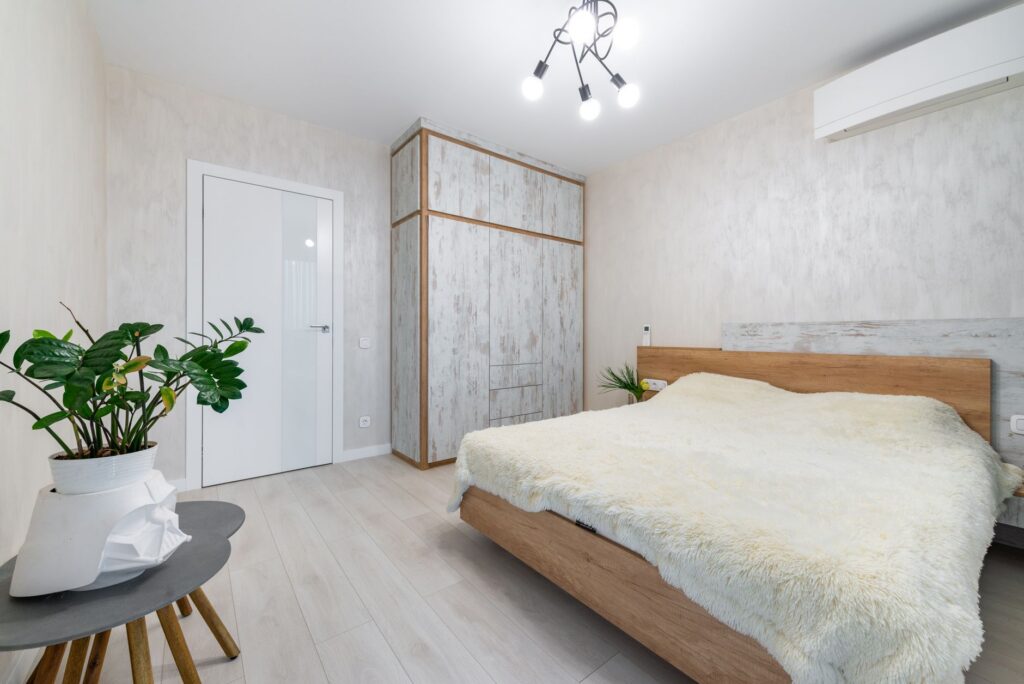
For a truly space-enhancing effect, consider cabinets in the same color as your walls. This creates a built-in look that recedes into the background. Floating cabinets—mounted on the wall without visible legs—make floors appear larger and simplify cleaning underneath.
Mid-century modern and Scandinavian-style cabinets often feature tapered legs that create breathing room beneath the piece. This leggy look feels less bulky than cabinets that sit flush with the floor. Expect to pay $400-700 for quality mid-range options, or $200-350 for budget-friendly versions.
Smart Shopping: What to Prioritize
Before you buy, think about what you’re actually storing. Bulky items like blankets need different shelving than books or office supplies. Measure your tallest and widest items to ensure they’ll fit on the shelves or through the doors.
Quality hardware matters more in small spaces because you’ll access these cabinets frequently. Soft-close hinges prevent door slamming in tight quarters, and sturdy drawer glides ensure smooth operation even when fully loaded. These features typically bump prices up by $50-100 but prove worth it over time.
Assembly is another consideration. Flat-pack furniture keeps costs down ($100-400 range) but requires patience and a free afternoon. Pre-assembled cabinets ($300-1,000+) are move-in ready but harder to transport up narrow staircases.
The best storage cabinet for your small space balances size, function, and style while staying within your budget. Measure carefully, think about how you’ll actually use it, and choose a design that feels light rather than imposing. The right piece will clear your clutter and might even make your space feel a bit larger—exactly what you need when every square foot counts.
If you’re shopping for an air purifier, you’ve probably noticed two main technologies dominating the market: ionic purifiers and HEPA filters. Both promise cleaner air, but they work in completely different ways—and when it comes to safety, one has a clear advantage. Let’s break down what you actually need to know to make the right […]
You know you want cleaner air at home, but standing in front of air purifier options can feel overwhelming. Should you invest in a whole house system that integrates with your HVAC, or stick with portable units you can move from room to room? The answer depends on your home’s layout, your budget, and how […]
Did You Know? The Declaration of Independence Was Likely Written in a Windsor Chair As America celebrates 250 years of independence, it’s worth looking at one of the quieter witnesses to that history: the humble Windsor chair. Thomas Jefferson is said to have drafted the Declaration of Independence while seated in an unusual revolving Windsor […]