Let’s be honest—your laundry room probably isn’t getting the love it deserves. It’s one of the most-used spaces in your home, yet it often ends up as an afterthought filled with mismatched storage and harsh overhead lighting. This year’s laundry room trends are changing that narrative, focusing on designs that make the space actually enjoyable to spend time in while staying practical enough to handle the daily grind of sorting, washing, and folding.
Statement Lighting That Makes the Space Feel Intentional
Gone are the days of settling for a single builder-grade flush mount. Pendant lights and modern sconces are having a moment in laundry rooms, and for good reason—they transform the space from purely functional to a room that feels like it belongs in the rest of your home. Look for fixtures with ceramic or matte black finishes that can handle humidity without looking dated in three years.
If you have space above a folding counter or island, consider two matching pendants hung 30-36 inches apart. Budget options start around $60-80 per fixture, while designer pendants can run $200-400 each. The key is choosing something with personality that still provides adequate task lighting—you need to see what you’re doing when treating stains or matching socks.
Open Shelving Mixed With Closed Storage
The all-cabinets approach is giving way to a more curated mix of open and closed storage. Floating shelves in warm wood tones or powder-coated metal let you display prettier essentials like glass detergent dispensers and woven baskets, while closed cabinets hide the less photogenic necessities.
When planning your storage mix, aim for about 60-70% closed storage to keep clutter under control. Open shelving works best in these spots:
Above the washer and dryer for frequently-used detergents and stain removers
On a side wall for folded towels and decorative storage baskets
Flanking a window for plants or small decor items that add warmth
Quality floating shelves run $40-80 per shelf depending on length and material, while custom cabinet systems typically start around $1,500 and go up from there. The beauty of open shelving is you can start small and add as your needs evolve.
Durable Countertops That Double as Folding Stations
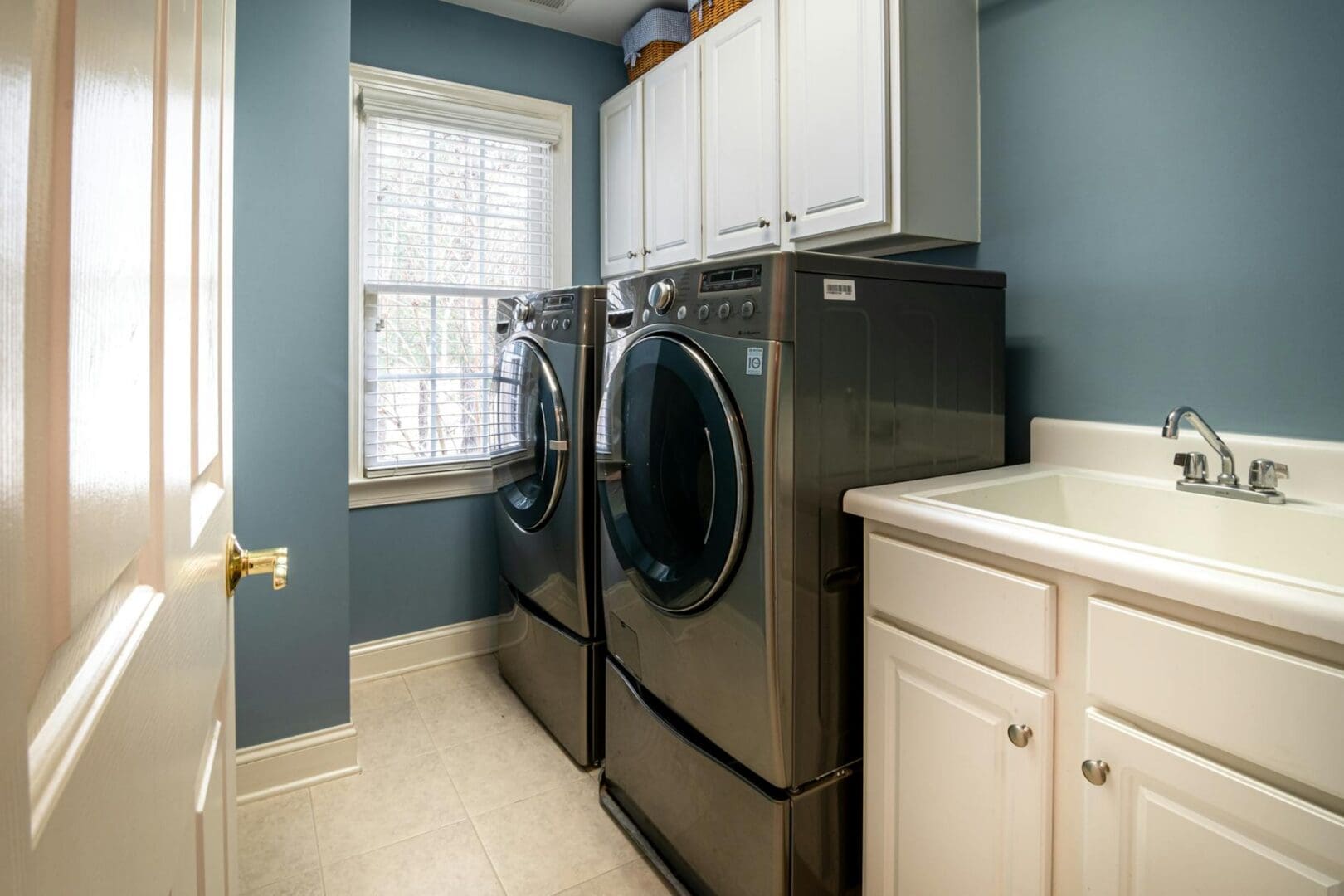
Counter space above front-load washers isn’t just trendy—it’s genuinely useful. A solid countertop creates a dedicated folding station and keeps your machines feeling built-in rather than thrown together. Butcher block brings warmth and costs $200-400 for a typical laundry room span, but it requires regular sealing. Quartz offers durability and water resistance in the $400-800 range for similar coverage, with minimal maintenance beyond daily wiping.
If you’re working with top-load machines, a separate wall-mounted folding table or small island serves the same purpose. Look for options at least 24 inches deep to comfortably fold sheets and towels without items sliding off the edge. Some come with built-in storage underneath, which is worth the extra $100-150 if you’re tight on space.
Personality Through Paint and Pattern
This year’s laundry rooms are embracing color beyond plain white walls. Deep greens, warm terracotta, and even dramatic navy blues are showing up as accent colors that make the space feel grounded and intentional. If full-wall color feels like too much commitment, consider these smaller moves:
Paint just the lower cabinets in a rich color while keeping walls neutral
Add peel-and-stick wallpaper on a single accent wall (budget around $30-60 per roll)
Install patterned cement tile as a backsplash behind the machines ($8-15 per square foot)
Bring in a vintage-inspired rug that can handle the occasional splash ($80-200 for washable options)
The goal isn’t to turn your laundry room into a showpiece—it’s to create a space that doesn’t drain your energy every time you walk in with another basket of clothes.
These trends work because they balance aesthetics with the reality of what a laundry room needs to do. Start with the change that addresses your biggest frustration—whether that’s inadequate lighting, lack of folding space, or storage that doesn’t actually store anything useful—and build from there. Your laundry room might never be your favorite room in the house, but it can certainly stop being the one you avoid.
If you’re shopping for an air purifier, you’ve probably noticed two main technologies dominating the market: ionic purifiers and HEPA filters. Both promise cleaner air, but they work in completely different ways—and when it comes to safety, one has a clear advantage. Let’s break down what you actually need to know to make the right […]
You know you want cleaner air at home, but standing in front of air purifier options can feel overwhelming. Should you invest in a whole house system that integrates with your HVAC, or stick with portable units you can move from room to room? The answer depends on your home’s layout, your budget, and how […]
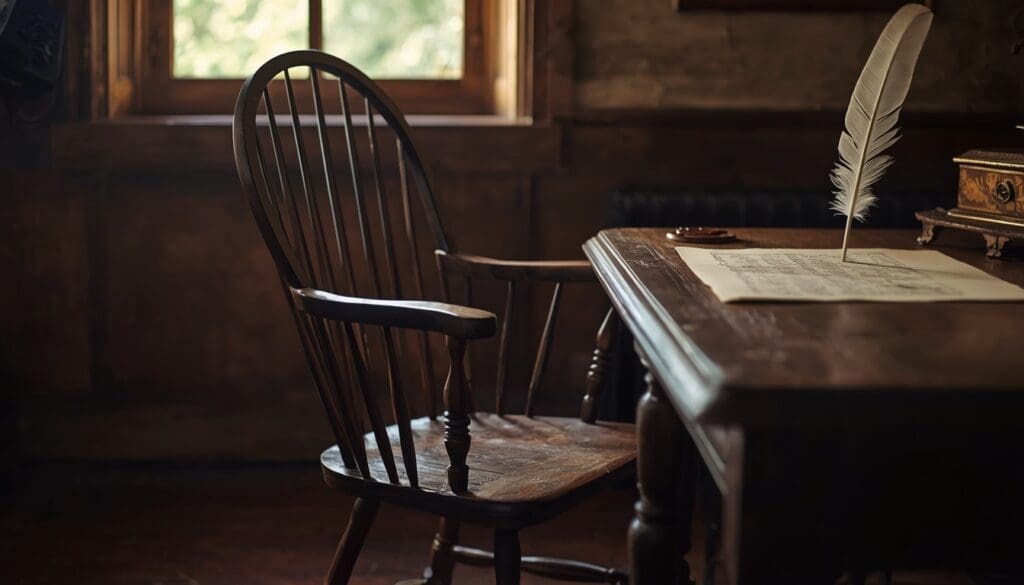
Did You Know? The Declaration of Independence Was Likely Written in a Windsor Chair As America celebrates 250 years of independence, it’s worth looking at one of the quieter witnesses to that history: the humble Windsor chair. Thomas Jefferson is said to have drafted the Declaration of Independence while seated in an unusual revolving Windsor […]