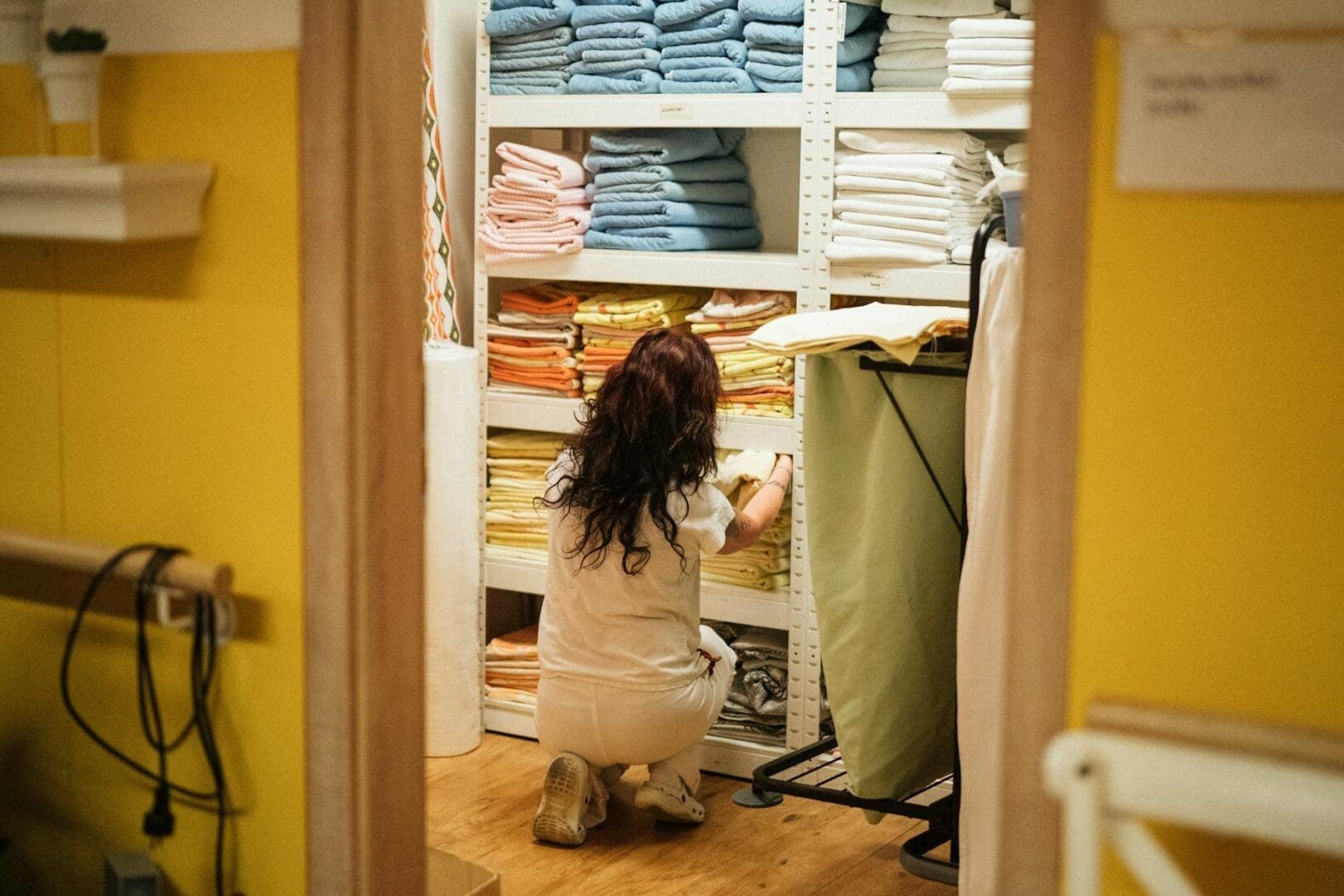
We’ve all been there—you open the linen closet to grab fresh sheets and an avalanche of mismatched towels tumbles out. Or you’re digging through a pile of tablecloths to find the fitted sheet that actually fits your bed. A disorganized linen closet wastes time and space, but with the right storage pieces and a simple system, you can transform it into a model of efficiency.
Start With the Right Shelving and Storage Foundation
Before you think about folding techniques, take a hard look at your shelving. Wire shelves that came with your house might be creating more problems than they solve—fitted sheets slip through the gaps, and stacks tend to topple.
Consider adding shelf dividers or risers to maximize vertical space. These simple additions keep stack heights manageable and prevent the dreaded towel avalanche. Adjustable shelving systems let you customize the height between shelves based on what you’re storing. Bulky comforters need more clearance than washcloths, after all.
Pull-out drawers or rolling carts work beautifully for deeper closets where items at the back become forgotten. Budget-friendly options start around $30-50 for basic drawer units, while custom closet systems with built-in drawers run $200-600 depending on size. If your linen closet is shallow, over-the-door organizers with pockets can hold smaller items like hand towels without taking up precious shelf space.
Choose Storage Bins and Baskets That Work With Your Space
Not everything needs to sit directly on shelves. Storage baskets and bins are the secret weapon of an organized linen closet, especially for corralling smaller items or seasonal linens you don’t use daily.
Woven baskets add warmth and texture while hiding beach towels or extra pillowcases. Clear plastic bins let you see exactly what’s inside—perfect for guest room sheets or holiday tablecloths you only need occasionally. Look for bins with labels or label holders so everyone in your household knows where things belong.
Measure your shelf depth before buying. A basket that’s too deep becomes a black hole; one that’s too shallow won’t hold much. Most standard linen closet shelves are 12-16 inches deep, so look for organizers in the 10-14 inch range to allow for easy sliding in and out. Fabric bins typically run $15-30 each, while quality woven baskets cost $25-60 depending on size.
Create Zones for Different Linen Types
The key to maintaining order is giving everything a designated home. Organize your linen closet by category and frequency of use, with everyday items at eye level and occasional-use items up high or down low.
Dedicate one shelf to bath towels, another to sheet sets, and a third to table linens. Within each zone, you can organize by size, color, or room. Many people find it helpful to store complete sheet sets inside one of their pillowcases—this keeps the fitted sheet, flat sheet, and pillowcases together so you’re not hunting for matches.
Use the top shelves for items you rarely need, like extra blankets for guests or seasonal linens. The most accessible middle shelves should hold your everyday towels and the sheets for beds you change weekly. Bottom shelves work well for beach towels, cleaning rags, or bulk paper products if you have the space.
Maintain Your System With Smart Folding and Stacking
Even the best storage solutions fall apart without a consistent folding method. The file-folding technique—where you fold items into rectangles and store them upright rather than stacked—works wonderfully for towels and washcloths. You can see everything at a glance and pull out one item without disturbing the rest.
For sheets, fold fitted sheets into neat rectangles (there are countless tutorials if the fitted sheet has always defeated you) and stack sets together. Limit stack height to 3-4 sets maximum. Taller stacks inevitably topple and create mess.
Shelf dividers are your friend here, keeping stacks separated and preventing the domino effect. Even simple acrylic dividers at $10-20 each make a noticeable difference in maintaining order week after week.
A well-organized linen closet isn’t about perfection—it’s about creating a system that makes your daily life easier. With the right combination of shelving, storage containers, and zones for different items, you’ll spend less time wrestling with towels and more time enjoying your beautifully organized space. Take measurements, assess what you actually store, and invest in a few key organizers that match your specific needs.
If you’re shopping for an air purifier, you’ve probably noticed two main technologies dominating the market: ionic purifiers and HEPA filters. Both promise cleaner air, but they work in completely different ways—and when it comes to safety, one has a clear advantage. Let’s break down what you actually need to know to make the right […]
You know you want cleaner air at home, but standing in front of air purifier options can feel overwhelming. Should you invest in a whole house system that integrates with your HVAC, or stick with portable units you can move from room to room? The answer depends on your home’s layout, your budget, and how […]
Did You Know? The Declaration of Independence Was Likely Written in a Windsor Chair As America celebrates 250 years of independence, it’s worth looking at one of the quieter witnesses to that history: the humble Windsor chair. Thomas Jefferson is said to have drafted the Declaration of Independence while seated in an unusual revolving Windsor […]