If you’re constantly moving things around just to find the paprika, or if your countertops have become permanent storage for appliances you use twice a year, you’re not alone. The right kitchen storage can transform a chaotic cooking space into one that actually makes meal prep easier. The trick is choosing solutions that fit how you really use your kitchen, not just what looks good in photos.
Start With What You’re Actually Storing
Before you buy a single storage piece, take inventory of what you need to store. Are you dealing with bulky small appliances, an extensive spice collection, or an overflow of pots and pans? Different items need different solutions.
For pantry staples and dry goods, pull-out pantry cabinets with adjustable shelving work beautifully. They typically run $200-$600 for freestanding units, while built-in versions start around $800. If you’re storing lots of small appliances, look for cabinets with appliance garages or deep lower cabinets—these keep your stand mixer accessible but out of sight.
Pot and pan storage is where many kitchens fall short. Deep drawers with dividers (usually $150-$400 per drawer system) beat stacking them in cabinets every time. You can actually see what you have, and nothing crashes down when you grab the one on the bottom.
Match Storage Types to Your Kitchen Layout
Your kitchen’s footprint determines which storage solutions will actually fit and function well. Small kitchens need vertical storage and multi-purpose pieces. Large kitchens can accommodate islands with built-in storage, but risk wasted space without proper planning.
Wall-mounted solutions like open shelving ($50-$300), magnetic knife strips ($20-$80), and hanging pot racks ($100-$500) maximize vertical space without eating into your floor plan. Kitchen islands with storage run from $400 for simple rolling carts to $3,000+ for substantial pieces with drawers, cabinets, and wine racks.
Corner spaces are tricky. Lazy Susans ($30-$150) remain popular for a reason—they make corner cabinets functional. Corner drawers and pull-out corner organizers ($200-$600) cost more but provide better visibility and access.
Consider Material Quality and Durability
Kitchen storage takes daily abuse from moisture, heat, and constant use. Materials matter more here than in almost any other room.
Solid wood cabinets and furniture pieces last decades but start around $300-$500 per unit. Wood veneer over engineered wood offers a middle ground at $150-$400 per piece—just ensure the veneer is thick enough to withstand occasional moisture. Laminate and thermofoil options ($100-$250) work fine for pantry storage but may warp near dishwashers or sinks.
For drawer organizers and shelf systems, bamboo ($25-$80) resists moisture better than plastic ($10-$40) and looks nicer too. Metal wire shelving ($60-$200 for a typical pantry system) allows air circulation, which helps in humid climates, but can feel industrial.
Check weight ratings, especially for pull-out drawers and shelves. Quality full-extension drawer slides that hold 75-100 pounds cost more upfront but won’t sag or stick after a year of storing your Dutch ovens.
Balance Open and Closed Storage
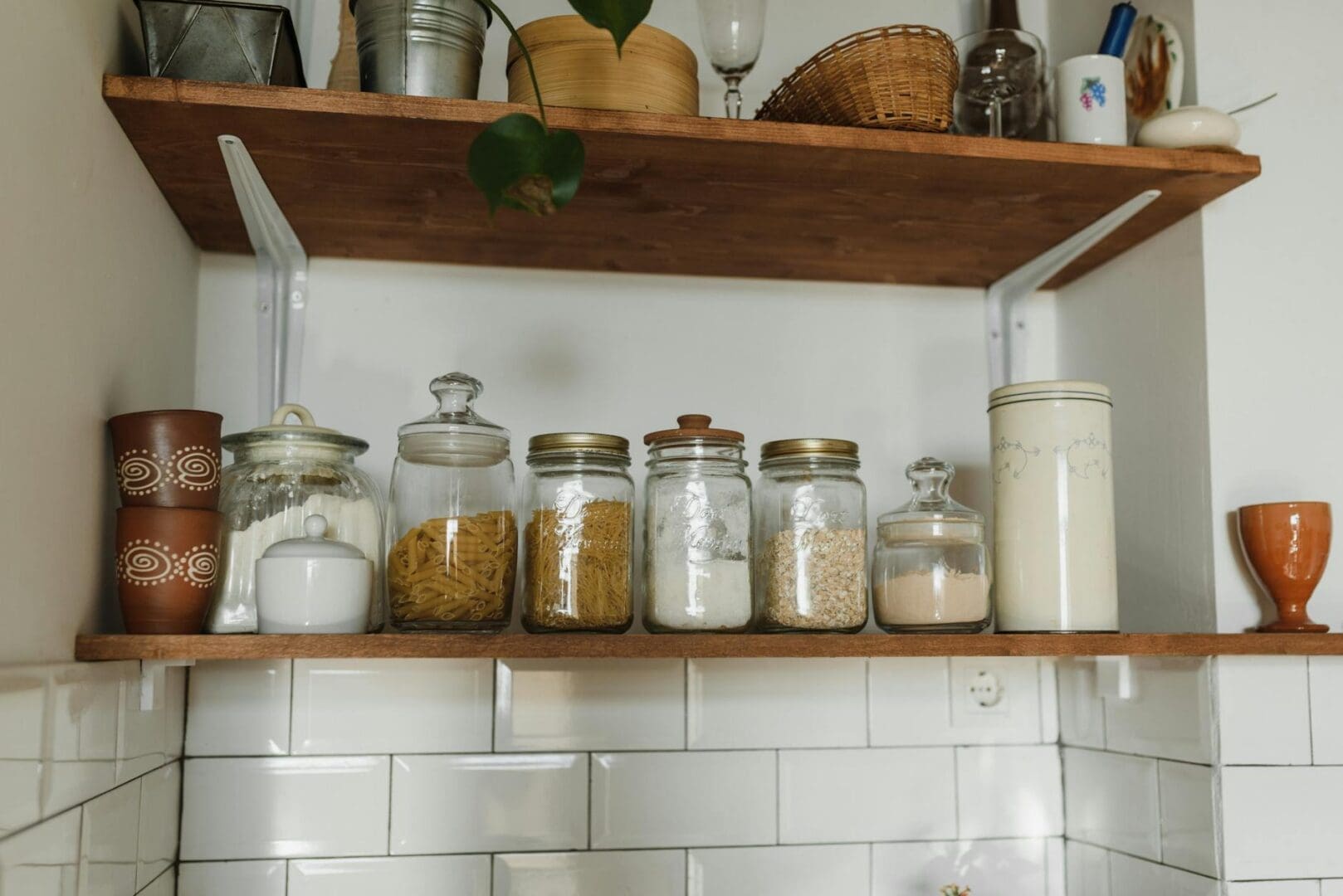
Open shelving has flooded kitchen designs lately, and while it can look stunning, it’s not for everyone. Open storage displays your prettiest dishes and keeps everyday items within easy reach, but everything collects dust and cooking grease. You’ll need items that look good together and the discipline to keep them organized.
A practical approach uses both: closed cabinets for bulk storage and less-attractive items, open shelving or glass-front cabinets ($250-$800) for dishes and glassware you’re proud to display. Rolling carts ($80-$400) split the difference—you can tuck them away when needed but keep frequently used items accessible.
The sweet spot for most kitchens is about 70-80% closed storage, 20-30% open or glass-front. This keeps visual clutter manageable while still adding personality to your space.
Choosing kitchen storage comes down to honest assessment of your space, your stuff, and your habits. The best system is one you’ll actually use—whether that’s a $2,000 custom pantry organization or a thoughtful combination of $300 worth of shelving, drawer dividers, and a rolling cart. Measure your space carefully, prioritize storing the things that currently frustrate you most, and look for pieces built to handle daily kitchen life.
If you’re shopping for an air purifier, you’ve probably noticed two main technologies dominating the market: ionic purifiers and HEPA filters. Both promise cleaner air, but they work in completely different ways—and when it comes to safety, one has a clear advantage. Let’s break down what you actually need to know to make the right […]
You know you want cleaner air at home, but standing in front of air purifier options can feel overwhelming. Should you invest in a whole house system that integrates with your HVAC, or stick with portable units you can move from room to room? The answer depends on your home’s layout, your budget, and how […]
Did You Know? The Declaration of Independence Was Likely Written in a Windsor Chair As America celebrates 250 years of independence, it’s worth looking at one of the quieter witnesses to that history: the humble Windsor chair. Thomas Jefferson is said to have drafted the Declaration of Independence while seated in an unusual revolving Windsor […]