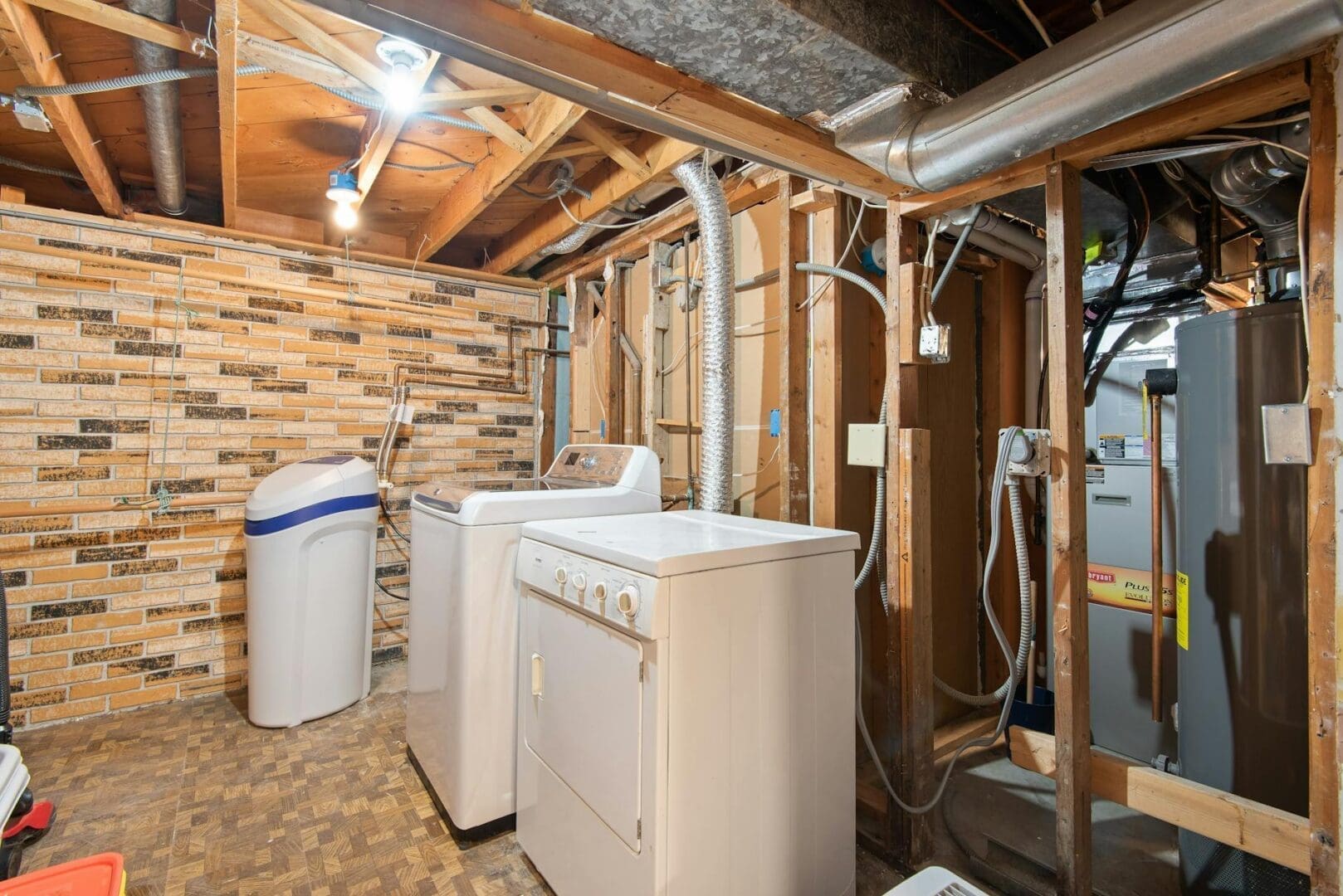
That musty smell. The dampness you feel when you walk downstairs. Maybe you’ve even spotted mildew creeping along the walls or noticed your stored belongings feeling clammy. A basement dehumidifier isn’t the most exciting purchase you’ll make for your home, but it might be one of the most important for protecting your space and everything in it. Here’s how to choose one that actually works for your situation.
Get the Capacity Right for Your Space
The biggest mistake people make is buying a dehumidifier that’s too small for their basement. These units are rated by how many pints of moisture they can remove in 24 hours, and you need to match that capacity to your basement’s square footage and dampness level.
For a moderately damp basement (that musty smell, occasional moisture), you’ll want about 10 pints of capacity for every 500 square feet. If your basement feels noticeably damp or you see water stains, bump that up to 12-14 pints per 500 square feet. A very wet basement with standing water or seeping walls needs 14-16 pints per 500 square feet.
In practical terms, most average basements (800-1,200 square feet) do well with a 50-70 pint dehumidifier. Smaller spaces under 500 square feet can get by with a 30-50 pint model. If you have a large basement over 1,500 square feet, look at 70 pint units or consider running two smaller ones in different areas.
Drainage Options Matter More Than You Think
You have three ways to handle the water your dehumidifier collects, and this choice affects how hands-off your setup can be:
Manual emptying: Most units come with a bucket that holds 1-2 gallons. In a damp basement, you might need to empty this daily or even twice daily. It gets old fast.
Gravity drain: If you have a floor drain nearby, you can attach a hose and let water drain continuously. This is the sweet spot for most people—no emptying required.
Condensate pump: For basements without floor drains, some models include a built-in pump that pushes water up and out to a sink or exterior drain. Worth the extra cost if you don’t have a floor drain.
Make sure any model you’re considering has the drainage option you need. Continuous drainage through a hose is standard on most units, but condensate pumps are typically only on mid-range to higher-end models.
Features That Actually Add Value
Once you’ve nailed down capacity and drainage, a few features separate okay dehumidifiers from great ones. A built-in humidistat lets you set your target humidity level (aim for 30-50% for basements), and the unit cycles on and off automatically to maintain it. This is pretty much essential.
Auto-restart is clutch if you experience power outages—the unit remembers your settings and starts back up automatically. Without this, you’ll need to manually restart it every time the power flickers.
Look for an Energy Star rating if you’re running the unit frequently. A dehumidifier can use as much electricity as a refrigerator, so efficiency matters for your utility bill. Washable or reusable filters save money over time compared to disposable ones.
Digital displays are nice but not necessary. What matters more is that controls are straightforward enough that you’ll actually adjust them as needed throughout humid and dry seasons.
What You’ll Spend
Budget-friendly dehumidifiers in the 30-50 pint range start around $180-250. These work fine for smaller, moderately damp spaces, though they’re typically louder and less energy-efficient.
Mid-range units ($250-400) give you better capacity (50-70 pints), quieter operation, Energy Star efficiency, and more reliable performance. This is where most homeowners with average basements should focus.
Premium models ($400-600+) offer larger capacities, built-in pumps, lower noise levels, and features like Wi-Fi connectivity or automatic defrosting for cold basements. Worth it if you’re dealing with a seriously damp space or want maximum convenience.
Getting the right dehumidifier means finally having a basement that doesn’t smell musty, protecting your belongings from moisture damage, and maybe even creating usable living space where there wasn’t any before. Measure your space, assess how damp it really is, and pick a model with enough capacity and the drainage setup that fits your basement layout. Your nose will thank you.
If you’re shopping for an air purifier, you’ve probably noticed two main technologies dominating the market: ionic purifiers and HEPA filters. Both promise cleaner air, but they work in completely different ways—and when it comes to safety, one has a clear advantage. Let’s break down what you actually need to know to make the right […]
You know you want cleaner air at home, but standing in front of air purifier options can feel overwhelming. Should you invest in a whole house system that integrates with your HVAC, or stick with portable units you can move from room to room? The answer depends on your home’s layout, your budget, and how […]
Did You Know? The Declaration of Independence Was Likely Written in a Windsor Chair As America celebrates 250 years of independence, it’s worth looking at one of the quieter witnesses to that history: the humble Windsor chair. Thomas Jefferson is said to have drafted the Declaration of Independence while seated in an unusual revolving Windsor […]