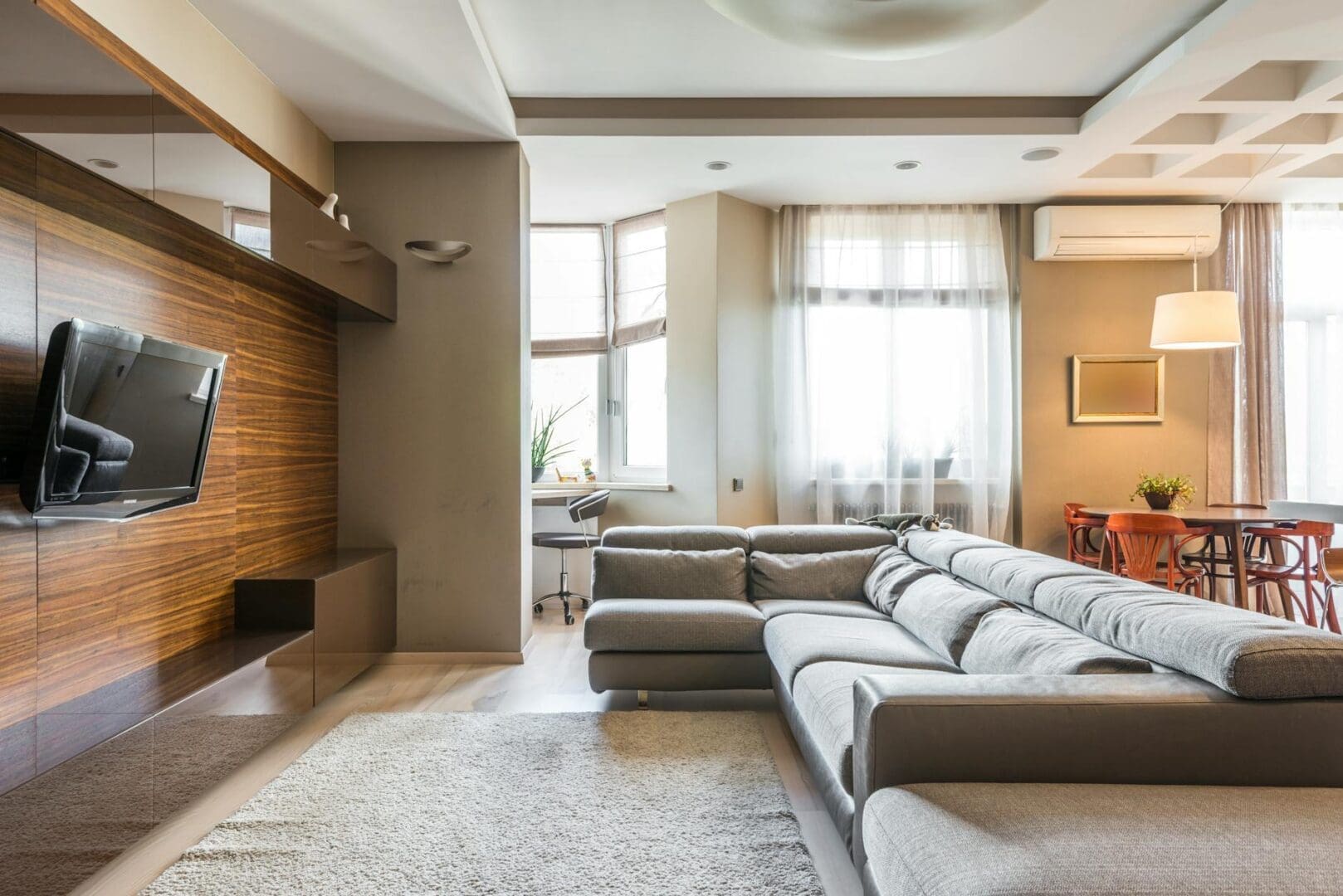
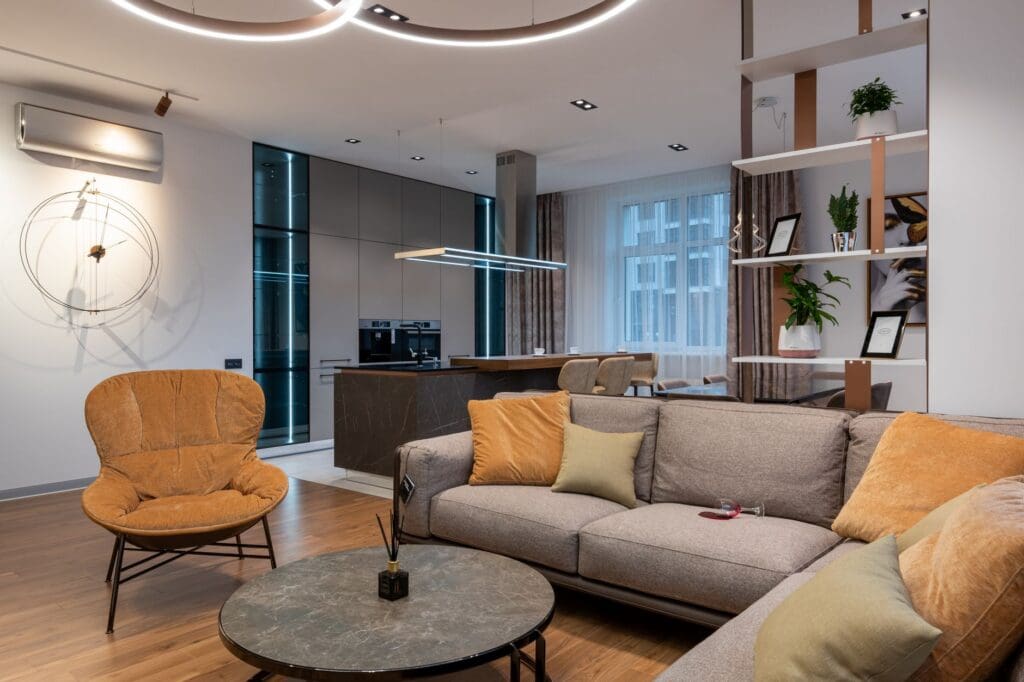
Open floor plans are wonderful until you realize that smoke from last night’s cooking experiment is still lingering in your bedroom the next morning. Large, flowing spaces need serious air cleaning power, and choosing the wrong purifier means you’re basically just running an expensive fan. Here’s what actually matters when you’re shopping for an air purifier that can handle your great room, loft, or open-concept living area.
Match the Coverage Area to Your Actual Space
The single most important specification is the coverage area, measured in square feet. Manufacturers test their purifiers in controlled lab conditions, so you’ll want a unit rated for more space than you actually have. If your open living area is 500 square feet, look for purifiers rated for 600-700 square feet minimum.
Here’s the catch: those ratings assume an 8-foot ceiling. If you have vaulted ceilings, cathedral ceilings, or anything over 10 feet, you’re dealing with significantly more air volume. In these cases, either size up dramatically or consider running two medium-sized units at opposite ends of the space.
Also pay attention to the ACH rating (air changes per hour). For living spaces, you want at least 4-5 air changes per hour, which means the purifier cycles through all the air in the room four to five times every 60 minutes. Allergy sufferers should aim even higher.
Filter Type Makes or Breaks Performance
For large spaces, you need a true HEPA filter—not “HEPA-type” or “HEPA-like.” True HEPA filters capture 99.97% of particles as small as 0.3 microns, including dust, pollen, pet dander, and smoke particles. Everything else is marketing language for less effective filtration.
Most quality purifiers use a three-stage system: a pre-filter for large particles like hair and dust, the HEPA filter for fine particles, and an activated carbon filter for odors and VOCs. The carbon layer is especially important in open spaces where cooking smells, pet odors, or off-gassing from furniture can affect multiple rooms at once.
Replacement filter costs matter more than you’d think. Budget purifiers ($100-200) often have expensive proprietary filters that cost $80-100 to replace twice a year. Mid-range options ($300-500) typically have more affordable filters and better longevity. Higher-end models ($600-1000) often have washable pre-filters and longer-lasting HEPA filters that reduce long-term costs.
Noise Levels and Placement Strategy
A purifier powerful enough for 800 square feet will move a lot of air, and that creates noise. Check the decibel ratings at different fan speeds. On low or medium settings, you want something under 50 decibels—about the sound level of rainfall or quiet conversation. Even the best units get louder on high speed, but you shouldn’t need to run them at maximum constantly.
Placement is critical in open spaces. Air purifiers work best in central locations with clearance on all sides—not tucked in corners or behind furniture. If your open space includes a kitchen, position the unit where it can intercept cooking odors before they spread. For spaces with pets, place it closer to where your animals spend most of their time.
Some larger units include handles or casters, which seems like overkill until you’re trying to move a 20-pound appliance for vacuuming. If you have multiple zones in your open space, mobility becomes genuinely useful.
Smart Features Worth Considering
Air quality sensors automatically adjust fan speed based on current conditions, which is helpful in spaces where pollution levels vary throughout the day. You’ll see the fan kick up when you’re cooking or when someone opens a window on a high-pollen day.
Timer functions and scheduling matter more in large spaces because you might want the unit running on high while you’re out, then switching to quiet mode when you’re home. App connectivity lets you monitor filter life and air quality remotely, though it’s not essential—just convenient.
Skip the ionizers and UV lights. These features add cost without meaningful benefit for most households, and ionizers can produce trace amounts of ozone.
The right air purifier for a large space is powerful enough to actually clean the air, quiet enough that you’ll keep it running, and efficient enough that the operating costs won’t shock you. Measure your space accurately, invest in true HEPA filtration, and choose a unit rated for more coverage than you technically need. Your lungs will thank you, and that lingering smell from Tuesday’s fish dinner will finally disappear.
If you’re shopping for an air purifier, you’ve probably noticed two main technologies dominating the market: ionic purifiers and HEPA filters. Both promise cleaner air, but they work in completely different ways—and when it comes to safety, one has a clear advantage. Let’s break down what you actually need to know to make the right […]
You know you want cleaner air at home, but standing in front of air purifier options can feel overwhelming. Should you invest in a whole house system that integrates with your HVAC, or stick with portable units you can move from room to room? The answer depends on your home’s layout, your budget, and how […]
Did You Know? The Declaration of Independence Was Likely Written in a Windsor Chair As America celebrates 250 years of independence, it’s worth looking at one of the quieter witnesses to that history: the humble Windsor chair. Thomas Jefferson is said to have drafted the Declaration of Independence while seated in an unusual revolving Windsor […]