There’s nothing worse than spending money on a new sofa or accent chair, only to realize it doesn’t match the rug you bought last week. Or worse, staring at paint swatches for hours, unable to commit because you’re not sure how everything will look together. A mood board solves this problem by letting you test-drive your design choices before you spend a dime.
Think of it as a visual shopping list that keeps you focused and prevents expensive mistakes. Whether you’re tackling a full room refresh or just updating a few key pieces, here’s how to build a mood board that actually works.
Choose Your Format: Digital or Physical
Your first decision is whether to go digital or stick with the tactile experience of a physical board. Digital mood boards using apps like Canva, Pinterest, or Milanote are perfect if you’re tech-comfortable and want to easily rearrange elements or share ideas with a partner. You can screenshot products, save images, and drag things around until the composition feels right.
Physical mood boards have their own appeal, especially if you’re working with actual fabric swatches, paint chips, and material samples. Pick up a foam core board from any craft store (usually around $5-10) and use pins or adhesive putty to arrange your pieces. The advantage here is seeing true colors and textures under your home’s actual lighting, which matters more than you’d think when you’re choosing between three shades of gray.
Many people use a hybrid approach: digital for gathering initial inspiration, then physical for finalizing fabric and finish decisions. There’s no wrong answer, just what fits your process.
Gather Inspiration (But Stay Focused)
Start collecting images that capture the feeling you want, not just individual pieces you like. Save photos of rooms with the right vibe, color palettes that speak to you, and specific furniture pieces you’re considering. If you’re shopping for a new sectional, grab screenshots from websites showing it styled in different settings.
Here’s the key: be specific about what you’re drawn to in each image. Is it the warm wood tones? The way natural light fills the space? The mix of textures? This helps you identify patterns in what you actually want versus what just looks pretty on Instagram.
Include practical reference points too. If you’re keeping your existing hardwood floors or that vintage credenza from your grandmother, add those to your board. Your new pieces need to work with what’s staying put.
Build Your Color and Material Story
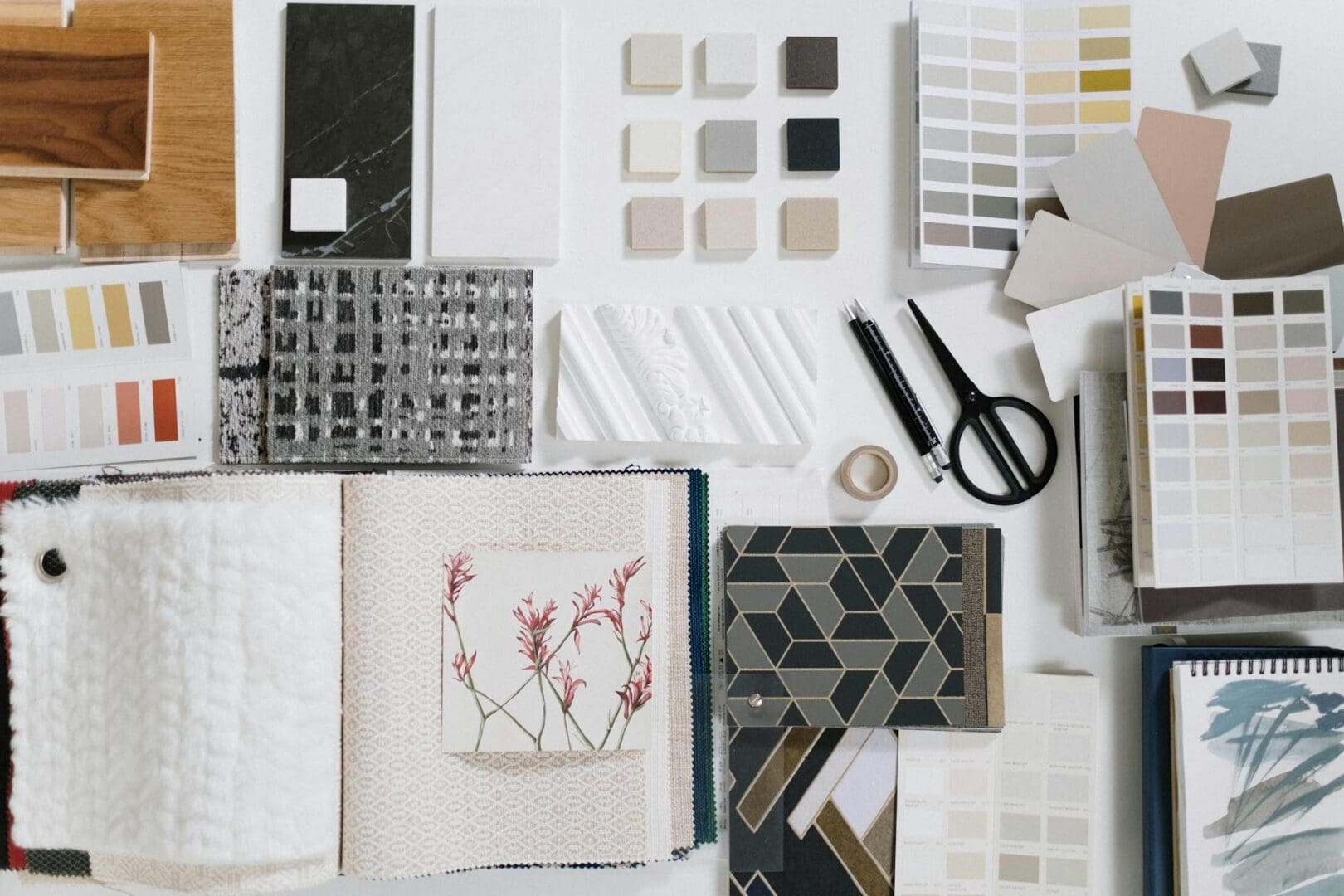
Now comes the fun part: seeing if everything actually works together. Arrange your paint samples, fabric swatches, and finish options side by side. You’re looking for a cohesive palette, typically built around three to five main colors plus one or two accent shades.
Request fabric samples from furniture retailers (most offer them free or for a few dollars). Get paint chips from the hardware store. Screenshot exact product images from websites and print them, or keep them in your digital board with the product names and prices noted. If you’re considering a $1,200 velvet accent chair versus a $400 linen option, seeing them in context with your other choices makes the decision clearer.
Pay attention to texture balance. A room with all smooth, sleek surfaces feels cold, while too many nubby textures can look cluttered. Mix materials: pair a leather sofa with linen pillows, or balance a glass coffee table with a chunky wool rug.
Test and Refine Your Selections
Live with your mood board for at least a week before making major purchases. Look at it in morning light and evening lamplight. Show it to someone whose taste you trust. Sleep on those bigger decisions, especially for anchor pieces like sofas ($800-3,000+) or dining tables ($600-2,500+).
If something feels off, it probably is. Maybe that bold wallpaper you loved online overwhelms the space when you see it next to your actual furniture selections. Or perhaps your “neutral” palette needs a pop of color to avoid looking flat. Adjust, swap, and rearrange until everything clicks.
Your mood board should make shopping easier, not harder. When you’re confident in your direction, you can shop with purpose, knowing exactly what you’re looking for in terms of style, color, and scale.
The best mood boards aren’t precious works of art—they’re working documents that help you spend your money wisely and create a room you’ll actually want to spend time in. Once yours feels right, you’re ready to start turning those images and swatches into a real space.
There’s nothing quite like settling in for movie night at home, but harsh overhead lighting can ruin the whole experience. Too bright, and you’re squinting at a washed-out screen. Too dark, and you’re fumbling for the remote or straining your eyes. Getting your living room lighting right for movie watching isn’t complicated—it just takes the […]
You probably reach for your phone to change the temperature, lock your doors, or check who’s at the front door—so why are you still walking across the room to flip light switches? Smart lighting transforms your living room from a space with basic on-off switches into one that adapts to movie nights, dinner parties, reading […]
A chandelier can transform your living room from ordinary to unforgettable, but choosing the wrong size or style can throw off your entire space. Unlike task lighting that quietly does its job, a chandelier makes a statement—which means getting it right matters. Whether you’re working with vaulted ceilings or a cozy 10×12 room, here’s how […]