You’re staring at your ceiling, trying to decide whether to install recessed lights or hang pendant fixtures. It’s a choice that affects everything from your daily tasks to your home’s ambiance, and the wrong decision can leave you with harsh shadows or that dreaded “dental office” vibe. The good news? Understanding a few key factors makes this choice surprisingly straightforward.
Both recessed and pendant lighting have their strengths, and sometimes the best solution involves using both. Let’s break down what actually matters when you’re making this decision.
Consider Your Ceiling Height and Room Size
This is where many homeowners trip up right out of the gate. Ceiling height often dictates what’s even practical.
Recessed lights work beautifully in rooms with low ceilings—anything under 8 feet. They sit flush with the ceiling, so you won’t bump your head or make the space feel cramped. They’re also ideal for smaller rooms where you want light without visual clutter. Think hallways, closets, bathrooms, or compact home offices.
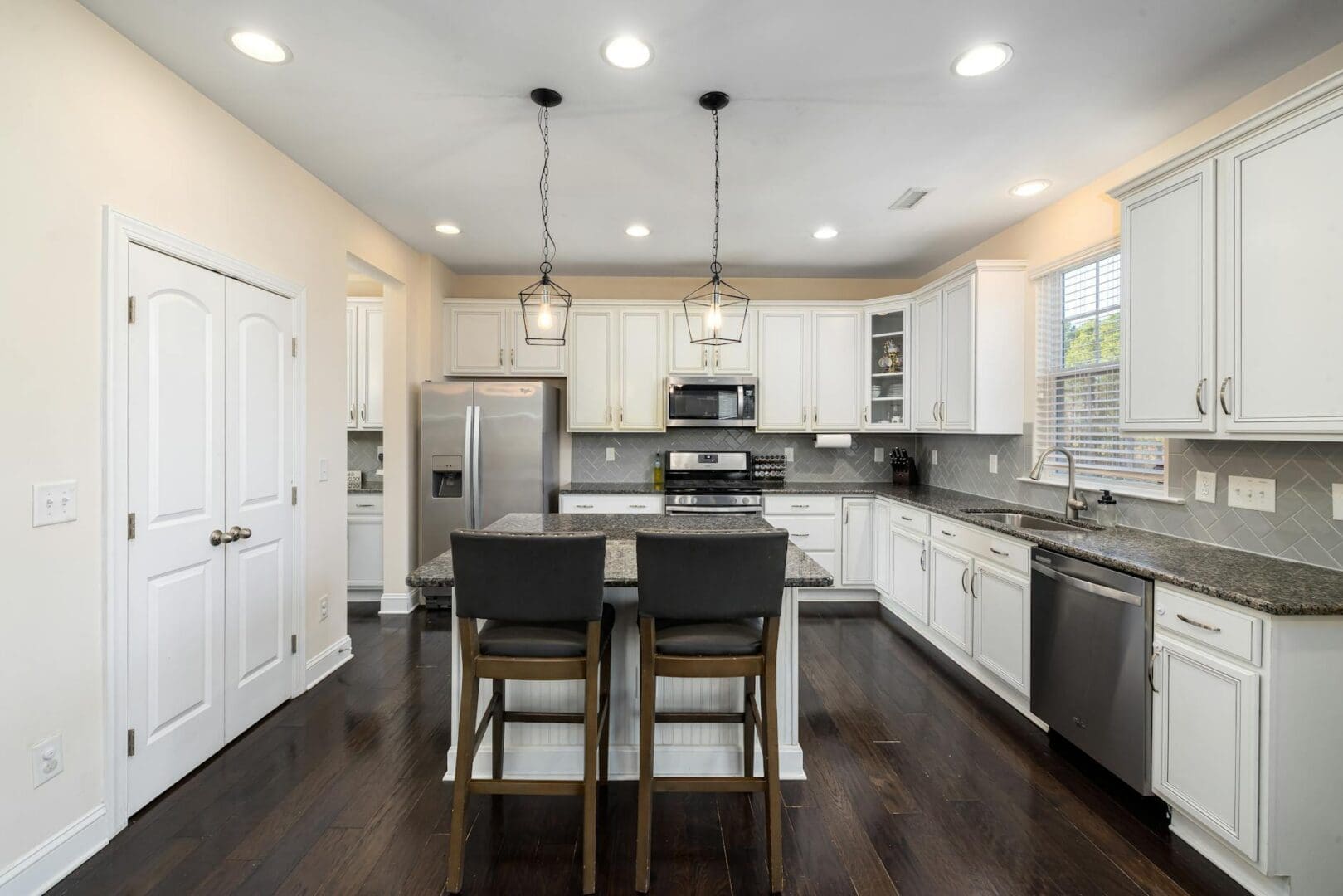
Pendant lights need breathing room. You’ll want at least 8-foot ceilings, and they really shine (pun intended) in spaces with 9-foot ceilings or higher. They work best in rooms where they can become a focal point—kitchens, dining rooms, entryways, and living rooms with vaulted ceilings. Over a kitchen island, hang pendants 30-36 inches above the counter. Over a dining table, aim for 30-34 inches above the surface.
Large, open-concept spaces often benefit from a combination: recessed lights for general ambient lighting with pendants highlighting specific zones like the dining area or kitchen island.
Think About Function and Light Quality
How you’ll actually use the space should drive this decision more than aesthetics (though we’ll get to that).
Recessed lighting provides broad, even illumination across a room. It’s the workhorse of lighting—reliable, unobtrusive, and excellent for general visibility. You’ll typically space them 4-6 feet apart for even coverage. They’re perfect for task-heavy areas like laundry rooms, garages, or anywhere you need consistent light without shadows. Budget around $150-$300 per light installed for quality LED recessed fixtures.
Pendant lights excel at focused, task-oriented lighting and creating ambiance. They direct light downward, making them perfect over workspaces, kitchen islands, reading nooks, or dining tables. The downside? They can create darker corners if used alone. A single statement pendant might run $100-$400 for budget-friendly options, $400-$800 for mid-range designer pieces, and upward of $1,000 for high-end or custom fixtures. Mini pendants typically cost $50-$200 each, and you’ll often need multiples.
Match Your Style and Design Goals
Here’s where personality enters the equation.
Recessed lights are the minimalist’s dream. They disappear into the architecture, making them ideal for modern, contemporary, or Scandinavian-inspired spaces. They’re also perfect when you want the focus on other design elements—artwork, architectural features, or bold furniture. If you’re selling your home soon, recessed lighting is the safer, more universally appealing choice.
Pendants are statement makers. They add personality, draw the eye upward, and can tie together your whole design scheme. From industrial metal shades to elegant glass globes to woven rattan, pendants come in endless styles. They’re essential for farmhouse kitchens, mid-century modern dining rooms, or any space where the lighting itself is part of the decor. Just remember: the more distinctive the pendant, the more committed you are to that style.
Factor in Installation and Flexibility
The practical stuff matters, especially if you’re renovating.
Recessed lights require cutting holes in your ceiling and often need accessible attic space above. Installation costs typically run $200-$300 per light including labor. Once installed, they’re permanent—you can’t easily move them if you rearrange furniture. However, they’re low-maintenance and don’t collect dust like hanging fixtures.
Pendants need electrical boxes but are more forgiving with placement. Installation is usually simpler and less invasive, running $75-$150 per fixture for labor. The big advantage? You can swap them out when you’re ready for a new look. Pendants do require occasional cleaning and can be tricky to change bulbs in if you’ve got high ceilings.
Most designers recommend layering both types when possible. Use recessed lights for your base layer of ambient lighting, then add pendants for task lighting and visual interest. This combination gives you flexibility, proper illumination, and style all at once. You’ll have the even coverage you need with the personality you want, creating a lighting scheme that’s both functional and beautiful.
There’s nothing quite like settling in for movie night at home, but harsh overhead lighting can ruin the whole experience. Too bright, and you’re squinting at a washed-out screen. Too dark, and you’re fumbling for the remote or straining your eyes. Getting your living room lighting right for movie watching isn’t complicated—it just takes the […]
You probably reach for your phone to change the temperature, lock your doors, or check who’s at the front door—so why are you still walking across the room to flip light switches? Smart lighting transforms your living room from a space with basic on-off switches into one that adapts to movie nights, dinner parties, reading […]
A chandelier can transform your living room from ordinary to unforgettable, but choosing the wrong size or style can throw off your entire space. Unlike task lighting that quietly does its job, a chandelier makes a statement—which means getting it right matters. Whether you’re working with vaulted ceilings or a cozy 10×12 room, here’s how […]