Staring at hundreds of paint swatches while trying to imagine how “Whispering Wheat” will look on your living room walls? You’re not alone. Choosing paint colors feels permanent and intimidating, especially for the room where you spend most of your time. But with a clear approach focused on how your space actually works, you can land on a color you’ll genuinely enjoy living with.
Start With Your Lighting Situation
Before you fall in love with any color, spend a day observing how natural light moves through your living room. North-facing rooms tend to cast cooler, bluer light that can make warm colors look muddy and cool colors feel stark. South-facing rooms get warm, golden light that enhances most colors beautifully. East-facing spaces enjoy morning brightness but can feel dim by evening, while west-facing rooms do the opposite.
Test paint samples on different walls and watch them at various times of day. That cozy gray you loved at noon might turn dingy purple at 7 PM. Your artificial lighting matters too. LED bulbs with warm color temperatures (2700-3000K) make whites and neutrals feel inviting, while cooler LEDs can make the same colors seem clinical. If you’re working with limited natural light, lighter paint colors will help reflect what light you do have, while darker shades work best in bright, sun-filled spaces.
Consider What’s Already in the Room
Your existing furniture, flooring, and architectural features aren’t going anywhere soon, so they need to play nicely with your wall color. Pull together samples of your current elements: fabric from your sofa, a picture of your hardwood or carpet, photos of your fireplace or built-ins.
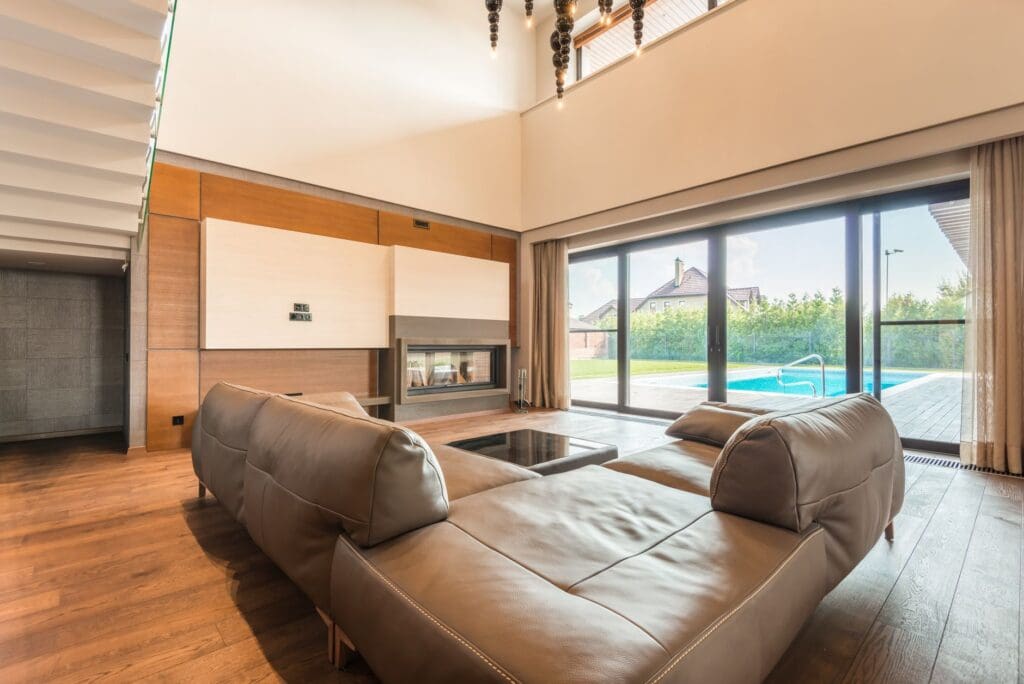
If you have warm-toned wood floors in honey or amber shades, cool grays can create an awkward clash. Instead, consider greiges (gray-beige hybrids), warm whites, or earthy neutrals. Cool-toned gray floors pair beautifully with true grays, soft blues, or crisp whites. Already have a bold sofa or colorful area rug you’re keeping? Choose a neutral wall color that lets those pieces shine rather than competing for attention.
Pay attention to undertones. Every “neutral” leans somewhere—toward pink, yellow, green, or blue. Hold paint chips next to your existing elements to spot any clashing undertones before you commit.
Match Your Color to Your Lifestyle
Think honestly about how you use your living room. A formal sitting room you use mainly in the evenings can handle moodier, dramatic colors like deep navy, charcoal, or forest green. These sophisticated shades create an intimate atmosphere perfect for conversation and relaxation, though you’ll want ample lighting to keep things from feeling cave-like.
If your living room is actually a high-traffic family hub where kids do homework and you binge Netflix, you might prefer something more forgiving and energizing. Warm neutrals, soft taupes, and gentle blue-grays hide scuffs better than stark white and maintain a calm but lively feel. Homes with pets and children often benefit from satin or eggshell finishes that wipe clean more easily than flat paint.
For open floor plans where the living room flows into the kitchen or dining area, ensure your paint choice works with adjacent spaces. You don’t need matching colors, but they should share similar undertones or intensity levels to create visual harmony.
Testing Before Committing
Those tiny paint chips lie. Always test larger samples before buying gallons of paint. Most paint brands sell sample sizes for $5-10 that cover about 16 square feet. Paint a 2×2 foot section on at least two different walls—one that receives direct light and one that doesn’t.
Live with your samples for several days. Notice how they look in morning light during your coffee, in afternoon sun, and under evening lamp light during dinner. Ask yourself if the color makes the room feel bigger or smaller, calmer or more energetic. Does it make you feel good when you walk in? That emotional response matters more than design trends.
If you’re torn between several options, remember that lighter colors generally make rooms feel more spacious and airy, while darker colors create coziness but can shrink the space visually. Medium tones offer a happy middle ground that adds personality without overwhelming.
Choosing the right paint color comes down to understanding your specific space and being honest about how you live in it. Take your time with testing, trust your gut response to colors throughout the day, and remember that paint is ultimately changeable. Once you’ve sorted out your perfect wall color, you’ll have the ideal backdrop for selecting furniture and decor that truly makes your living room feel like home.
There’s nothing quite like settling in for movie night at home, but harsh overhead lighting can ruin the whole experience. Too bright, and you’re squinting at a washed-out screen. Too dark, and you’re fumbling for the remote or straining your eyes. Getting your living room lighting right for movie watching isn’t complicated—it just takes the […]
You probably reach for your phone to change the temperature, lock your doors, or check who’s at the front door—so why are you still walking across the room to flip light switches? Smart lighting transforms your living room from a space with basic on-off switches into one that adapts to movie nights, dinner parties, reading […]
A chandelier can transform your living room from ordinary to unforgettable, but choosing the wrong size or style can throw off your entire space. Unlike task lighting that quietly does its job, a chandelier makes a statement—which means getting it right matters. Whether you’re working with vaulted ceilings or a cozy 10×12 room, here’s how […]