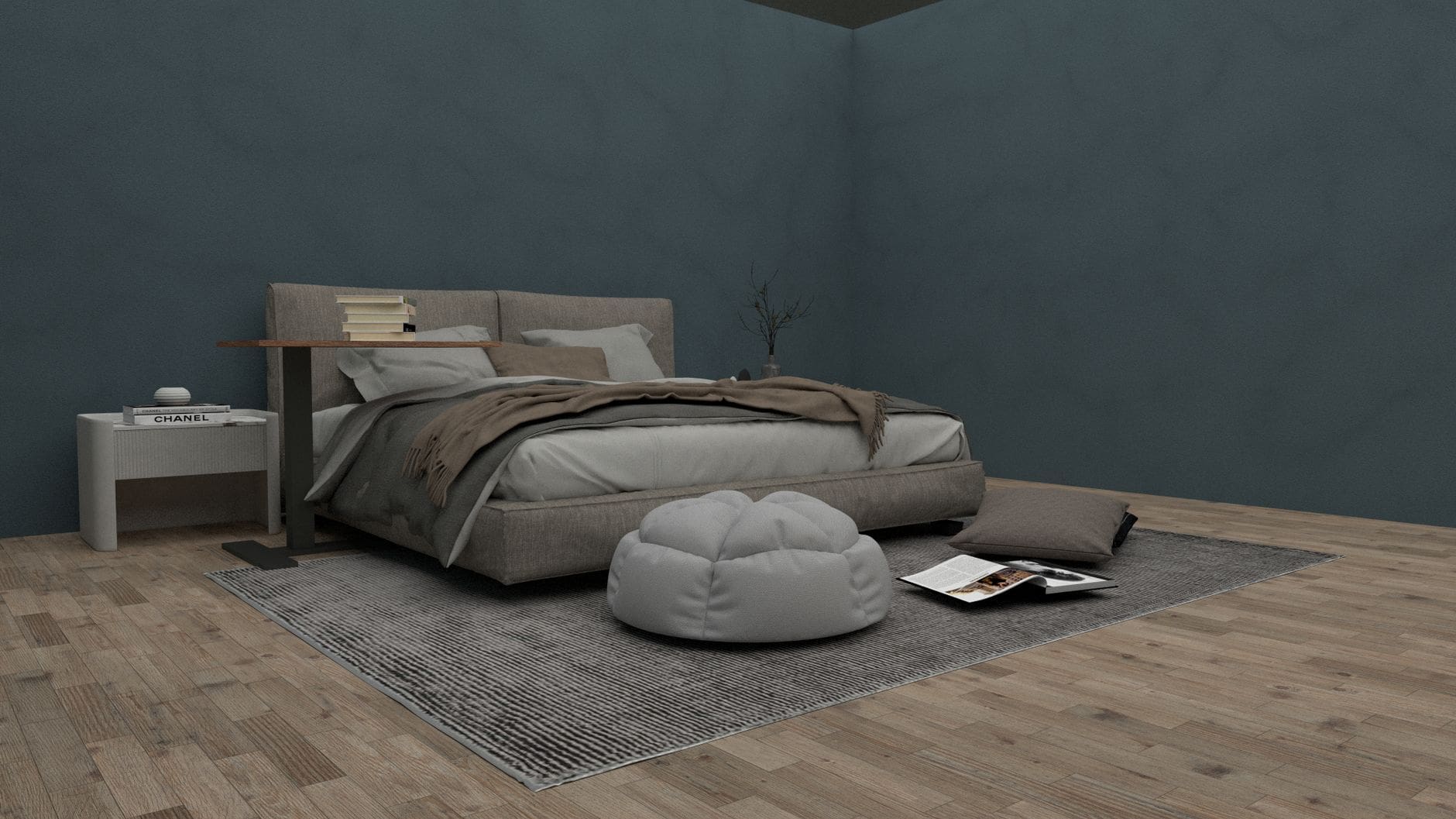
A rug under your bed can transform your bedroom from a collection of furniture into a cohesive, intentional space. But walk into any furniture store or browse online, and you’ll quickly realize that getting the sizing and placement right isn’t as obvious as it seems. Too small, and it looks like a bath mat that wandered in from the wrong room. Too large, and you’re wrestling with furniture placement and wasted square footage.
The good news? Once you understand a few key principles about size, material, and placement, choosing the right bedroom rug becomes straightforward.
Getting the Size Right
This is where most people either nail it or end up with a rug that looks awkwardly small. The golden rule: your rug should extend at least 18-24 inches beyond each side of your bed and at least two feet past the foot. This gives you a soft surface to step onto when you get out of bed and creates visual balance.
For a queen bed, an 8×10 rug is typically your starting point. It works beautifully in most standard bedrooms and provides that generous overhang you’re looking for. If you have a king bed or a more spacious room, consider a 9×12 rug. In smaller bedrooms with a full or twin bed, a 6×9 or even a 5×8 can work, though you’ll want to be more careful about placement.
Here’s what to avoid: rugs that only extend a few inches past the bed frame. They look like afterthoughts. If your budget or room size means you can’t get the ideal overhang, it’s often better to use runner rugs on each side of the bed rather than one undersized rug that tries to do it all.
Placement and Configuration
Most bedroom rugs follow one of two placement approaches. The most common is positioning the rug so it starts under the bottom third of your bed and extends out toward the foot and sides. This means your headboard and the top portion of your bed frame sit on bare floor, while the rest sits on the rug. This approach works well because it puts the rug exactly where you need it—where your feet land when you get up.
The second approach is sliding the entire bed, including the headboard, onto the rug. This creates a more luxurious, hotel-like feel and works best in larger bedrooms with 9×12 or bigger rugs. Your nightstands can sit on the rug too, which creates a unified furniture grouping.
Whichever approach you choose, center the rug under your bed. A rug that’s off-center will always look wrong, even if everything else is perfect.
Material Matters for Bedroom Rugs
Since you’ll be stepping on this rug barefoot every morning, texture and softness matter more in bedrooms than in high-traffic areas. Wool rugs are the gold standard—they’re soft, naturally stain-resistant, and incredibly durable. Expect to pay $400-$800 for a good quality 8×10 wool rug, with high-end options pushing well over $1,000.
Cotton rugs offer a more casual feel and come in at budget-friendly prices, typically $150-$400 for an 8×10. They’re washable, which is a huge plus, though they won’t have quite the plush feel of wool. Synthetic options like polypropylene or polyester have come a long way and can mimic the look of natural fibers while staying in the $200-$500 range for larger sizes.
Avoid materials that are too rough or scratchy underfoot—sisal, jute, and seagrass work beautifully in living rooms but feel uncomfortable when you’re padding around in bare feet. Save those for spaces where you’re usually wearing shoes or slippers.
Style and Pattern Choices
Your bedroom rug is one of the largest visual elements in the room, so it sets the tone. If you have a bold, patterned duvet or busy wallpaper, a solid or subtly textured rug keeps things from feeling chaotic. Conversely, if your bedding and walls are neutral, a patterned rug adds personality without overwhelming the space.
Low-pile rugs work best under beds because they don’t interfere with opening and closing drawers if you have under-bed storage, and they’re easier to vacuum. High-pile or shag rugs feel luxurious but can make it harder to move around and may trap more dust—something to consider if you have allergies.
Color-wise, think about what you want to emphasize. Lighter rugs make rooms feel larger and airier but show dirt more easily. Darker or medium-toned rugs are more forgiving and can anchor a room beautifully, especially if you have light-colored furniture.
Choosing a rug for under your bed doesn’t have to be complicated. Get the size right so it extends generously past the bed frame, pick a material that feels good on bare feet, and select a style that complements rather than competes with your bedding. When you nail these basics, you’ll have a bedroom that feels pulled together and genuinely comfortable—not just a place where furniture happens to sit in the same room.
For a queen bed, you’ll want a rug that’s at least 8×10 feet. This allows the rug to extend 18-24 inches beyond each side of the bed and at least two feet past the foot, giving you a soft landing when you get up. An 8×10 works for most queen setups, while a 9×12 offers even more coverage if your room is spacious.
Should an area rug go under all furniture in a bedroom?
In a bedroom, the rug should go under at least two-thirds of the bed, extending beyond the sides and foot. Nightstands can sit either on or off the rug, depending on your room size and rug dimensions. The goal is to create a cohesive look where the rug anchors the bed rather than floating awkwardly in the middle of the room.
What’s the best material for a rug under a bed?
Wool and cotton are excellent choices for bedroom rugs under the bed because they’re soft underfoot, durable, and easy to maintain. Wool naturally resists stains and feels luxurious when you step out of bed. For budget-friendly options, synthetic blends can mimic wool’s softness while being more affordable and easier to clean.
How far should a rug extend past the bed?
Ideally, your rug should extend 18-24 inches beyond each side of the bed and at least two feet past the foot of the bed. This creates a balanced look and ensures you’re stepping onto the rug rather than the floor when you get up. If space is tight, you can go slightly smaller, but aim for at least 12 inches of overhang on the sides.
Can you put a rug on carpet in a bedroom?
Yes, you can layer a rug over carpet in a bedroom, and it’s a great way to add visual interest or define the sleeping area. Choose a rug with a different texture or bolder pattern than your carpet, and use a non-slip rug pad designed for carpet-to-rug application. This prevents bunching and adds stability when you walk on it.
There’s nothing quite like settling in for movie night at home, but harsh overhead lighting can ruin the whole experience. Too bright, and you’re squinting at a washed-out screen. Too dark, and you’re fumbling for the remote or straining your eyes. Getting your living room lighting right for movie watching isn’t complicated—it just takes the […]
You probably reach for your phone to change the temperature, lock your doors, or check who’s at the front door—so why are you still walking across the room to flip light switches? Smart lighting transforms your living room from a space with basic on-off switches into one that adapts to movie nights, dinner parties, reading […]
A chandelier can transform your living room from ordinary to unforgettable, but choosing the wrong size or style can throw off your entire space. Unlike task lighting that quietly does its job, a chandelier makes a statement—which means getting it right matters. Whether you’re working with vaulted ceilings or a cozy 10×12 room, here’s how […]