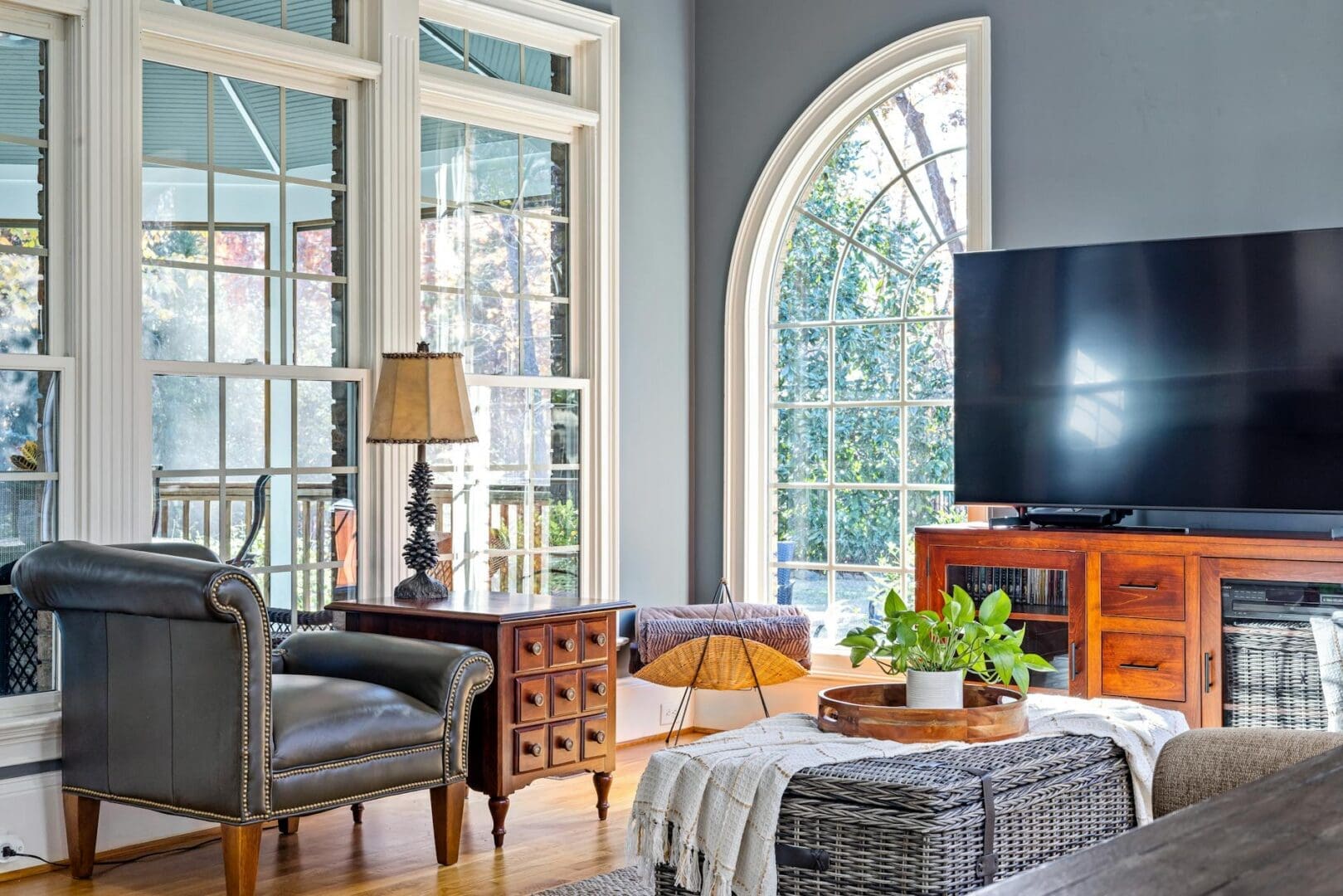
There’s nothing quite like settling in for movie night only to realize your neck is craned at an uncomfortable angle. If your TV feels too high or too low, the culprit is usually your TV stand. Getting the height right isn’t just about aesthetics—it directly impacts your viewing comfort and can mean the difference between a cozy evening and a stiff neck.
The Eye-Level Rule: Your Starting Point
The golden rule for TV stand height is simple: when you’re seated in your usual viewing spot, the center of your TV screen should be at or slightly below eye level. For most people sitting on a standard sofa, this puts the ideal viewing height around 42 inches from the floor to the center of the screen.
Here’s how to calculate the right stand height for your setup. First, measure from the floor to your eye level while seated—typically between 38-45 inches depending on your sofa height and your own height. Then measure your TV from bottom to center (half the screen height). Subtract the TV’s half-height from your seated eye level, and that’s your target stand height.
For example, if your seated eye level is 42 inches and you have a 50-inch TV (about 25 inches from bottom to center), you’d want a stand around 17 inches tall. Most standard TV stands range from 16 to 24 inches in height, with low-profile media consoles starting around 12 inches and taller entertainment centers reaching 30 inches or more.
Factoring in Your Seating and Room Layout
Your furniture arrangement plays a huge role in determining the right stand height. If you’re watching from a low sectional or floor cushions, you’ll want a lower stand—look for media consoles in the 12-18 inch range. These sleek, modern pieces keep everything at a comfortable viewing level without dominating the room.
Have a higher sofa or prefer watching from a dining area or bar stools? A taller stand in the 24-30 inch range makes more sense. Corner TV stands often come in slightly taller configurations too, which can work well in multi-use spaces where people view from different heights.
If your household watches TV from multiple spots—say, the sofa and a kitchen island—aim for a middle ground that works reasonably well from both positions. Generally, it’s better to err slightly lower rather than higher, as looking slightly down is more comfortable than craning your neck upward.
TV Size and Stand Proportions
Beyond viewing comfort, your TV stand height should create visual balance with your television. A 65-inch or larger TV on a very low 12-inch stand can look top-heavy and unstable, even if it’s technically secure. Conversely, a small 32-inch TV on a tall 28-inch stand looks awkward and defeats the purpose of a streamlined setup.
As a general guideline, larger TVs (55 inches and up) pair well with stands 18-24 inches tall, giving enough visual weight to support the screen. Smaller TVs under 43 inches can sit comfortably on stands ranging from 16-22 inches. The stand should also be at least a few inches wider than your TV on each side—both for stability and aesthetics.
Consider the stand’s overall footprint too. Taller stands often come with more vertical storage, which is great for keeping components and media organized but can make a small room feel crowded. Lower, wider consoles create a more open feel and work beautifully in contemporary spaces.
Testing Before You Commit
Before you buy, do a simple test at home. Stack books, boxes, or sturdy cushions to your calculated height and place your TV on top (safely, with someone helping). Sit in your usual spot and watch for a few minutes. Does it feel natural? Can you relax your neck completely? If you’re straining or slouching to compensate, adjust the height up or down.
Budget-friendly TV stands start around $100-200 and work fine for basic setups, though they may have limited storage. Mid-range options ($200-500) offer better construction, more storage configurations, and finishes that coordinate with your existing furniture. Splurge-worthy pieces ($500+) feature solid wood construction, sophisticated cable management, and designs that double as statement furniture.
Getting your TV stand height right transforms your viewing experience from tolerable to truly comfortable. Take the time to measure your space and seating, consider how your household actually uses the room, and don’t be afraid to test different heights before making your final choice. Your neck will thank you.
There’s nothing quite like settling in for movie night at home, but harsh overhead lighting can ruin the whole experience. Too bright, and you’re squinting at a washed-out screen. Too dark, and you’re fumbling for the remote or straining your eyes. Getting your living room lighting right for movie watching isn’t complicated—it just takes the […]
You probably reach for your phone to change the temperature, lock your doors, or check who’s at the front door—so why are you still walking across the room to flip light switches? Smart lighting transforms your living room from a space with basic on-off switches into one that adapts to movie nights, dinner parties, reading […]
A chandelier can transform your living room from ordinary to unforgettable, but choosing the wrong size or style can throw off your entire space. Unlike task lighting that quietly does its job, a chandelier makes a statement—which means getting it right matters. Whether you’re working with vaulted ceilings or a cozy 10×12 room, here’s how […]