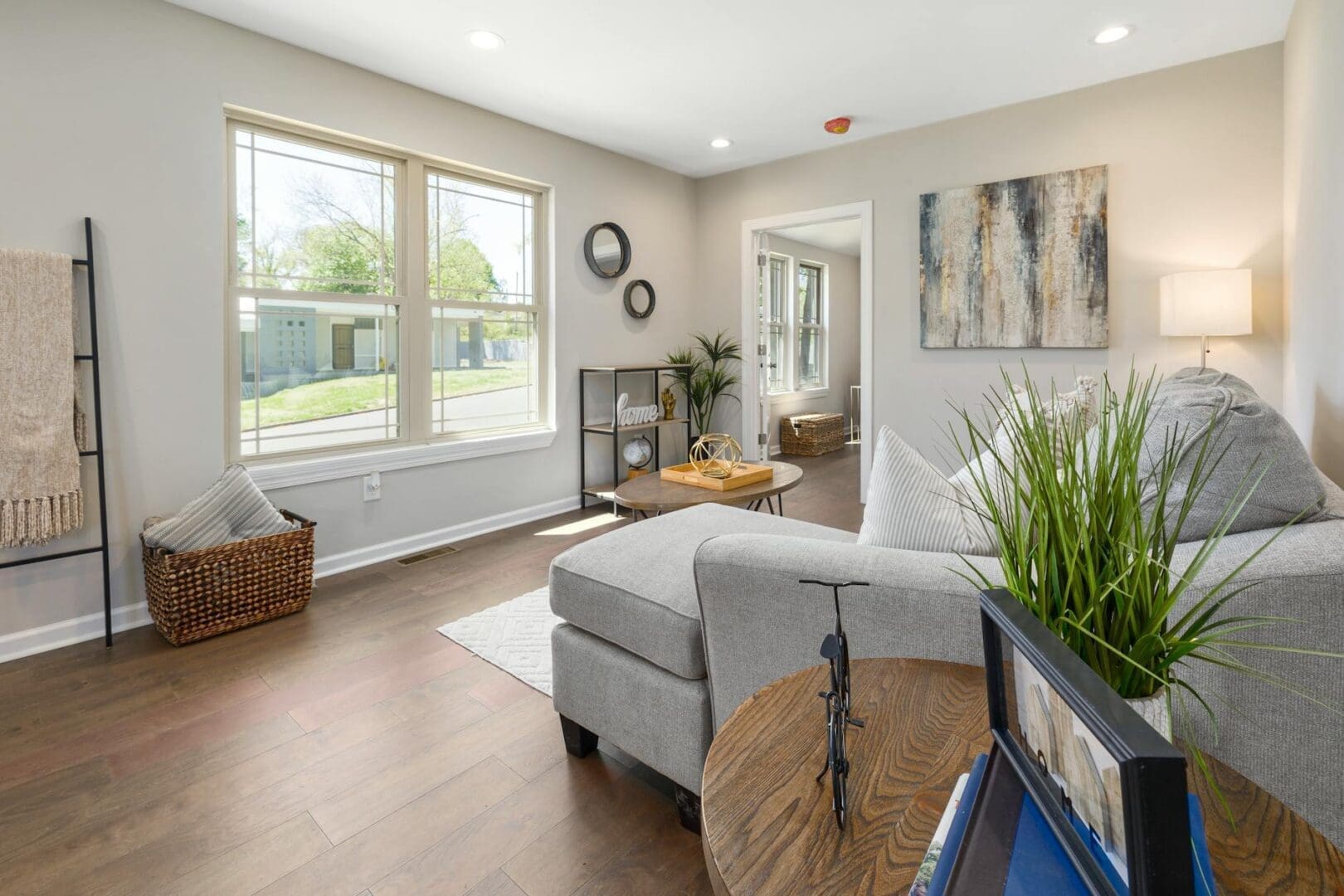
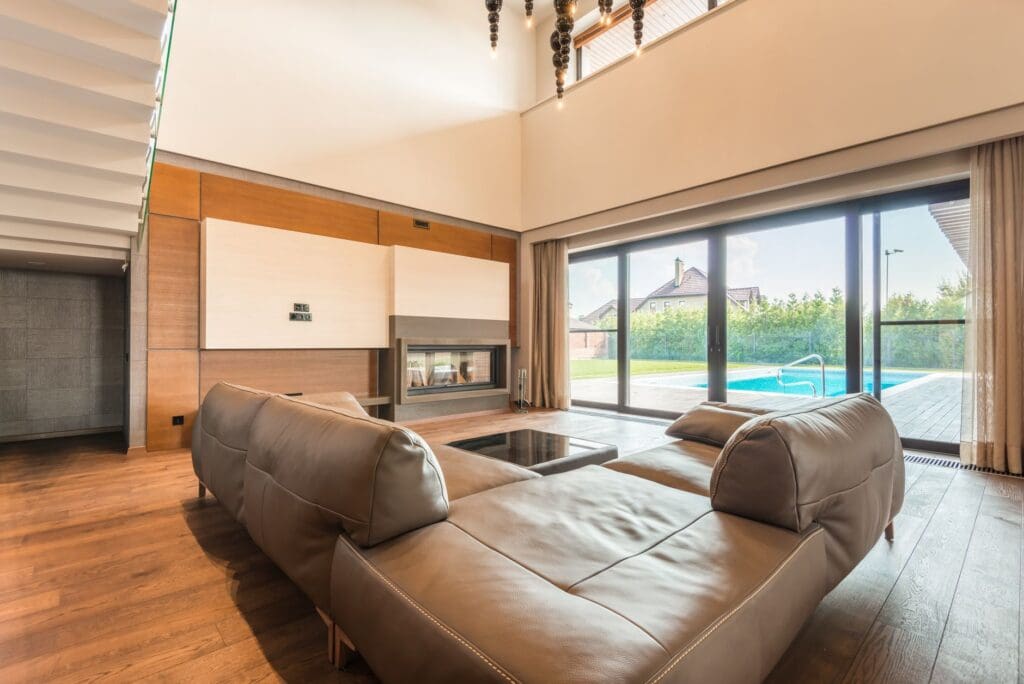
That awkward empty corner in your living room isn’t a design problem—it’s an opportunity. Whether you’re dealing with a narrow nook by the window or a spacious corner begging for attention, the right approach can turn dead space into one of the most inviting spots in your home. The key is choosing pieces that balance function with visual interest while making the corner feel intentional rather than like an afterthought.
Anchor the Space with the Right Furniture
Start by selecting an anchor piece that fits both the corner’s dimensions and your lifestyle needs. A corner accent chair creates an instant reading nook, especially when paired with a small side table. Look for chairs with a footprint around 30-35 inches to avoid overwhelming smaller corners, or go up to 40 inches if you have generous space to work with.
Corner shelving units are perfect for tight spots where traditional bookcases won’t fit. Ladder-style shelves (typically $80-$200) work beautifully in modern spaces, while built-in-look corner étagères ($250-$600) add architectural interest. If you’re working with a larger corner, consider a small loveseat angled at 45 degrees—this creates conversation-friendly seating while breaking up the boxy feel of the room.
For corners near windows, a small writing desk transforms unused space into a functional workspace. Compact corner desks range from $150 for basic models to $500+ for pieces with drawers and refined finishes.
Layer in Lighting for Ambiance and Function
Corners tend to be the darkest spots in any room, so proper lighting is essential. Floor lamps are the most straightforward solution—arc lamps ($120-$400) are especially effective because they extend light outward from the corner, creating a cozy glow without requiring multiple fixtures.
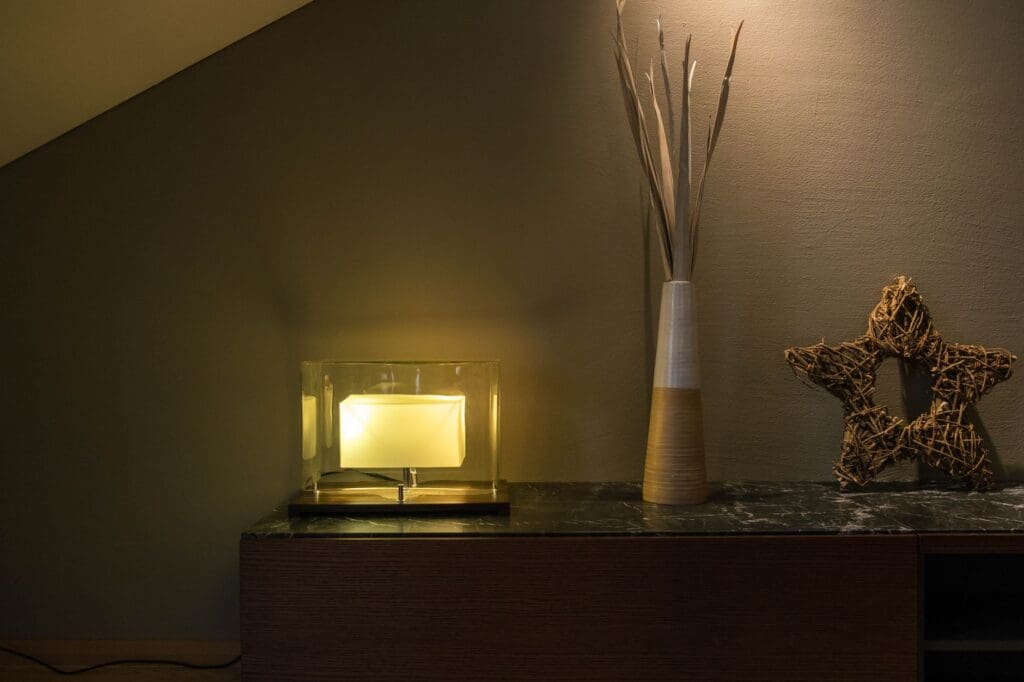
If your corner includes a chair or desk, add a table lamp on the adjacent side table for task lighting. Choose lamps that are proportional to your furniture: a 24-26 inch lamp works well beside a standard accent chair, while petite 18-20 inch lamps suit smaller spaces.
Don’t overlook wall sconces if you’re willing to install them. They free up floor and table space while adding a designer touch. Budget around $60-$150 per sconce for quality options that include dimming capabilities.
Add Vertical Interest and Texture
Once your foundational pieces are in place, think vertically. Corners naturally draw the eye upward, so take advantage of that height. A tall potted plant—like a fiddle leaf fig or monstera in a 10-12 inch pot ($40-$100)—fills space beautifully without cluttering the floor.
Wall art arranged in a corner configuration creates visual flow. Try hanging two or three pieces that follow the corner’s lines, or install a single statement piece on one wall with a complementary textile or mirror on the adjacent wall. This layering technique makes the corner feel curated rather than empty.
Texture matters too. A chunky knit throw draped over your corner chair, a jute or wool rug defining the space, or woven baskets tucked under a console table add depth and warmth. These elements make corners feel inviting rather than utilitarian.
Create Purpose with Thoughtful Styling
The most successful corner designs have a clear purpose. A reading corner needs good lighting, a comfortable chair, and a small table for books and coffee. A plant corner might feature a trio of plants at varying heights with a small watering can as both tool and decor.
Keep styling proportional to your space. In a small corner, three well-chosen items (chair, lamp, plant) might be perfect. Larger corners can handle more: a chair, side table, floor lamp, art, and several accessories without feeling crowded. Edit ruthlessly—overcrowding a corner makes it look cluttered rather than styled.
Your living room corners have more potential than you might think. By selecting appropriately sized furniture, adding layered lighting, and styling with intention, you transform overlooked spaces into functional, beautiful areas that enhance your entire room. The corner that once felt awkward becomes a favorite spot—and a testament to your design skills.
There’s nothing quite like settling in for movie night at home, but harsh overhead lighting can ruin the whole experience. Too bright, and you’re squinting at a washed-out screen. Too dark, and you’re fumbling for the remote or straining your eyes. Getting your living room lighting right for movie watching isn’t complicated—it just takes the […]
You probably reach for your phone to change the temperature, lock your doors, or check who’s at the front door—so why are you still walking across the room to flip light switches? Smart lighting transforms your living room from a space with basic on-off switches into one that adapts to movie nights, dinner parties, reading […]
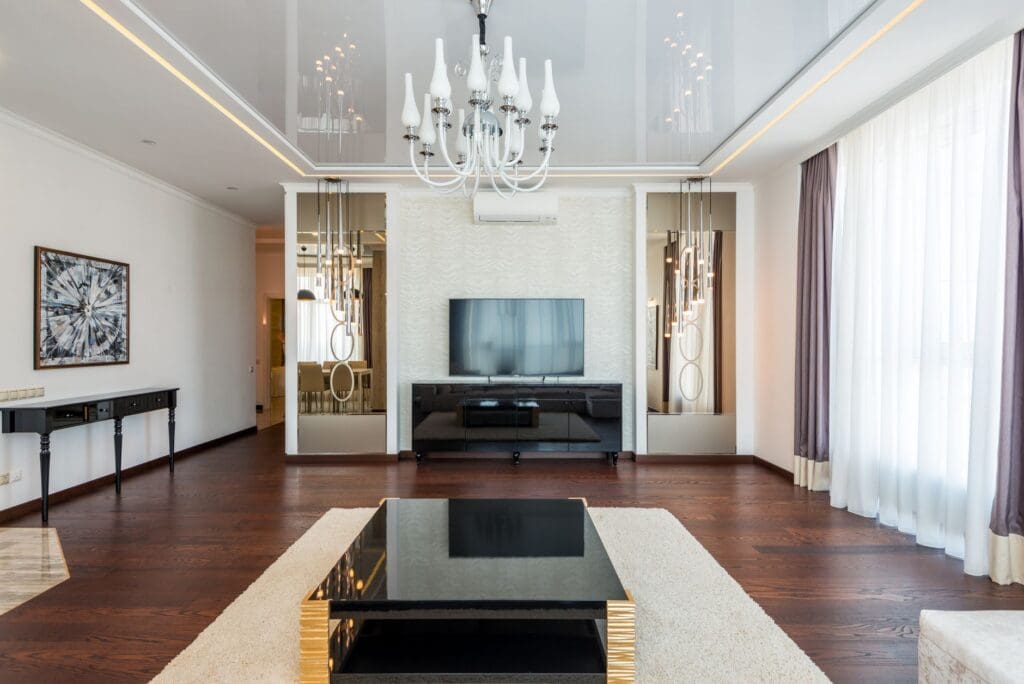
A chandelier can transform your living room from ordinary to unforgettable, but choosing the wrong size or style can throw off your entire space. Unlike task lighting that quietly does its job, a chandelier makes a statement—which means getting it right matters. Whether you’re working with vaulted ceilings or a cozy 10×12 room, here’s how […]