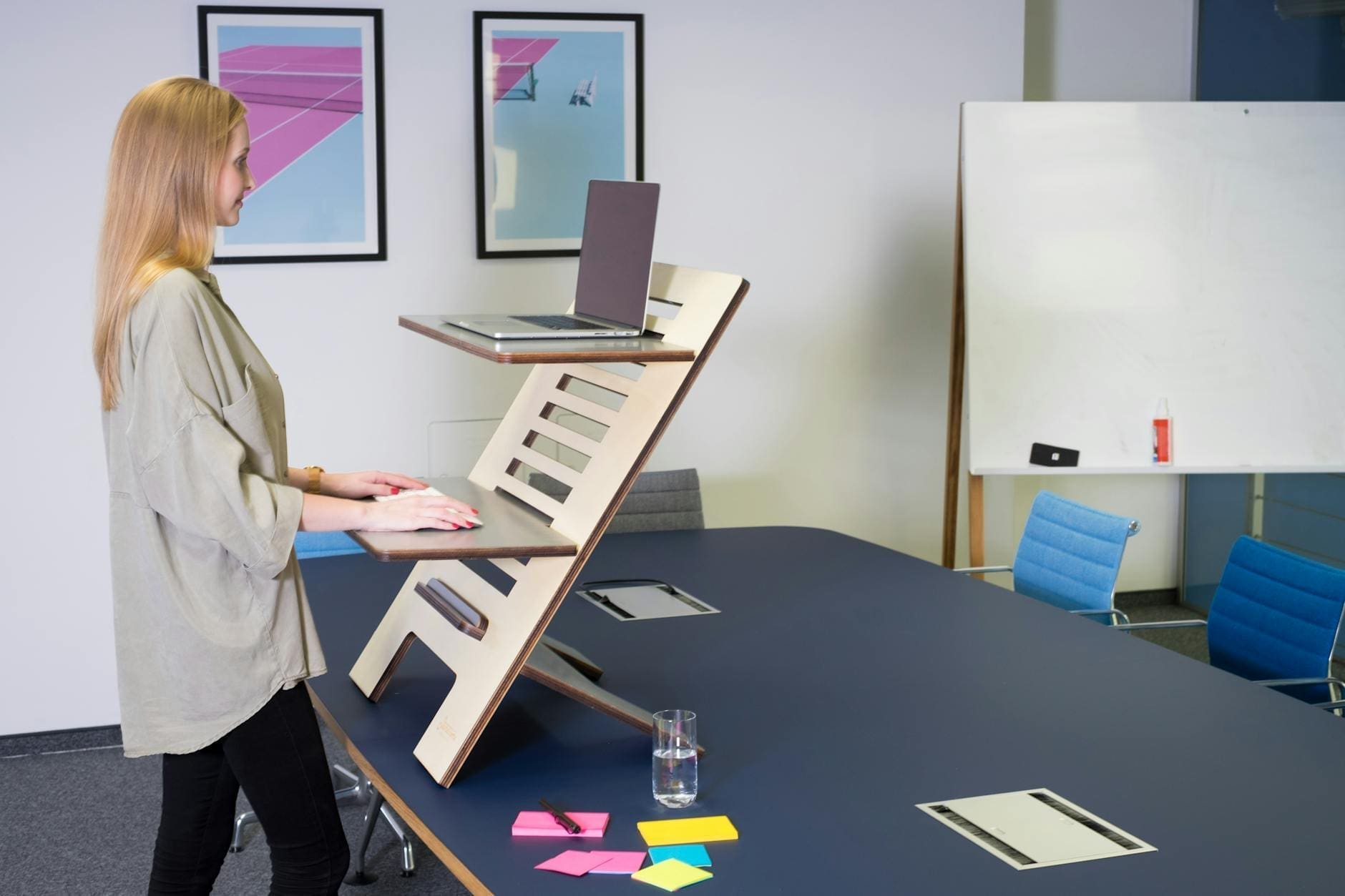
If you’ve been dealing with back pain, afternoon energy slumps, or just feeling restless sitting all day, a standing desk might be exactly what your home office needs. The right one can genuinely improve how you feel during and after work, but with options ranging from $200 manual cranks to $1,500 programmable powerhouses, it’s worth knowing what actually matters before you buy.
Manual vs. Electric: Which Lifting Mechanism Makes Sense?
This is your first big decision, and it comes down to how often you’ll actually adjust the height. Manual standing desks use a hand crank to raise and lower the surface. They’re budget-friendly (typically $200-$400) and never need an outlet, but cranking takes 30-40 seconds of effort each time. If you plan to switch positions multiple times a day, that gets old fast.
Electric standing desks use a motor to adjust height at the push of a button. They cost more ($400-$1,500), but the convenience means you’ll actually use the sit-stand feature regularly. Most come with programmable presets, so you can save your perfect sitting and standing heights and switch between them in seconds. For most people who work from home full-time, the electric mechanism pays for itself in consistent use.
Size and Weight Capacity: Getting the Dimensions Right
Standing desks typically come in widths from 48 to 72 inches. A 48-inch desk works for a laptop and a monitor, but feels cramped with dual monitors. Most people find 60 inches the sweet spot—enough room for two monitors, a laptop, and some workspace without overwhelming a home office.
Depth matters too. Standard desks run 24-30 inches deep. If you use large monitors or want space for notebooks and supplies in front of your keyboard, go for 30 inches. The shallow 24-inch desks work fine for minimal setups but can feel restrictive.
Weight capacity is crucial for stability. Look for desks rated for at least 150 pounds if you have multiple monitors and equipment. Budget models sometimes max out at 100 pounds, which sounds like plenty until you add a monitor arm, CPU, and everything else—then you’re dealing with wobble when you type.
Stability and Build Quality: What Separates Good from Frustrating
A wobbly standing desk ruins the whole experience. The shakiness when typing at standing height drives people back to sitting and staying there. Here’s what creates stability:
Dual-motor systems are steadier than single-motor options, especially at maximum height
Steel frames outlast aluminum and resist flex better
Three-stage legs (which telescope in three sections) reach higher but can wobble more than two-stage legs
Desks with crossbar supports between the legs stay solid even when fully extended
The stability issue becomes most noticeable above 42 inches in height. If you’re over 6 feet tall and need the desk at maximum extension, spending more for a dual-motor system with solid engineering makes a real difference. Budget desks ($200-$400) often struggle here, while mid-range options ($500-$800) typically nail the stability without requiring a splurge.
Desktop Material and Features Worth Considering
Desktop surfaces range from laminate particleboard to solid wood. Laminate tops (usually paired with budget and mid-range frames) resist scratches and spills well. Bamboo and hardwood tops cost more but look sharper and feel more substantial—expect to add $100-$300 for premium materials.
Useful features that actually enhance daily use include cable management grommets (game-changers for keeping cords tidy), programmable height presets (essential for shared desks or if you want sitting and standing positions dialed in exactly), and collision detection (stops the desk if it hits something while lowering, protecting pets and furniture).
Skip the gimmicks like built-in USB ports and wireless charging pads—they add cost and become obsolete quickly. A simple power strip mounted underneath does the job better.
Your standing desk should match how you actually work. If you know you’ll adjust height multiple times daily, electric is worth every penny. If you’re working with limited space, prioritize a stable 60-inch model over a shaky 72-inch desk. And if you’re over six feet tall, test the stability at full height or invest in a dual-motor system from the start. The right standing desk stops being furniture you think about and becomes the foundation of a workspace that actually supports how you want to feel while working.
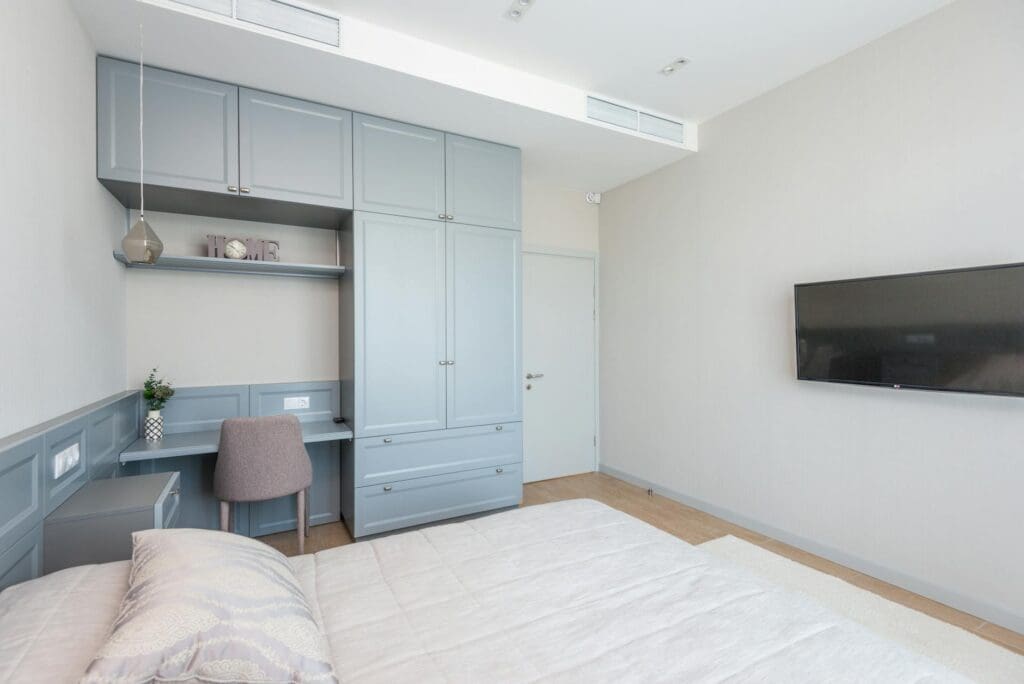
Your home office deserves better than a jumble of mismatched shelves and that filing cabinet you’ve been meaning to replace. A storage wall unit can transform your workspace from chaotic to composed, giving you dedicated spots for books, supplies, tech equipment, and all those things that currently live in piles. The trick is finding one […]
If you’re drowning in papers, sticky notes, and file folders that haven’t been touched in months, you’re not alone. The promise of a paper-free office isn’t just about going digital—it’s about choosing furniture and storage solutions that support a cleaner, more organized way of working. The right setup makes it easier to maintain that clutter-free […]
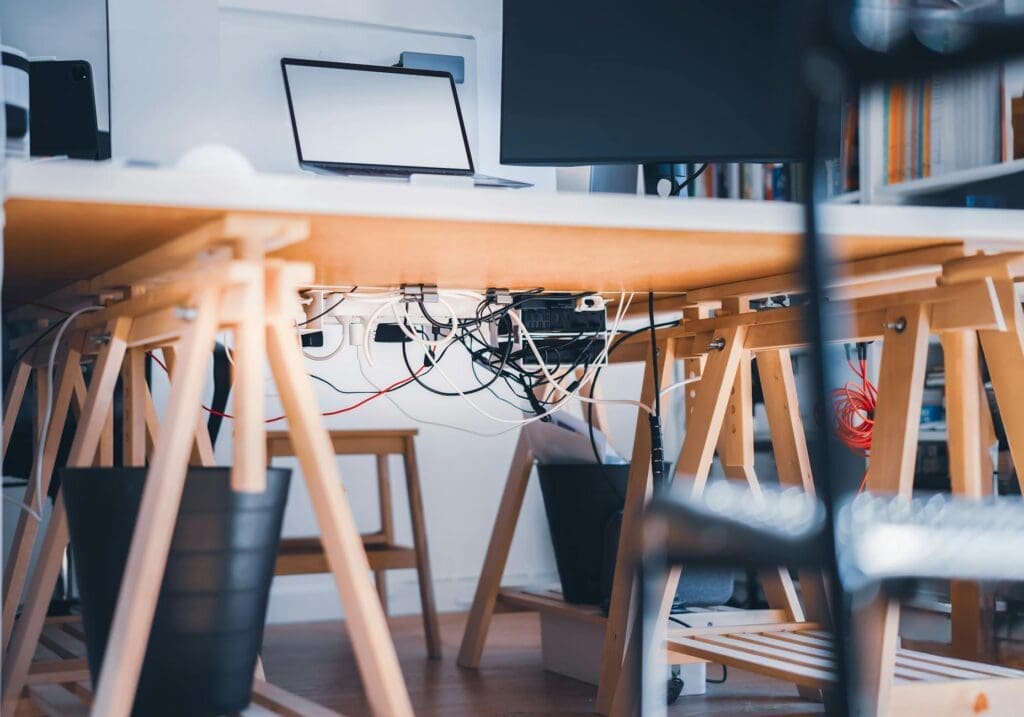
If your home office desk looks like a tech octopus exploded underneath it, you’re not alone. Between computer monitors, charging cables, desk lamps, and who knows what else, the average desk has at least six cables competing for space. The good news? A few smart cable management solutions can transform that tangled mess into an […]