If you’re drowning in papers, sticky notes, and file folders that haven’t been touched in months, you’re not alone. The promise of a paper-free office isn’t just about going digital—it’s about choosing furniture and storage solutions that support a cleaner, more organized way of working. The right setup makes it easier to maintain that clutter-free workspace you’ve been dreaming about.
Choosing the Right Desk for Minimal Paper Storage
When you’re going paper-free, your desk needs change completely. You don’t need those massive desks with built-in file drawers and hutches anymore. Instead, look for streamlined writing desks or compact computer desks with just enough surface area for your laptop, a monitor, and maybe a notebook.
Desks in the 42-48 inch range work beautifully for most paper-free setups. Consider styles with a single slim drawer for pens and chargers rather than deep filing drawers. Wall-mounted floating desks are particularly smart here—they give you work surface without any storage temptation underneath. Budget options start around $150-200, while solid wood or standing desk configurations run $400-800.
Standing desks with minimal storage actually help reinforce paper-free habits. When you can’t hide things in drawers, you’re less likely to accumulate them in the first place.
Smart Storage Solutions for the Essentials
Going paper-free doesn’t mean going storage-free. You’ll still have items that need a home—just fewer of them. The key is choosing furniture that accommodates what you actually need without providing space for clutter to creep back in.
A small bookshelf or credenza works well for storing reference books, supplies, and a few decorative items. Look for pieces with 2-3 shelves rather than floor-to-ceiling units. Open shelving keeps you honest—you can see exactly what you have, which discourages over-accumulation.
Consider these storage pieces for a paper-free office:
Narrow console tables with a single drawer for office supplies
Small credenzas (under 48 inches) with cabinet storage for equipment like printers and routers
Wall-mounted shelving systems that you can configure as your needs change
Rolling file carts with 2-3 drawers for the handful of papers you must keep
That last point matters: even in a paper-free office, you’ll have some documents. Tax records, warranties, a few sentimental items. A single small file cart in the $50-150 range handles this without enabling paper hoarding.
Furniture That Supports Digital Organization
The furniture that works best for paper-free offices actively supports your digital workflow. Cable management becomes crucial when your workspace revolves around devices rather than documents.
Look for desks with built-in cable grommets or channels that keep charging cables and monitor cords tidy. Many modern desks include cable management trays underneath—these aren’t just aesthetic, they’re functional for a workspace built around electronics.
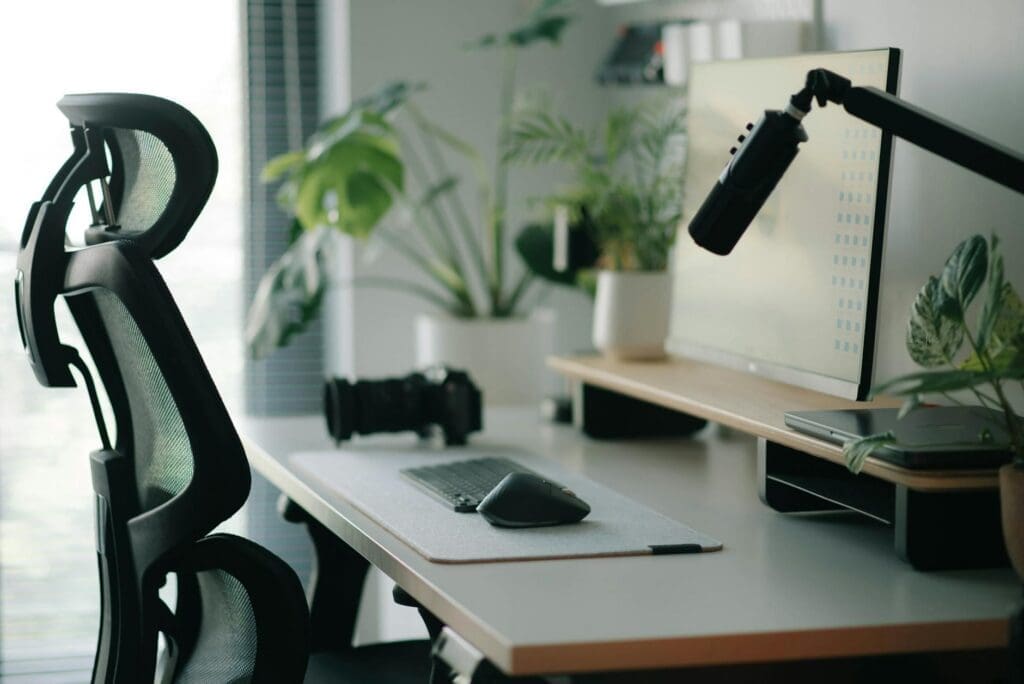
Monitor arms or stands elevate your screen to eye level while freeing up desk space you’d otherwise lose to a monitor base. This matters more when you’re not spreading papers around—suddenly that clear desk space becomes your primary work surface. Quality monitor arms run $80-200 and make a noticeable difference in how spacious your desk feels.
Task lighting also shifts in importance. Without papers to read, you need lighting positioned for screen work—articulating desk lamps that you can point away from your monitor help reduce glare while keeping your space well-lit.
Creating Zones Without Filing Cabinets
Traditional offices had clear zones: the filing area, the work surface, the reference section. Your paper-free office needs zones too, just different ones.
A small side table or mobile cart can serve as your “active projects” zone for items currently in use. This keeps your main desk clear while giving you a designated spot for anything you’re working on this week. Mobile carts in the $60-120 range give you flexibility to reconfigure your space as projects change.
Consider an upholstered chair or small loveseat if space allows—this becomes your reading and thinking zone, separate from your computer work area. Even in a paper-free office, you need space to step away from screens.
The furniture you choose for a paper-free office should feel lighter and more open than traditional office furniture. You’re not just eliminating paper—you’re creating a workspace that feels less cluttered and more intentional. Start with a streamlined desk, add only the storage you actually need, and choose pieces that support your digital workflow. Your office will not only look cleaner, it’ll be easier to keep that way.
Your home office deserves better than a jumble of mismatched shelves and that filing cabinet you’ve been meaning to replace. A storage wall unit can transform your workspace from chaotic to composed, giving you dedicated spots for books, supplies, tech equipment, and all those things that currently live in piles. The trick is finding one […]
Your back is telling you it’s time. After months of working from home in a dining chair or that hand-me-down seat from college, you’re ready to invest in a proper office chair. The good news? You don’t need to spend $800 on a Herman Miller to get real ergonomic support. The under-$300 market is packed […]
If you’re spending hours at your desk every day, your office chair matters more than you might think. The two most popular materials—mesh and leather—each have devoted fans, but they deliver very different sitting experiences. Let’s break down what actually matters so you can choose the one that fits your workday, your space, and your […]