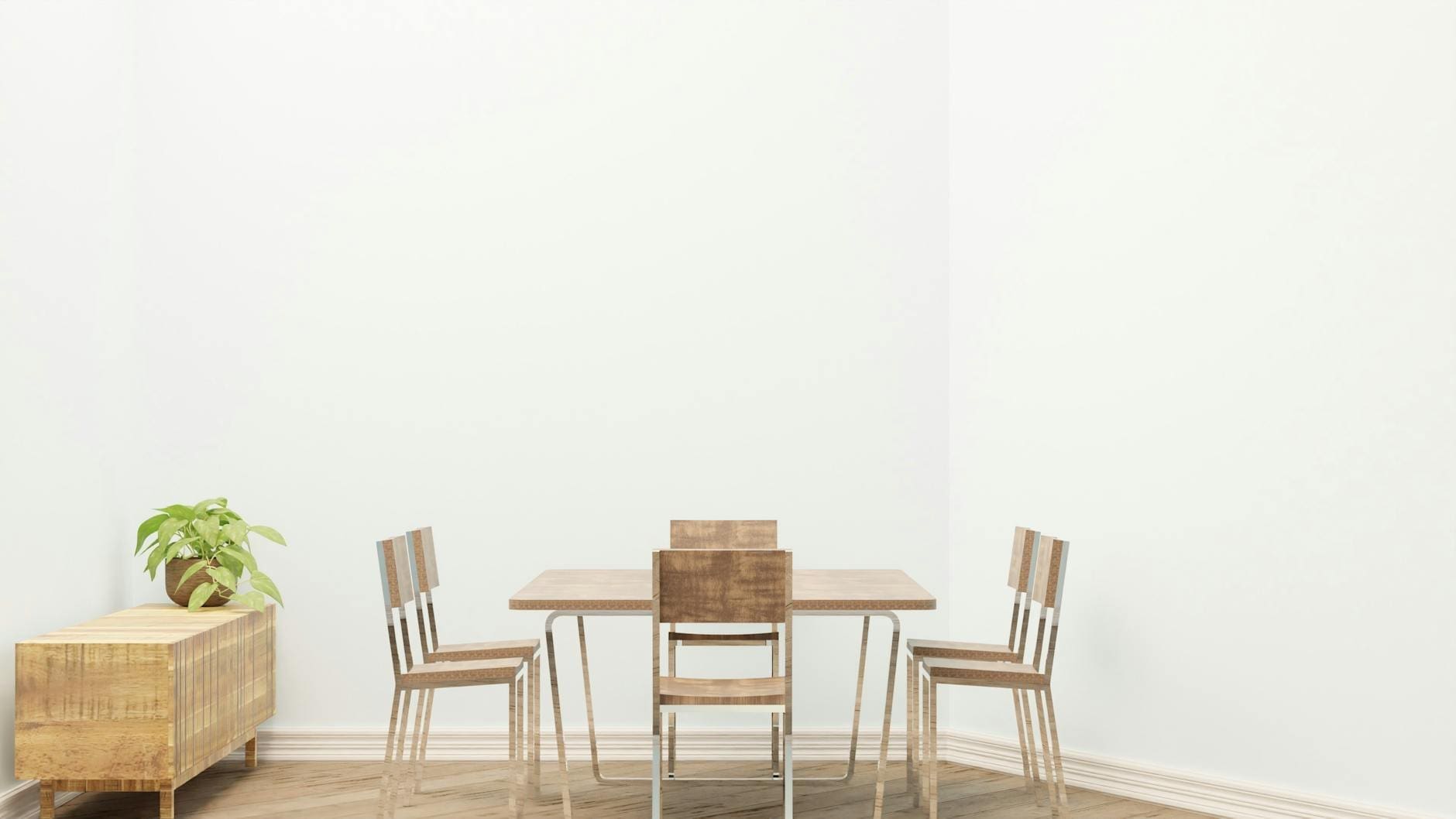
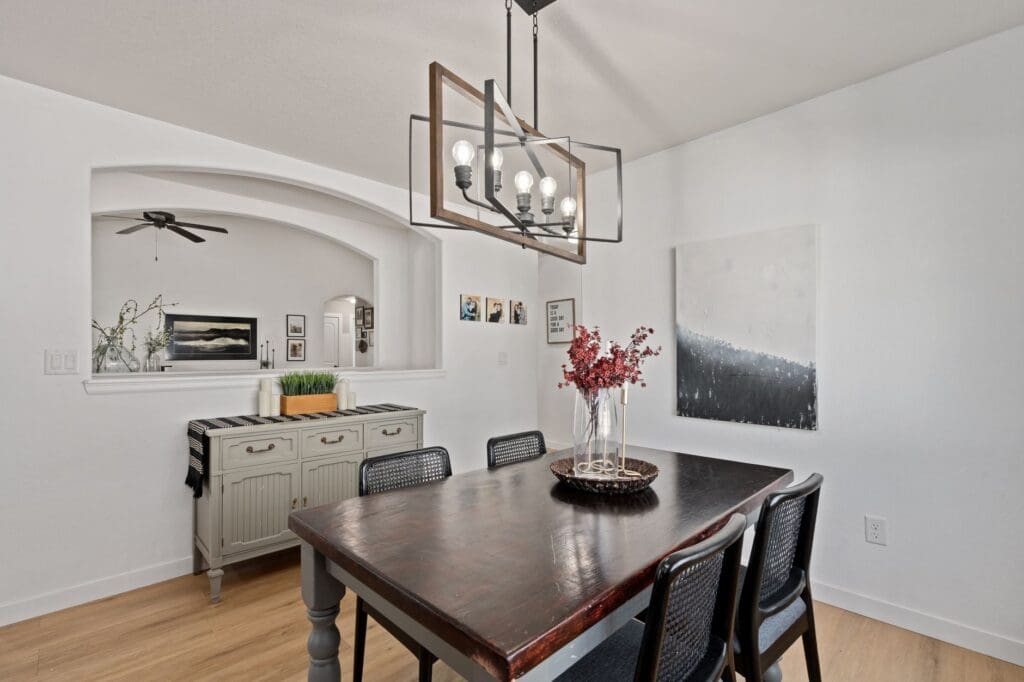
When your dining room feels more like a closet than a gathering space, every square foot matters. You want a spot where friends can actually sit down for dinner without feeling like sardines, but you’re working with what feels like impossible dimensions. The good news? Small dining rooms can be incredibly functional and stylish when you choose the right pieces and arrange them thoughtfully.
Choose the Right Table Shape and Size
Your table is the centerpiece, and picking the wrong one can make a small room feel cramped before you even add chairs. Round tables are your best friend in tight quarters—they naturally encourage conversation and eliminate sharp corners that eat up valuable circulation space. A 36-inch round table seats four comfortably and works beautifully in rooms as small as 9×9 feet.
If you’re drawn to rectangular tables, look for narrow options around 30 inches wide instead of the standard 36-42 inches. This seemingly small difference gives you crucial breathing room around the perimeter. Drop-leaf and extendable tables offer flexibility—keep them compact for everyday meals and expand when hosting. Budget options start around $200-300, while solid wood extendable tables run $600-1,200, and heirloom-quality pieces reach $2,000+.
Wall-mounted drop-leaf tables are game-changers for truly tiny spaces. They fold completely flat when not in use, giving you a functional dining surface that essentially disappears. Pair one with folding chairs stored elsewhere, and you’ve just created 15-20 square feet of usable floor space.
Get Strategic with Seating
Chairs take up more room than you think, especially when you account for the space needed to pull them out. Standard dining chairs require about 24 inches from the table edge to the wall behind them, but you really need 36 inches for comfortable movement.
Benches along one side of your table free up visual space and often tuck completely under the table when not in use. A bench against the wall can seat three people in the footprint where two chairs would normally go. Mix a bench with two chairs on the opposite side for the best of both worlds.
Armless chairs and those with open backs keep sight lines clear, making the room feel more spacious. Transparent acrylic chairs practically vanish, though they typically cost $150-300 each. If your style leans traditional, look for chairs with slim profiles and legs rather than bulky upholstered options. Stackable or folding chairs stored in a nearby closet give you flexibility for larger gatherings without permanent space commitment.
Smart Layout and Placement Strategies
Floating your table in the center of the room isn’t always the best move in a small space. Consider pushing it against a wall or into a corner for everyday use—you can always pull it out when entertaining. This immediately opens up traffic flow and makes the room feel less congested.
If your dining room connects to the kitchen or living area, embrace the open concept. A round pedestal table positioned at the boundary between spaces defines the dining zone without blocking movement or views. Corner banquettes with a small table create an efficient breakfast nook setup that maximizes seating in minimal square footage.
Leave at least 36 inches of clearance for major walkways. If your space can’t accommodate this, your table is probably too large. Measure twice, buy once—bring painter’s tape and mark out your proposed table dimensions on the floor before purchasing.
Multi-Functional Pieces and Storage Solutions
Small dining rooms need furniture that works overtime. Tables with built-in storage shelves or drawers keep placemats, napkins, and candles within reach without requiring a separate sideboard. Bench seating with lift-top storage hides table linens, serving pieces, or even seasonal decor.
If you lack a separate dining room, consider table styles that serve double duty. Console tables that extend into full dining tables work perfectly behind sofas. Compact bar-height tables can function as workspace during the day and dining surfaces at night. The key is choosing pieces that transition seamlessly between uses without requiring major furniture rearranging.
Wall-mounted shelving above a bench or along an empty wall provides display space for dishes or decor without consuming floor space. Narrow sideboards (12-15 inches deep) offer storage and serving surfaces while maintaining traffic flow—standard 18-inch depth sideboards often overwhelm small rooms.
Your small dining room can absolutely work for everyday meals and dinner parties. Focus on appropriately scaled furniture, flexible pieces that adapt to your needs, and smart placement that maximizes every inch. When you shop, bring your room measurements and don’t fall in love with anything until you’ve confirmed it fits your space with proper clearance. The right pieces will make your dining room feel intentional and inviting, not squeezed and uncomfortable.
You’ve measured your dining room, you know you need more storage, and now you’re staring at dozens of sideboards wondering: doors or open shelves? It’s not just an aesthetic choice—it affects how you’ll actually use this piece every single day. Let’s walk through what really matters so you can pick the sideboard that works for […]
Did You Know? The Declaration of Independence Was Likely Written in a Windsor Chair As America celebrates 250 years of independence, it’s worth looking at one of the quieter witnesses to that history: the humble Windsor chair. Thomas Jefferson is said to have drafted the Declaration of Independence while seated in an unusual revolving Windsor […]
Shopping for a dining table when you have a family of six means you need something that works for Tuesday night homework sessions, weekend pancake breakfasts, and holiday dinners with grandparents—all without taking over your entire dining room. The right table makes family life easier. The wrong one? You’ll feel it every single day. Let’s […]