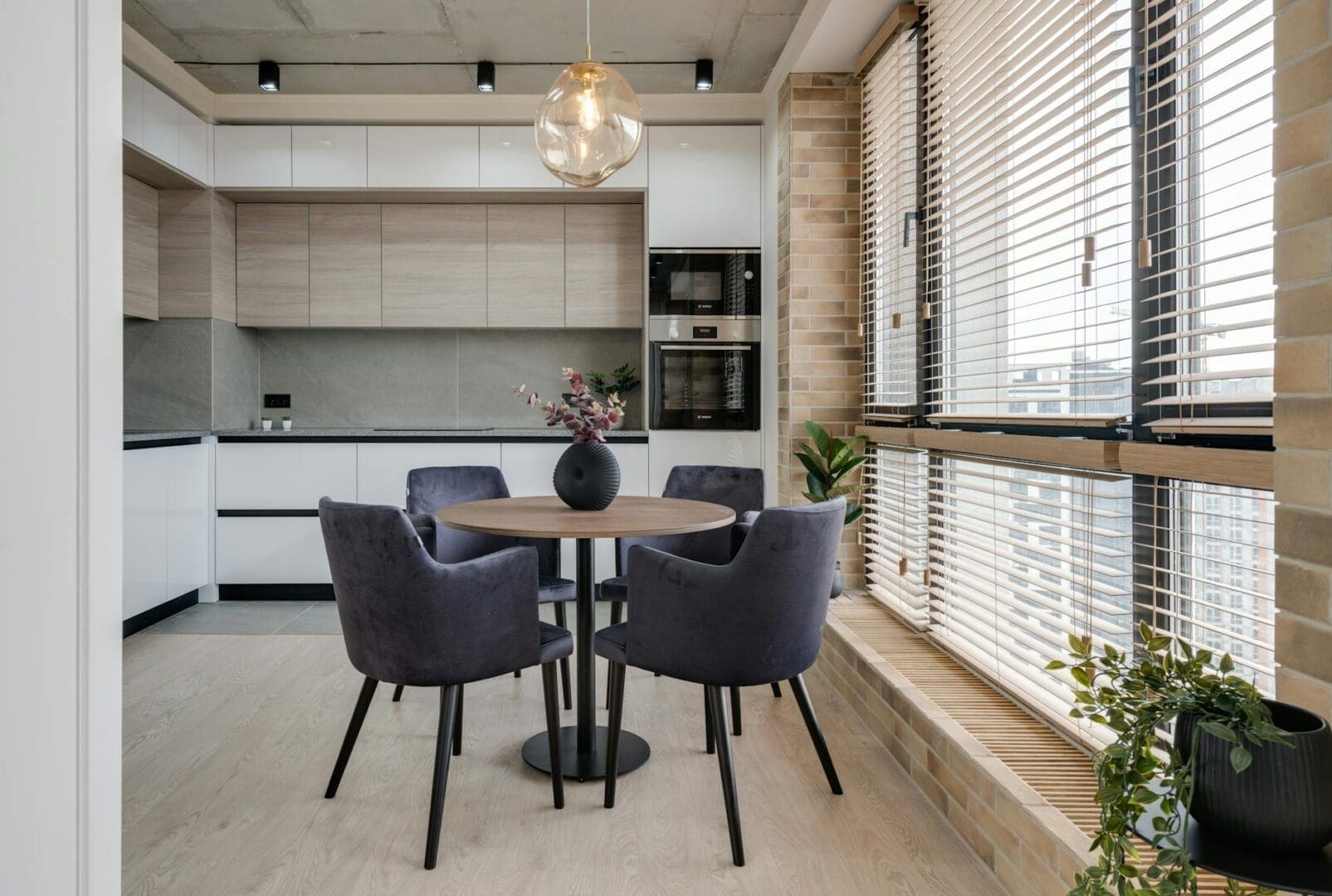
If you’re working with a compact dining area, you’ve probably already discovered that square and rectangular tables can feel like furniture Tetris. Round dining tables are often the smartest solution for small spaces—they eliminate sharp corners that eat up valuable square footage, create better traffic flow, and somehow make a room feel more spacious even when it’s not. Let’s walk through exactly what to look for so you can find a round table that fits your space and your life.
Getting the Size Right (This Matters More Than You Think)
The difference between a table that works and one that makes you squeeze past chairs every day often comes down to just a few inches. For small spaces, round tables typically range from 36 to 48 inches in diameter. A 36-inch table comfortably seats two to three people and works beautifully in studio apartments or breakfast nooks. If you’re looking at 42 to 48 inches, you can seat four people without anyone playing footsie under the table.
Here’s the magic number to remember: you need at least 36 inches of clearance between your table edge and the wall or nearest furniture. This gives people enough room to pull out chairs and walk behind seated diners. If your space is really tight, consider a pedestal base instead of four legs—you’ll gain precious knee room and won’t bang your shins when you sit down.
Materials That Make Sense in Tight Quarters
In a small space, your dining table isn’t just a place to eat—it’s probably your work-from-home desk, game night headquarters, and meal prep surface rolled into one. The material you choose needs to handle that multitasking life.
Solid wood: Durable and timeless, but expect to pay $400-$1,200 depending on wood type. Lighter woods like oak or ash can make a small room feel more open than darker walnut or mahogany.
Glass tops: These create visual space since you can see through them, typically running $300-$800. Look for tempered glass that’s at least ½-inch thick, and keep microfiber cloths handy for fingerprints.
Veneer or engineered wood: Budget-friendly at $200-$500, these can look surprisingly high-end and resist scratches better than solid wood. Just avoid placing hot dishes directly on the surface.
Marble or stone: Beautiful and substantial ($600-$2,000+), but heavy. Make sure your floors can handle it, and be prepared for maintenance—marble stains easily.
Smart Features for Space-Challenged Homes
The best small-space dining tables work a little harder than their full-sized cousins. Drop-leaf round tables can shrink down when it’s just you, then expand when friends come over. Some models go from a two-person 30-inch circle to a four-person 42-inch table in seconds.
Storage-savvy tables with built-in shelves underneath give you a place to stash placemats, napkins, or that collection of candles you keep meaning to use. And if you’re really tight on space, consider a counter-height round table (around 36 inches tall)—paired with backless stools that tuck completely underneath, your dining area practically disappears when not in use.
Style Choices That Won’t Overwhelm Your Space
Round tables have an inherent softness that works in small spaces, but the style details matter. Pedestal bases with a single center column keep the look clean and uncluttered—perfect for minimalist or modern spaces. They typically feel less bulky than four-legged designs.
For traditional or farmhouse styles, turned legs can add character without visual weight if you choose lighter finishes. Mid-century modern tables with tapered legs create an airy, elevated look that helps small rooms breathe. Glass tops on metal bases practically vanish, making them ideal for truly tiny spaces where every visual inch counts.
Pay attention to the base-to-top ratio too. An oversized pedestal base on a small top looks bottom-heavy and awkward. The base should be proportional—generally no more than two-thirds the diameter of your tabletop.
A round dining table can transform how a small space functions and feels. Measure your room carefully, think about how you’ll actually use the table, and don’t be afraid to go slightly smaller than you think you need. The right round table will make your compact dining area feel intentional and inviting rather than cramped. Once you know your ideal size and style, you’re ready to find the perfect piece that’ll anchor your space for years to come.
Hallways are the overlooked workhorses of our homes—they connect every room, but rarely get the storage love they deserve. A well-chosen sideboard transforms that narrow stretch of wall into genuinely useful space without making your hallway feel like an obstacle course. The trick is finding one that fits the proportions of the room while actually […]
Dark kitchens—whether they feature rich espresso cabinets, moody charcoal walls, or black granite countertops—create incredible drama and sophistication. But they also present a unique challenge when it comes to choosing bar stools. Pick the wrong ones, and your beautiful space can feel cave-like or visually heavy. Choose wisely, and your stools become the bright spot […]
Your kitchen peninsula is prime real estate—it’s where morning coffee happens, where kids do homework while you’re prepping dinner, and where guests naturally gather during parties. Getting the right bar stools makes all the difference between a peninsula that feels welcoming and one that sits empty. But with so many options for height, style, and […]