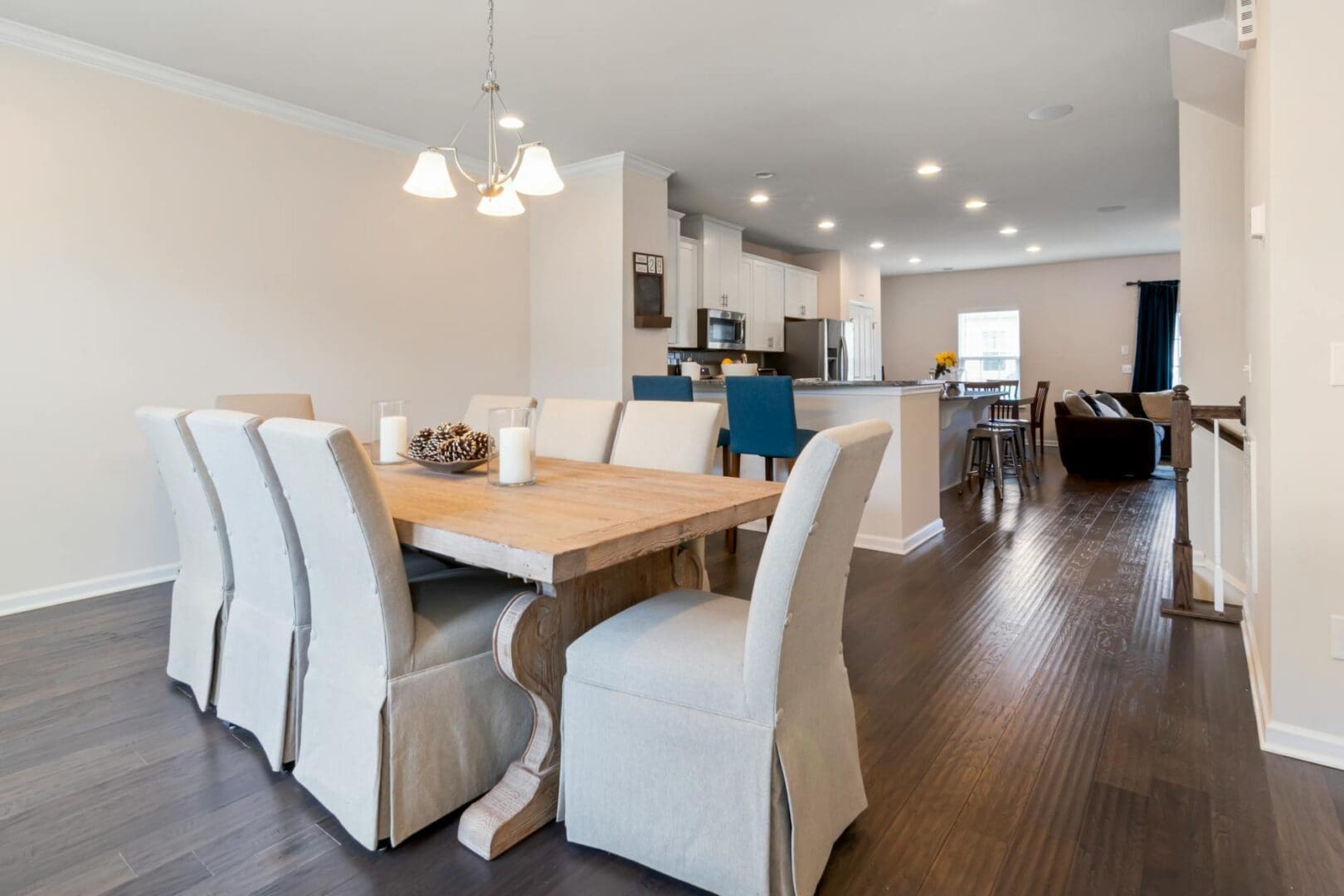
Designing a dining area in an open floor plan can feel like trying to define a room that doesn’t technically exist. Without walls to naturally separate your eating space from the kitchen or living room, you might be wondering how to make your dining area feel intentional rather than like a table floating in the middle of everything. The good news? With the right furniture choices and a few strategic design moves, you can create a dining zone that feels both distinct and beautifully integrated with the rest of your space.
Define Your Dining Zone Without Walls
The first challenge in an open concept space is creating visual boundaries. Area rugs are your best friend here—a well-chosen rug anchors your dining table and tells everyone exactly where the dining room “begins.” Look for a rug that extends at least 24 inches beyond the edges of your table on all sides, so chairs can pull out comfortably while staying on the rug. Budget-friendly synthetic rugs start around $150-$300 for standard dining sizes, while wool or natural fiber options run $400-$1,200 and hold up better to spills and daily wear.
Lighting also does heavy lifting when it comes to zone definition. A statement chandelier or pendant light positioned directly over your dining table creates an invisible ceiling for your dining area. This focal point draws the eye and makes the space feel separate, even when it’s physically connected to your kitchen or living area. Pendant lights hung 30-36 inches above the table surface provide the right scale and proportion.
Choose Dining Furniture That Complements Adjacent Spaces
In an open floor plan, your dining furniture needs to coordinate with what’s happening in the neighboring kitchen and living areas—but that doesn’t mean everything has to match. Consider the visual weight and style of your existing pieces. If your living room features a substantial leather sectional, a delicate glass dining table might look out of place. Instead, opt for a solid wood table with similar heft and presence.
Table shape matters more in open concepts than in traditional dining rooms. Round or oval tables promote better flow and conversation when your dining area is visible from multiple angles. Rectangular tables work well when positioned parallel to kitchen islands, creating a natural linear flow. Extendable tables ($400-$2,000 depending on quality) give you flexibility for entertaining without permanently claiming extra square footage.
For seating, consider a mix of chairs and a upholstered bench on one side. Benches tuck neatly under the table when not in use, making the space feel less cluttered from the living room view. They also reinforce the casual, flowing nature of open concept living.
Use Strategic Room Dividers and Furniture Placement
Sometimes you need a bit more separation than a rug can provide. Low-profile room dividers—think open shelving units, console tables, or even a credenza positioned perpendicular to the dining table—can subtly mark territory without blocking sightlines or natural light. A 36-40 inch high bookshelf stocked with decorative objects and a few books creates separation while maintaining the open, airy feeling that makes these floor plans so appealing.
If your dining area sits between the kitchen and living room, consider using a sideboard or buffet as a buffer zone. This piece provides practical storage for table linens and servingware while creating a visual break. Position it against the wall nearest the kitchen for easy access during meals. Mid-range buffets run $500-$1,200, while designer pieces can exceed $2,000.
Create Cohesion with Color and Materials
Your open concept dining area should feel like part of a larger whole, not a random section of floor with a table on it. Pull accent colors from your living room or kitchen into your dining chairs or table linens. If your kitchen features brass hardware and fixtures, echo that finish in your dining room light fixture or cabinet pulls on a sideboard.
Material repetition also builds cohesion. Wood tones don’t need to match exactly, but they should be in the same family—all warm tones or all cool tones. If your kitchen island has a marble countertop, you might incorporate marble into a dining table top or a decorative tray on your buffet. These subtle connections make the entire space feel thoughtfully designed rather than haphazardly arranged.
The beauty of an open concept dining room is its flexibility and the way it keeps everyone connected during meals. By using furniture and design elements to gently define your dining zone while maintaining visual flow with adjacent spaces, you create a dining area that feels purposeful and inviting. Start with one or two key pieces that anchor the space—a great rug and the right table—and build from there.
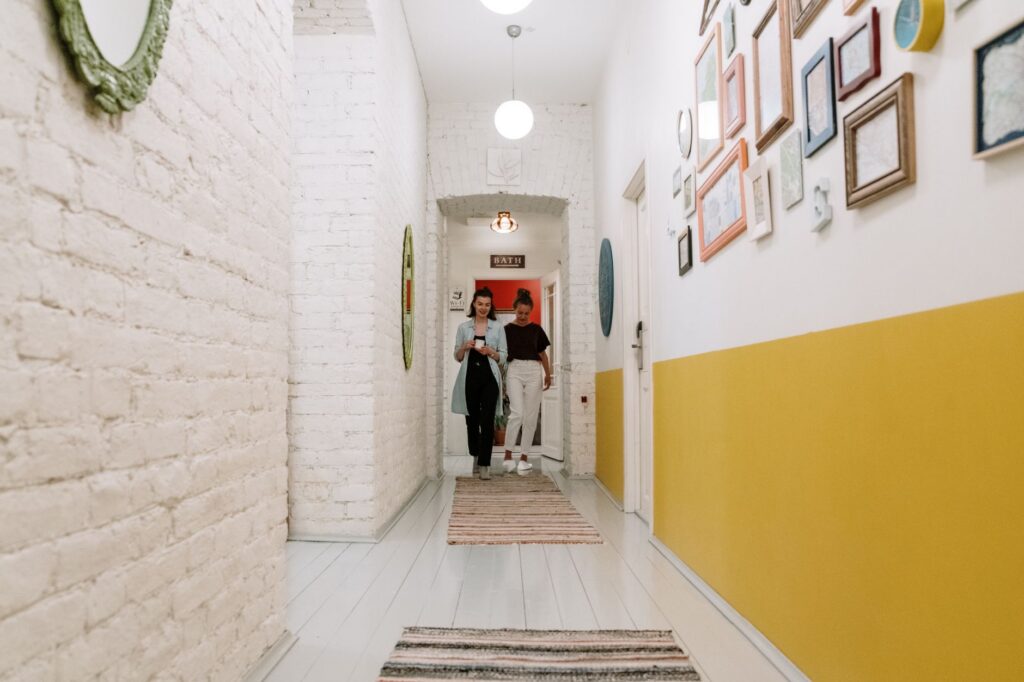
Hallways are the overlooked workhorses of our homes—they connect every room, but rarely get the storage love they deserve. A well-chosen sideboard transforms that narrow stretch of wall into genuinely useful space without making your hallway feel like an obstacle course. The trick is finding one that fits the proportions of the room while actually […]
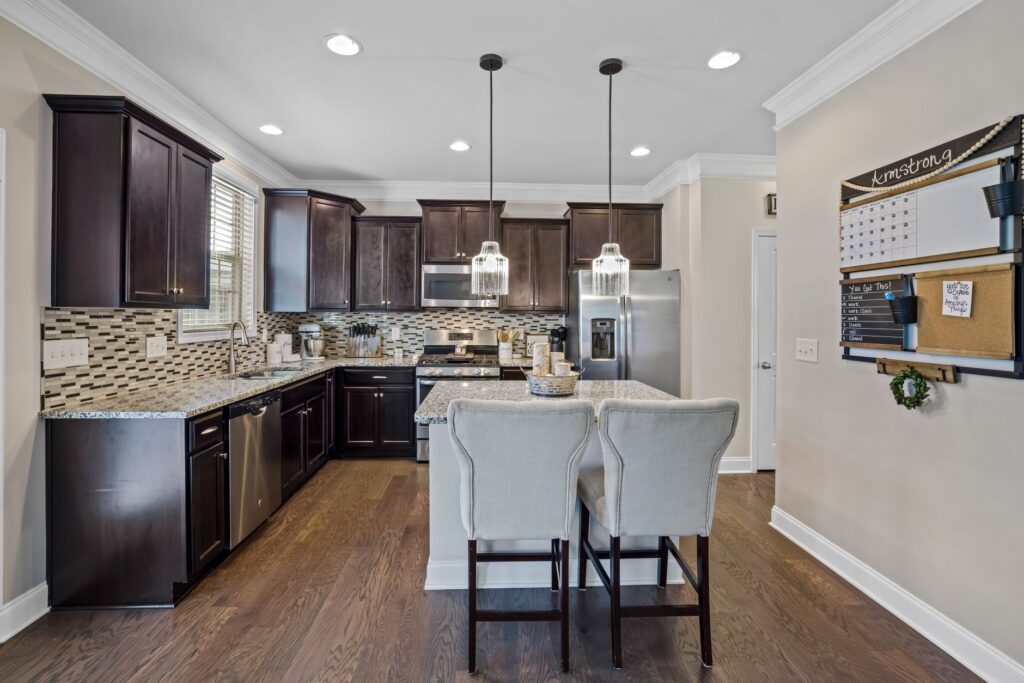
Dark kitchens—whether they feature rich espresso cabinets, moody charcoal walls, or black granite countertops—create incredible drama and sophistication. But they also present a unique challenge when it comes to choosing bar stools. Pick the wrong ones, and your beautiful space can feel cave-like or visually heavy. Choose wisely, and your stools become the bright spot […]
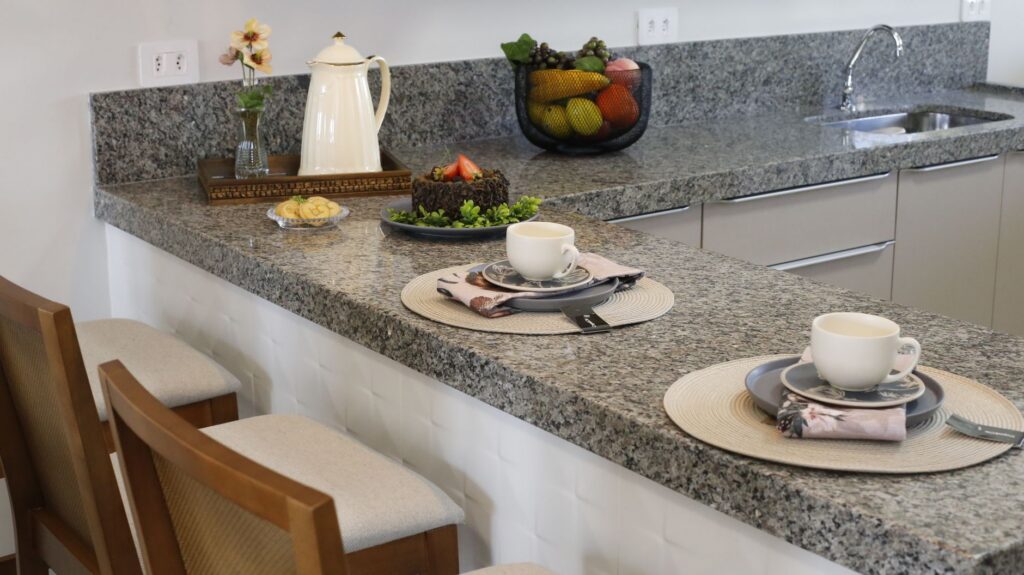
Your kitchen peninsula is prime real estate—it’s where morning coffee happens, where kids do homework while you’re prepping dinner, and where guests naturally gather during parties. Getting the right bar stools makes all the difference between a peninsula that feels welcoming and one that sits empty. But with so many options for height, style, and […]