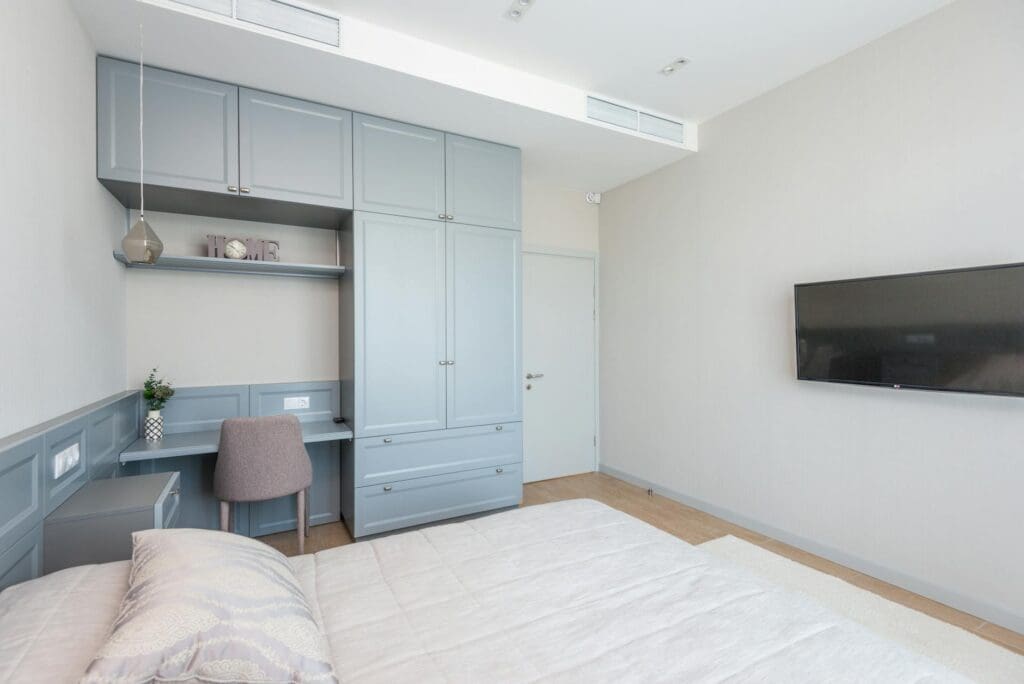
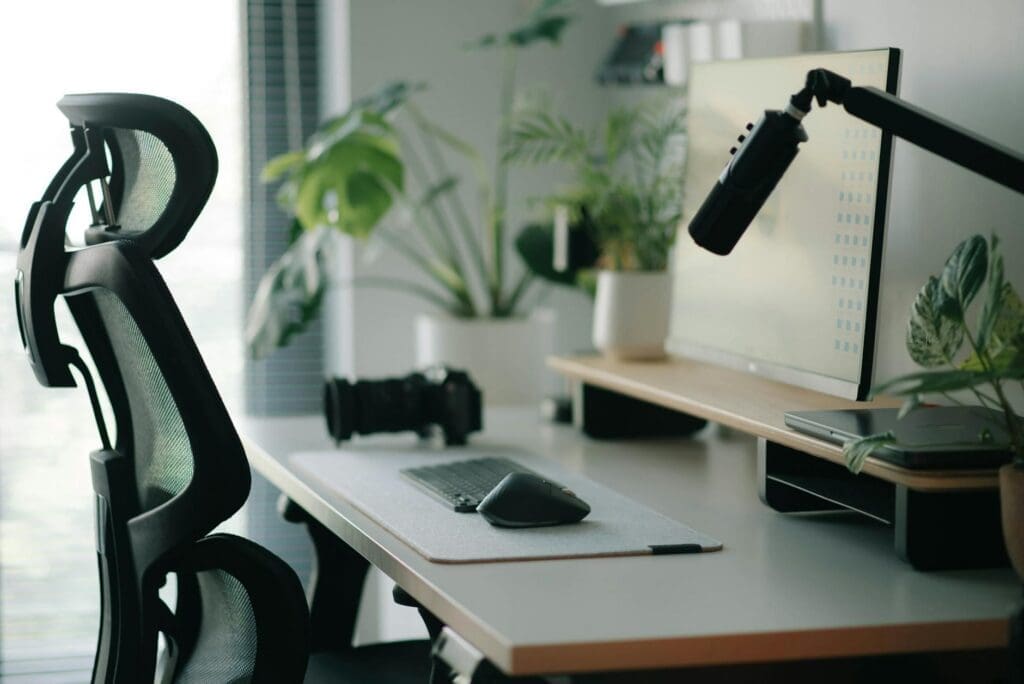
Setting up a home office in a small space can feel like solving a puzzle where the pieces just don’t want to fit. You need a functional workspace, but your spare room is barely bigger than a closet, or maybe you’re carving out a corner of your bedroom or living room. The good news? The right furniture can transform even the tiniest nook into a productive, organized workspace without making your home feel cramped.
Desks That Don’t Dominate Your Room
The desk is your workspace foundation, and choosing the wrong size is the fastest way to make a small room feel suffocating. Skip the executive desk fantasy and look for pieces designed with compact living in mind.
Wall-mounted drop-leaf desks are brilliant for truly tight spaces. They fold up when not in use, giving you back precious floor space. Budget options start around $100-150, while solid wood versions with better hardware run $250-400. Corner desks make smart use of otherwise wasted space and typically offer more surface area than their footprint suggests—look for L-shaped designs between 40-50 inches on each side rather than massive 60+ inch models.
Writing desks with minimal depth (20-24 inches instead of the standard 30) work beautifully in narrow rooms or alongside beds. A simple parsons-style desk can cost as little as $150, while mid-century modern versions in walnut or oak range from $300-600. If you need serious work surface but have limited floor space, consider a narrow console table (around 12-16 inches deep) paired with a wall-mounted shelf above for monitors or supplies.
Storage Solutions That Work Vertically
Small office spaces fail when clutter takes over, so storage isn’t optional—it’s essential. The trick is building up, not out.
Tall, narrow bookcases (12-18 inches deep) provide substantial storage while occupying minimal floor space. Five or six-shelf units give you room for books, binders, and decorative boxes to hide supplies. You’ll find basic options for $80-150, while solid wood bookcases with adjustable shelving run $250-500.
Floating shelves above your desk create storage without eating into legroom. Install two or three shelves at varying heights to hold frequently used items and keep your desktop clear. File cabinets don’t have to be those clunky beige monsters from the 90s—modern lateral files with a finished top double as a side table or extra work surface. Look for compact two-drawer versions (around 30 inches wide) rather than deep filing systems meant for large offices.
Seating That Fits and Supports
A proper office chair matters for your back and productivity, but oversized executive chairs can overwhelm small spaces. Look for armless or minimal-arm designs that tuck completely under your desk when not in use.
Task chairs with a smaller footprint (under 25 inches wide) provide ergonomic support without visual bulk. Mesh-back styles feel lighter in tight quarters than heavily padded leather chairs. Budget-friendly ergonomic chairs start around $100-180, while quality adjustable models with lumbar support range from $250-450. For really tight spots, consider a backless saddle stool or kneeling chair—they promote good posture and slide away almost invisibly.
If your office pulls double duty (guest room, bedroom corner, living area), choose seating that doesn’t scream “office.” An upholstered side chair with good back support can work for shorter work sessions and looks at home in any room.
Multi-Functional Pieces That Earn Their Keep
In small spaces, every piece of furniture should justify its existence. Secretary desks and armoires with fold-out work surfaces hide your office completely when you’re done working—perfect for maintaining boundaries between work and home life. These heritage-style pieces range from $400-1200 depending on materials and craftsmanship.
Consider a storage ottoman that holds supplies while providing extra seating for visitors, or a bookcase that doubles as a room divider if you’re creating an office zone within a larger room. Rolling carts (around $50-150) move wherever you need them and tuck into corners when not in use.
Working with limited square footage doesn’t mean settling for a cramped, uncomfortable workspace. By choosing furniture with the right scale, prioritizing vertical storage, and selecting pieces that serve multiple purposes, you can create an office that feels spacious, stays organized, and actually makes you want to sit down and get to work. Measure your space carefully before shopping, and remember that smaller doesn’t mean less functional—it just means being more intentional about what you bring home.
Your home office deserves better than a jumble of mismatched shelves and that filing cabinet you’ve been meaning to replace. A storage wall unit can transform your workspace from chaotic to composed, giving you dedicated spots for books, supplies, tech equipment, and all those things that currently live in piles. The trick is finding one […]
If you’re drowning in papers, sticky notes, and file folders that haven’t been touched in months, you’re not alone. The promise of a paper-free office isn’t just about going digital—it’s about choosing furniture and storage solutions that support a cleaner, more organized way of working. The right setup makes it easier to maintain that clutter-free […]
Your back is telling you it’s time. After months of working from home in a dining chair or that hand-me-down seat from college, you’re ready to invest in a proper office chair. The good news? You don’t need to spend $800 on a Herman Miller to get real ergonomic support. The under-$300 market is packed […]