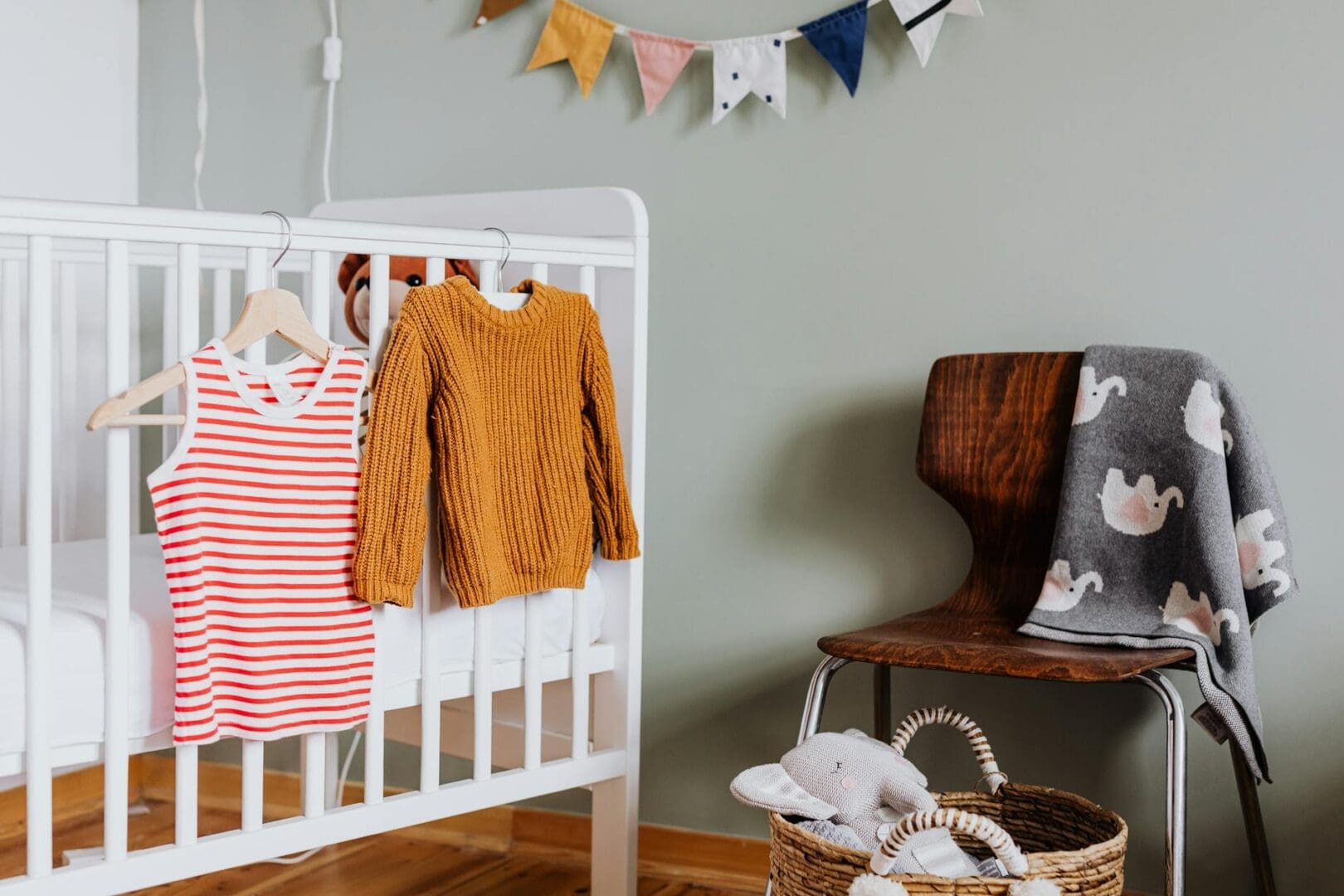
If you’ve started planning a nursery, you’ve probably noticed that baby furniture retailers want you to believe you need about seventeen different pieces of furniture, each with matching hardware and a coordinating mobile. Take a breath. The truth is, babies need surprisingly little, and your nursery can be both beautiful and functional without breaking the bank or cramming your space full of furniture you’ll use for six months.
Let’s cut through the registry noise and focus on what actually matters.
The Non-Negotiables: Crib and Mattress
Your crib is the one piece of nursery furniture you absolutely cannot skip. Babies sleep a lot (just not always when you want them to), so this is where you’ll want to be thoughtful about your choice.
Look for cribs that meet current safety standards—specifically JPMA certification and slat spacing no wider than 2⅜ inches. Convertible cribs that transform into toddler beds offer better long-term value, typically ranging from $250 to $600, while standard cribs start around $150. If you’re planning on multiple children or want an heirloom piece, you might splurge up to $800 or more for solid wood construction.
Here’s what matters: the mattress should fit snugly with no gaps (you shouldn’t be able to fit more than two fingers between the mattress and crib frame). Budget $100-300 for a quality crib mattress—this isn’t the place to cut corners, as a firm, well-fitted mattress is essential for safe sleep.
Seating: Your Late-Night Sanctuary
You’re going to spend a lot of time feeding, rocking, and soothing your baby, often at 2 a.m. when everything feels harder. A comfortable chair or glider isn’t technically essential, but ask any parent and they’ll tell you it’s practically non-negotiable for your sanity.
Gliders with smooth, quiet mechanisms start around $200 and go up to $1,000+ for upholstered versions with ottomans. Alternatively, a regular upholstered armchair with good back support works perfectly fine and might serve you better in other rooms once your kids are older. Look for something with arms at a comfortable height for bottle or breast feeding, and consider washable slipcovers because, well, babies.
Skip the dedicated “nursing chairs” with cutesy prints—you’ll tire of them quickly, and they’re impossible to repurpose.
Storage Solutions That Actually Work
Tiny humans come with a shocking amount of stuff. You’ll need storage for clothes, diapers, blankets, toys, and the endless parade of things people will give you.
A dresser is your most versatile storage piece. A standard three-drawer dresser ($150-400) can double as a changing table when you add a changing pad on top, saving you from buying a separate changing table that you’ll use for maybe eighteen months. Look for soft-close drawers if your budget allows—they’re safer and quieter.
For additional storage, consider:
Open shelving or bookcases for books and decorative storage bins ($50-200)
A small closet organizer system to maximize hanging and shelf space ($30-150)
Storage baskets or fabric bins that can corral toys and extras ($10-30 each)
Whatever you choose, make sure tall furniture is anchored to the wall. This is essential for safety as your baby becomes mobile.
What You Can Actually Skip
Let’s save you some money and space. You don’t need a changing table—a changing pad on a dresser or even on the floor works fine. You don’t need a dedicated toy chest yet (your newborn has approximately two toys). And that adorable coordinating nightstand? Your baby doesn’t care, and you can add it later if you want.
Instead, spend your energy on getting the basics right: a safe sleep space, comfortable seating, and enough storage to keep things organized. Everything else is optional, no matter what the registry checklist tells you.
Start with these essentials, see how your routine develops, and add pieces as you discover what you actually need. Your nursery doesn’t need to be Instagram-perfect on day one—it just needs to work for you and your baby.
You need more storage in your living room, but a bulky bookcase feels too heavy and floating shelves aren’t cutting it. A credenza might be exactly what you’re looking for—it’s that low-profile cabinet that gives you tons of hidden storage while creating a beautiful surface for lamps, plants, and the things you actually want to […]
If you’ve been hitting snooze repeatedly or dragging yourself out of bed feeling groggy, you’re not alone. Waking up to a jarring alarm in a dark room works against your body’s natural rhythms, especially during winter months. A sunrise alarm clock mimics natural dawn, gradually filling your room with light to ease you awake. But […]
Waking up at 3 a.m. with a sweaty neck and flipping your pillow to the cool side for the fourth time isn’t just annoying—it’s robbing you of quality sleep. If you’re a hot sleeper, your pillow might be trapping heat against your head and neck all night long. The good news? The right cooling pillow […]