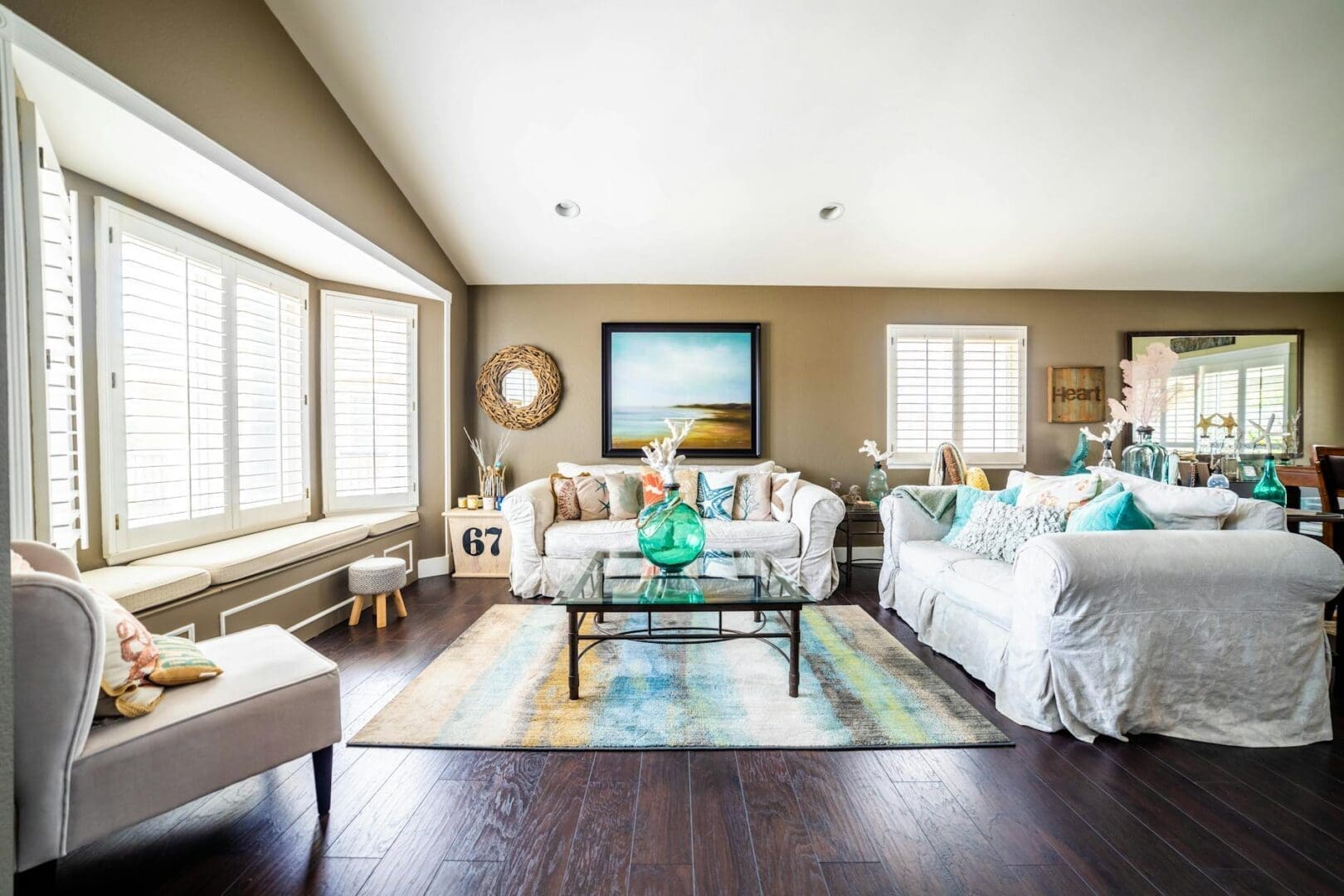
If you’re staring at your living room walls wondering why the space feels dated, you’re not alone. Color trends shift, and what felt fresh five years ago can suddenly look tired. The good news? Today’s popular living room colors are more livable and forgiving than ever—less about chasing trends and more about creating spaces that feel both current and comfortable.
Here’s what’s actually showing up in living rooms right now, and more importantly, how to decide if these colors are right for your home.
Warm Neutrals Are Replacing Cool Grays
The cool gray trend has finally loosened its grip, and warmer neutrals are taking over. Think greige (that perfect gray-beige hybrid), warm taupes, and creamy off-whites with beige undertones. These colors work beautifully because they’re neutral enough to anchor a room but warm enough to feel inviting.
If you’ve been living with stark gray walls, switching to a warm neutral like Accessible Beige or Balanced Beige can instantly make your living room feel cozier without a complete style overhaul. These shades pair well with both modern and traditional furniture, and they won’t make your white trim look dingy—a common problem with cooler grays.
When shopping for sofas and upholstered pieces, warm oatmeal and biscuit tones are everywhere right now. They’re practical for families (they hide stains better than you’d think) and sophisticated enough for adults-only spaces. Budget options start around $800 for a quality sofa in these shades, while mid-range pieces run $1,500-$3,000.
Earthy Terracotta and Rust Tones Add Instant Warmth
Terracotta, rust, and burnt orange have moved from accent colors to main players. These earthy, clay-inspired shades bring warmth and personality without overwhelming a space. You’ll see them in everything from accent walls to large sectionals.
The beauty of terracotta is its versatility. In a sun-drenched room, it feels Mediterranean and breezy. In a cozy space with wood tones, it leans bohemian. Pair it with cream and natural wood for a softer look, or with deep greens and navy for something more dramatic.
If painting a whole wall feels too committed, terracotta works beautifully in smaller doses—think throw pillows, area rugs, or an accent chair. Look for velvet or linen upholstery in these tones, which add texture alongside color. Accent chairs in rust velvet typically range from $400-$1,200 depending on quality and size.
Sage Green Continues Its Moment
Sage green isn’t going anywhere, and for good reason. This soft, grayed-green works in almost any living room because it’s neither too bold nor too boring. It’s calming without being cold, and it brings the outdoors in—something we all seem to crave lately.
Sage works particularly well as a wall color in rooms that get plenty of natural light, where it can shift from green to almost gray depending on the time of day. It pairs beautifully with warm wood tones, brass fixtures, and those warm neutrals we mentioned earlier.
For furniture, sage green sofas and sectionals have become surprisingly popular. They’re statement pieces that still feel neutral enough to live with long-term. You’ll find options at every price point: budget-friendly pieces around $700, solid mid-range options from $1,500-$2,500, and investment pieces over $3,000 in performance fabrics that’ll last for years.
Rich, Moody Blues for Drama Without Darkness
Navy and deeper blue-greens are showing up in living rooms that want drama without going full dark-and-moody. These colors add sophistication and work especially well in rooms with high ceilings or good natural light.
The trick with darker blues is balance. A navy accent wall behind your sofa can anchor the room and make artwork pop, but you’ll want to keep the other walls lighter and layer in plenty of warm metals and soft textures to prevent the space from feeling cave-like.
Blue velvet sofas have become particularly popular—they photograph beautifully and feel luxurious in person. The color hides wear well, and unlike lighter upholstery, it’s forgiving with pets and kids.
These colors all share something in common: they’re grounded, livable, and won’t feel dated in two years. Whether you’re repainting walls or shopping for a new sofa, choosing colors with warm undertones and natural inspiration will give you a living room that feels current without trying too hard. Start with one main color that speaks to you, then build your room around it with complementary neutrals and textures.
If you’ve been hitting snooze repeatedly or dragging yourself out of bed feeling groggy, you’re not alone. Waking up to a jarring alarm in a dark room works against your body’s natural rhythms, especially during winter months. A sunrise alarm clock mimics natural dawn, gradually filling your room with light to ease you awake. But […]
Waking up at 3 a.m. with a sweaty neck and flipping your pillow to the cool side for the fourth time isn’t just annoying—it’s robbing you of quality sleep. If you’re a hot sleeper, your pillow might be trapping heat against your head and neck all night long. The good news? The right cooling pillow […]
If you’re working from home or spending hours at your desk, you’ve probably noticed that not all chairs are created equal. That bargain office chair seemed fine at first, but now your back aches by mid-afternoon. You’ve been eyeing ergonomic chairs, but with price tags that can run three to ten times higher than regular […]