If you’re craving a living room that feels both serene and livable, Japandi design might be exactly what you’ve been searching for. This blend of Japanese minimalism and Scandinavian coziness creates spaces that are calm without feeling cold, and streamlined without being stark. The challenge? Pulling off this look requires some restraint and knowing which pieces actually deliver that effortless, zen-like quality.
Understanding the Japandi Foundation
Japandi works because it takes the best from both design worlds. From Scandinavia, you get warmth, natural textures, and livability. From Japan, you get clean lines, intentional space, and a respect for craftsmanship. In practical terms, this means your living room should feel uncluttered but never empty, minimal but still inviting.
Start with a neutral color palette as your base. Think warm whites, soft grays, beiges, and taupes. Unlike stark white minimalism, Japandi embraces warmer, earthier tones that make a room feel grounded. You’ll want to avoid bright colors or busy patterns—save those for other design styles. The only pops of color should come from natural wood tones and perhaps some muted greens from plants.
Choosing the Right Furniture
Furniture selection is where Japandi either comes together or falls apart. Look for low-profile pieces with clean lines and visible wood grain. A sofa should sit lower to the ground than standard Western styles, ideally with slim arms or no arms at all. Upholstery in linen, cotton, or bouclé works beautifully—stick with neutrals like oatmeal, charcoal, or warm gray.
Your coffee table deserves special attention. A solid wood table with simple joinery and minimal ornamentation captures the Japandi spirit perfectly. Look for light to medium wood tones like oak, ash, or walnut. Budget options start around $200-300, while handcrafted pieces from quality makers run $800-1,500.
For seating beyond the sofa, consider low lounge chairs with wooden frames and simple cushions. Avoid anything overstuffed or ornate. The goal is furniture that’s comfortable but doesn’t dominate the room visually. Each piece should have breathing room around it—Japandi spaces never feel crowded.
Materials and Textures That Work
The beauty of Japandi lies in its textures, not its colors. Since your palette is intentionally limited, varying textures keeps the space interesting. Natural materials are non-negotiable: wood, stone, linen, cotton, wool, rattan, and paper all belong here.
Layer different textures thoughtfully. A chunky knit throw over a smooth linen sofa. A jute rug under a sleek wooden coffee table. Ceramic vases next to woven baskets. These combinations add depth without adding visual noise. Avoid synthetic materials when possible—plastic, acrylic, and shiny metals don’t fit the aesthetic. If you need metal accents, choose matte black or brushed brass in small doses.
Window treatments should be simple and natural. Linen curtains in white or beige work well, or consider bamboo shades for a more Japanese influence. Heavy drapes or ornate curtain hardware will clash with the clean lines you’re building elsewhere.
The Art of Thoughtful Styling
Here’s where restraint becomes crucial. Japandi styling follows the “less is more” principle religiously. Each decorative object should earn its place in the room. A single sculptural vase beats a collection of trinkets every time.
Plants are one of the few places where you can be generous. A fiddle leaf fig in the corner, a small bonsai on a shelf, or trailing pothos on a bookcase all enhance the natural, organic feel. Choose simple planters—ceramic in neutral tones or natural terracotta.
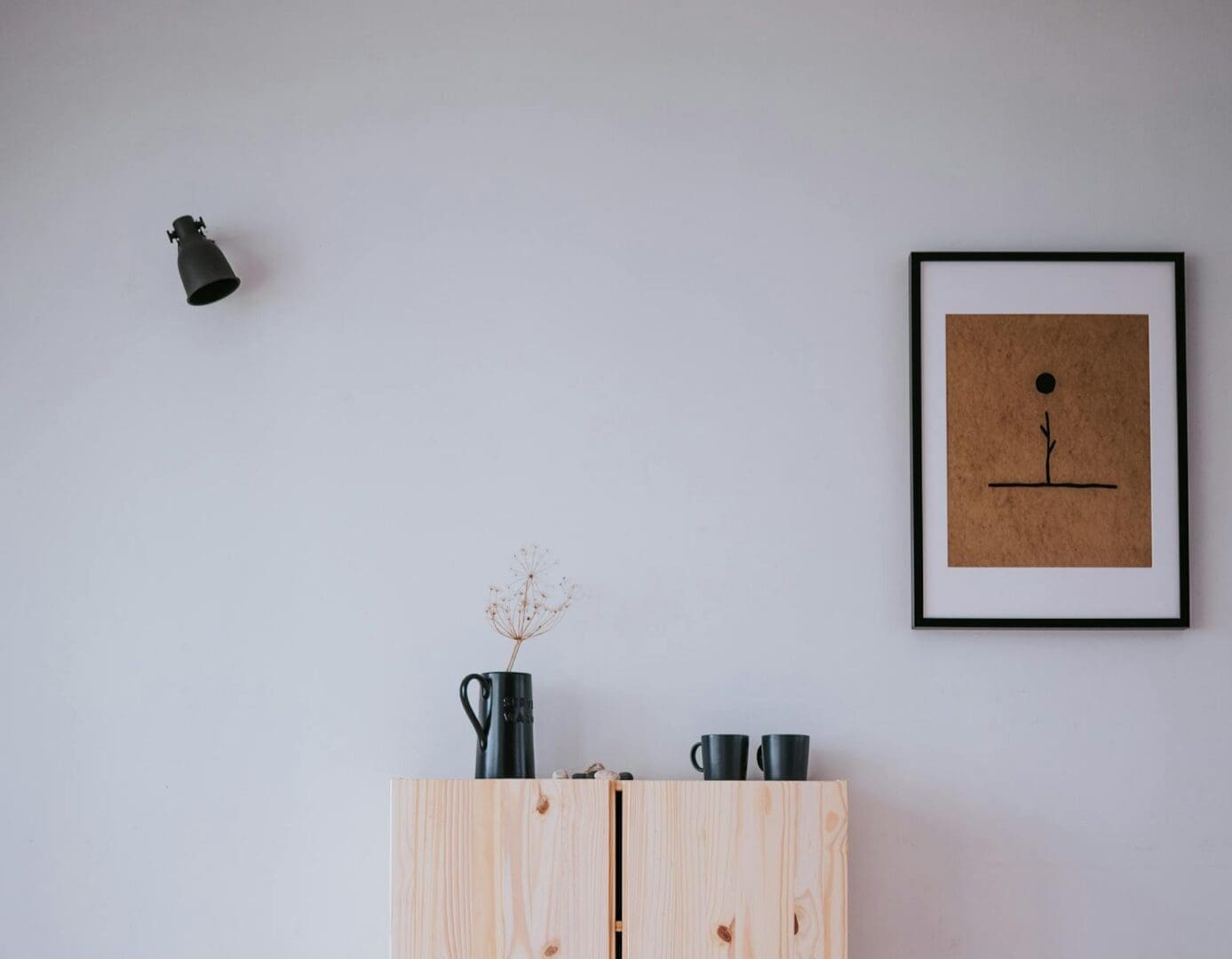
For wall art, think minimalist prints, simple line drawings, or abstract pieces in muted tones. Negative space matters in Japandi design, so leaving some walls bare is perfectly acceptable. If you’re displaying objects on shelves, use the rule of odd numbers and leave plenty of empty space between items.
Storage should be as invisible as possible. Built-in shelving, low credenzas with clean lines, or woven baskets that tuck away neatly all work. Clutter is Japandi’s worst enemy, so whatever storage you choose needs to actually hide your belongings, not just organize them on display.
Creating a Japandi living room means being selective about every element you bring into the space. Focus on quality over quantity, natural materials over synthetic ones, and intentional empty space over filling every corner. When you get it right, you’ll have a living room that genuinely helps you breathe easier the moment you walk in.
If you’ve been hitting snooze repeatedly or dragging yourself out of bed feeling groggy, you’re not alone. Waking up to a jarring alarm in a dark room works against your body’s natural rhythms, especially during winter months. A sunrise alarm clock mimics natural dawn, gradually filling your room with light to ease you awake. But […]
Waking up at 3 a.m. with a sweaty neck and flipping your pillow to the cool side for the fourth time isn’t just annoying—it’s robbing you of quality sleep. If you’re a hot sleeper, your pillow might be trapping heat against your head and neck all night long. The good news? The right cooling pillow […]
If you’re working from home or spending hours at your desk, you’ve probably noticed that not all chairs are created equal. That bargain office chair seemed fine at first, but now your back aches by mid-afternoon. You’ve been eyeing ergonomic chairs, but with price tags that can run three to ten times higher than regular […]