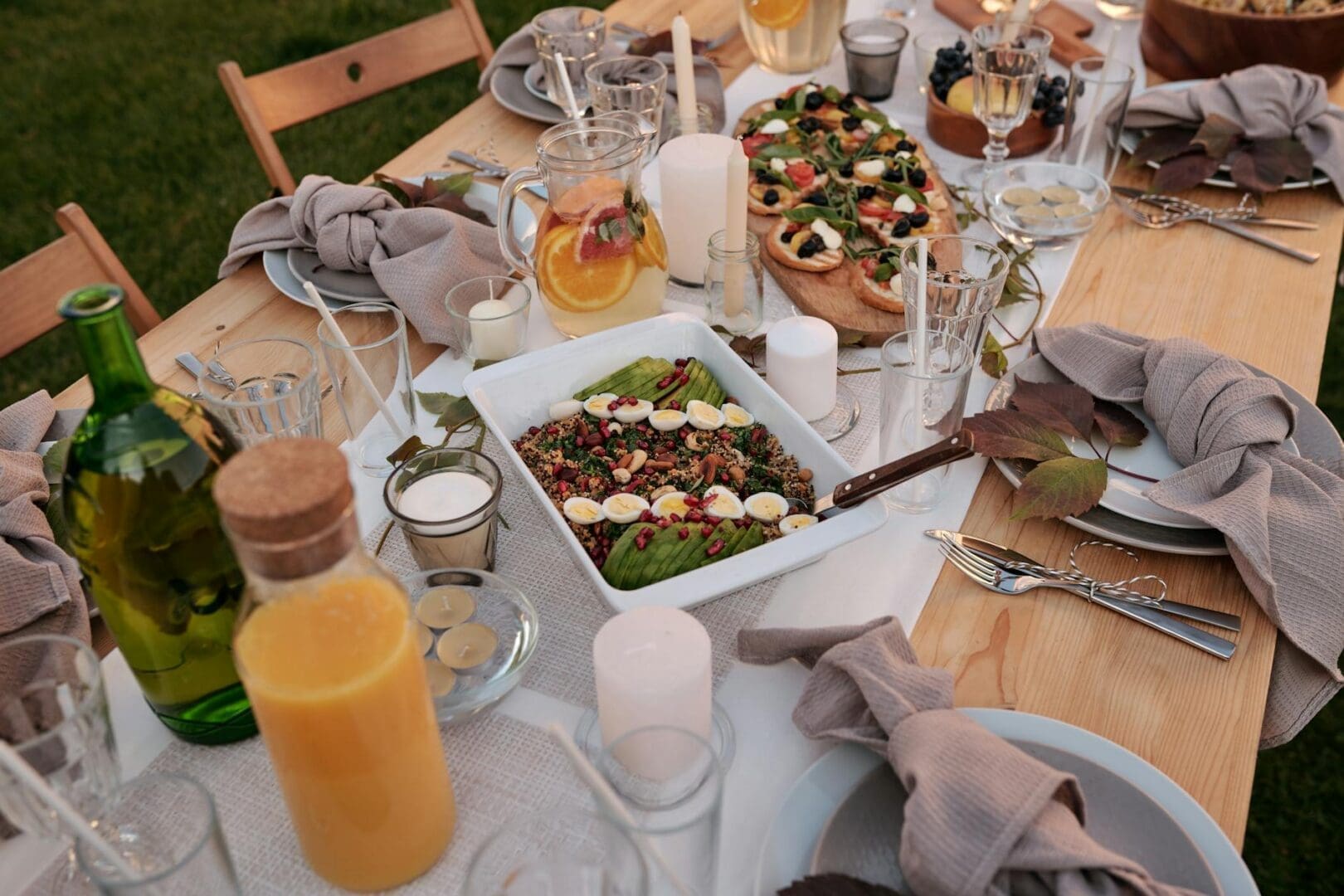
You don’t need a special occasion to make dinner feel a little more intentional. Setting a casual dinner table takes just a few minutes, but it transforms an ordinary weeknight meal into something that feels more put-together—without the fuss of formal dining. Whether you’re feeding your family on a Tuesday or having a few friends over for pasta, knowing the basics makes everything easier.
The Essential Pieces You Actually Need
A casual table setting is refreshingly simple. Start with a dinner plate as your foundation—nothing fancy required. Place it about an inch from the edge of the table, centered in front of each seat. If you’re serving a salad or appetizer, you can stack a smaller salad plate on top, but that’s completely optional for everyday meals.
For flatware, you only need three pieces: a fork to the left of the plate, and a knife and spoon to the right. The knife blade should face the plate. That’s it. No confusion about which fork goes where, no extra utensils cluttering the table. If you’re not serving soup, skip the spoon entirely.
Your drinking glass sits above the knife, roughly at the one o’clock position if you’re picturing the plate as a clock face. One glass is plenty for casual dining—water, wine, or whatever you’re pouring. Budget-friendly glassware sets run $20-40 for eight pieces, while sturdier mid-range options from brands like Bormioli Rocco or Duralex range from $40-80. If you want something with a bit more weight and clarity, expect to spend $80-150 for quality everyday glassware.
The Role of Linens (And When to Skip Them)
Placemats are your best friend for casual dining. They define each person’s space, protect your table, and add color or texture without the commitment of a full tablecloth. Woven vinyl placemats ($15-30 for a set of four) wipe clean in seconds and hold up to daily use. Cotton or linen placemats ($25-60 per set) feel more elevated and work beautifully if you don’t mind tossing them in the wash.
Cloth napkins make even a simple meal feel more considered, and they’re more sustainable than paper. You can find decent cotton napkins for $20-35 per set of four, or invest in linen napkins at $40-80 per set that’ll last for years and actually get softer with washing. Fold them simply and place them under the fork, on the plate, or to the left of the fork—whatever feels natural to you.
If your dining table itself is beautiful or you prefer a more minimalist look, skip the placemats entirely. Just make sure you’re using trivets or pot holders for anything hot.
Adding Personality Without Overthinking It
The beauty of casual table setting is that you can make it your own. A simple centerpiece pulls the whole table together—think a small vase with fresh greenery, a bowl of seasonal fruit, or a few candles clustered on a tray. Keep it low enough that people can see each other across the table, and leave enough room for serving dishes.
Mix and match if that’s your style. Your dinner plates don’t have to match your salad plates. White plates pair with virtually anything and create a clean backdrop that makes food look appealing. Stoneware and ceramic dinnerware sets in solid colors ($50-120 for a four-piece place setting) give you flexibility to layer patterns and textures as you build your collection.
Salt and pepper shakers or a small mill set should be easy to reach. If you’re serving family-style, which is perfect for casual meals, leave space in the center for passing dishes.
Making It Work for Your Real Life
The most important thing about a casual table setting is that it should be repeatable. If it takes too long or requires too many special pieces, you won’t do it regularly. Start with the basics—plate, fork, knife, glass, napkin—and add from there as it makes sense for what you’re serving.
Setting the table before you start cooking gives everyone a clear signal that it’s time to gather, and it ensures you’re not scrambling while dishes are getting cold. Even the simplest version of a set table creates a moment of pause in busy family life, turning dinner into something just slightly more special than eating over the kitchen counter.
You already have most of what you need to set a welcoming casual table. The pieces you might be missing—a proper set of everyday dishes, wipeable placemats, or durable glassware—are the kind of foundational items that make daily life smoother. When you find yourself reaching for them night after night, you’ll know they were worth it.
You need more storage in your living room, but a bulky bookcase feels too heavy and floating shelves aren’t cutting it. A credenza might be exactly what you’re looking for—it’s that low-profile cabinet that gives you tons of hidden storage while creating a beautiful surface for lamps, plants, and the things you actually want to […]
If you’ve been hitting snooze repeatedly or dragging yourself out of bed feeling groggy, you’re not alone. Waking up to a jarring alarm in a dark room works against your body’s natural rhythms, especially during winter months. A sunrise alarm clock mimics natural dawn, gradually filling your room with light to ease you awake. But […]
Waking up at 3 a.m. with a sweaty neck and flipping your pillow to the cool side for the fourth time isn’t just annoying—it’s robbing you of quality sleep. If you’re a hot sleeper, your pillow might be trapping heat against your head and neck all night long. The good news? The right cooling pillow […]