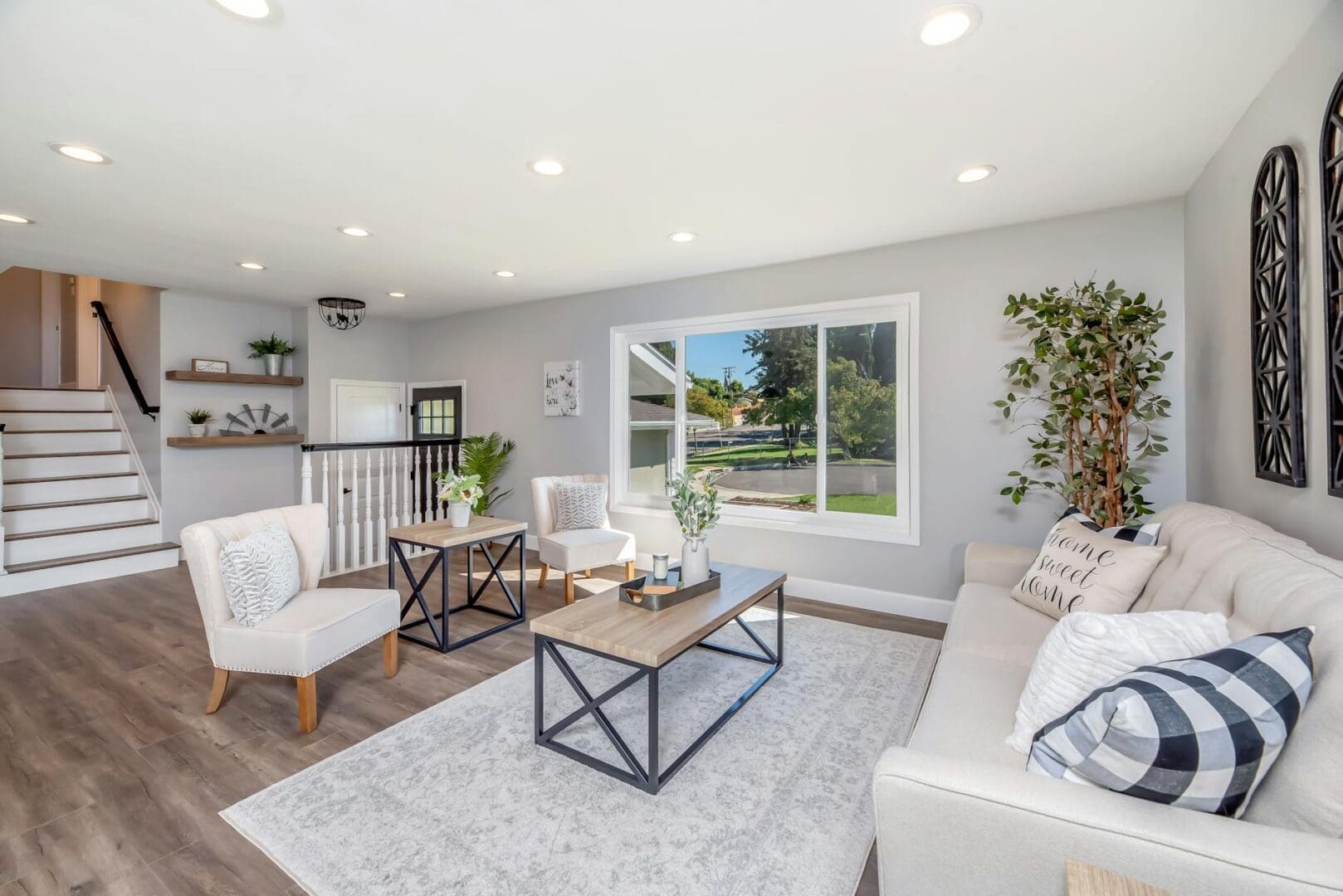
You’ve decided on two accent chairs for your living room—smart choice. They’re more flexible than a loveseat, can be moved when you need them, and create a more dynamic seating arrangement. But now comes the tricky part: where exactly do they go? The wrong placement can make your room feel awkward or cramped, while the right positioning turns your living room into a space people actually want to sit and linger in.
Create a Conversation Zone
The most classic arrangement positions your two accent chairs facing the sofa, either directly across or angled slightly inward. This creates what designers call a conversation area—a natural gathering spot where everyone can see each other without craning their necks. Place the chairs about 8-10 feet from the sofa, close enough for easy conversation but far enough that the space doesn’t feel crowded.
If you’re working with a fireplace or TV as your focal point, angle both chairs toward it while still maintaining that connection to the sofa. Think of it as creating a gentle semi-circle rather than a rigid square. This works beautifully in rooms from 12×14 feet up to larger great rooms, though you’ll want to adjust the spacing based on your specific dimensions.
For smaller living rooms under 12×12 feet, consider positioning the chairs perpendicular to the sofa instead of opposite it. This tighter L-shape arrangement takes up less visual space while still providing ample seating.
Balance Symmetry and Flow
You have two main options here: matching symmetry or intentional asymmetry. Symmetrical placement—two identical chairs positioned as mirror images—creates a formal, pulled-together look that works especially well in traditional spaces. Place them equidistant from a focal point like a fireplace or picture window, and you’ve got instant visual harmony.
Asymmetrical arrangements give you more flexibility and often feel more relaxed. You might place one chair angled near the fireplace and position its partner closer to a window with a reading lamp. This approach works particularly well if you’re mixing chair styles—say, pairing a wingback with a midcentury armchair. Just make sure they share some common element, whether that’s color, scale, or material, so the room still feels cohesive.
Either way, leave at least 24-30 inches of walking space between furniture pieces. Your arrangement should invite people in, not create an obstacle course.
Anchor with a Rug and Table
Here’s what transforms two random chairs into a real seating area: an area rug and a coffee table or ottoman. Your rug should be large enough that at least the front legs of both accent chairs sit on it—this visually connects all your seating pieces. For most living rooms, you’re looking at an 8×10 or 9×12 rug, depending on your furniture scale.
The coffee table or ottoman should sit within easy reach of all seating, typically 14-18 inches from the edge of each chair. A 36-48 inch coffee table works for most configurations, while smaller spaces might do better with a 30-inch round ottoman that’s easier to navigate around. If your chairs are positioned far apart, consider using two smaller side tables instead of one central piece—this gives each chair its own surface for drinks and books.
Consider Function and Lifestyle
Before you commit to a layout, think about how you actually use your living room. Do you host game nights? Position chairs where people can easily pull them up to a coffee table. Is your living room also the TV room? Make sure both chairs have decent sight lines to the screen, even if one is slightly better positioned than the other.
If you work from home, one accent chair near a window with a small side table can double as an impromptu workspace. Have kids or pets? Leave wider traffic paths and skip the delicate vintage chairs positioned right in the main walkway. Realistic furniture placement accounts for real life, not just magazine-worthy photos.
The beauty of accent chairs is their flexibility. Start with one of these foundational arrangements, live with it for a week, and don’t be afraid to adjust. You’ll know you’ve found the right position when people naturally gravitate to sitting in them—and when you stop thinking about whether your furniture layout is working.
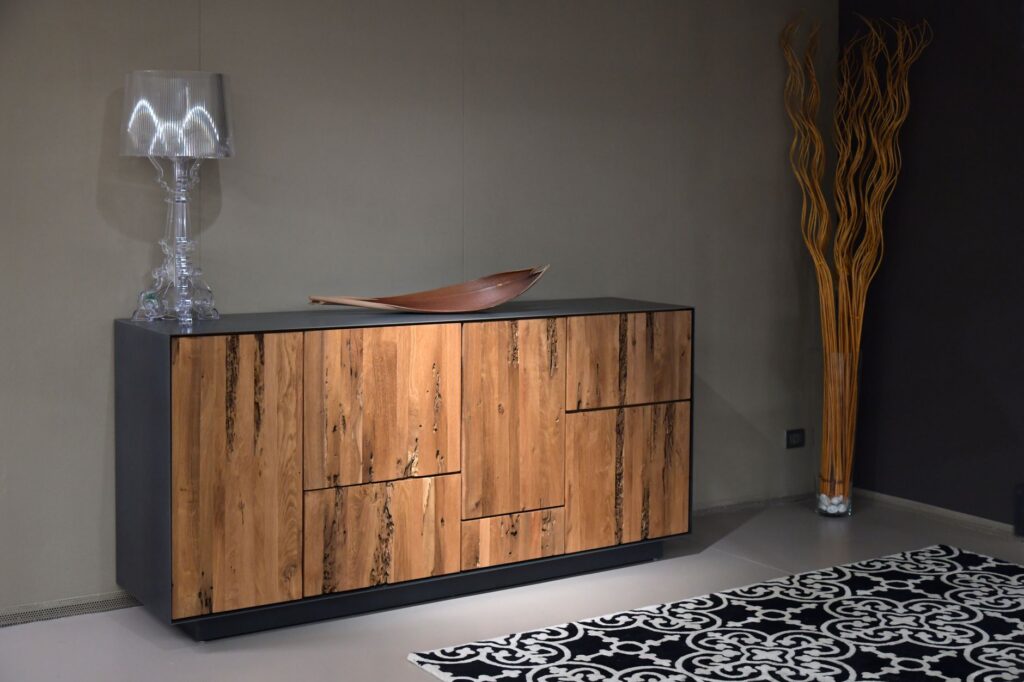
You need more storage in your living room, but a bulky bookcase feels too heavy and floating shelves aren’t cutting it. A credenza might be exactly what you’re looking for—it’s that low-profile cabinet that gives you tons of hidden storage while creating a beautiful surface for lamps, plants, and the things you actually want to […]
If you’ve been hitting snooze repeatedly or dragging yourself out of bed feeling groggy, you’re not alone. Waking up to a jarring alarm in a dark room works against your body’s natural rhythms, especially during winter months. A sunrise alarm clock mimics natural dawn, gradually filling your room with light to ease you awake. But […]
Waking up at 3 a.m. with a sweaty neck and flipping your pillow to the cool side for the fourth time isn’t just annoying—it’s robbing you of quality sleep. If you’re a hot sleeper, your pillow might be trapping heat against your head and neck all night long. The good news? The right cooling pillow […]