A cluttered home office isn’t just visually distracting—it actively works against your productivity. When papers pile up, supplies disappear into drawers, and cables tangle beneath your desk, even simple tasks feel harder than they should. The good news? An organized home office isn’t about having the perfect Pinterest-worthy setup. It’s about choosing the right furniture and storage solutions that make it easy to keep things tidy without thinking about it.
Start With a Desk That Works With Your Workflow
Your desk sets the foundation for everything else. If you’re constantly shuffling papers around looking for space, you need more surface area or better organization built into the desk itself. Look for desks with built-in drawers, keyboard trays, or hutches that add vertical storage without eating up floor space.
For compact spaces, an L-shaped or corner desk maximizes usable surface while fitting neatly against walls. These typically run $200-$400 for budget options, $500-$900 for solid wood mid-range pieces, and $1,000+ for high-end designs with premium materials. If you work with multiple monitors or spread out documents frequently, investing in a larger desktop pays off daily.
Writing desks with minimal storage work beautifully if you keep most supplies in separate cabinets, while executive desks with filing drawers help if you handle lots of paperwork. Match the desk style to how you actually work, not just how you imagine working.
Smart Storage Furniture Prevents Clutter Before It Starts
The secret to staying organized isn’t willpower—it’s having a designated home for everything you use regularly. Filing cabinets, bookcases, and credenzas do the heavy lifting here.
A two-drawer filing cabinet tucked under or beside your desk handles documents and supplies you need within arm’s reach. Lateral filing cabinets offer more storage and double as a surface for printers or plants. Budget options start around $100-$150, while metal or wood models with smooth-glide drawers run $300-$600.
Bookcases aren’t just for books. Use them for reference materials, office supplies in attractive bins, and decorative items that make your space feel intentional rather than chaotic. Look for adjustable shelving so you can accommodate everything from binders to small baskets. Five-shelf units in laminate start around $80, while solid wood bookcases range from $300-$800 depending on size and finish.
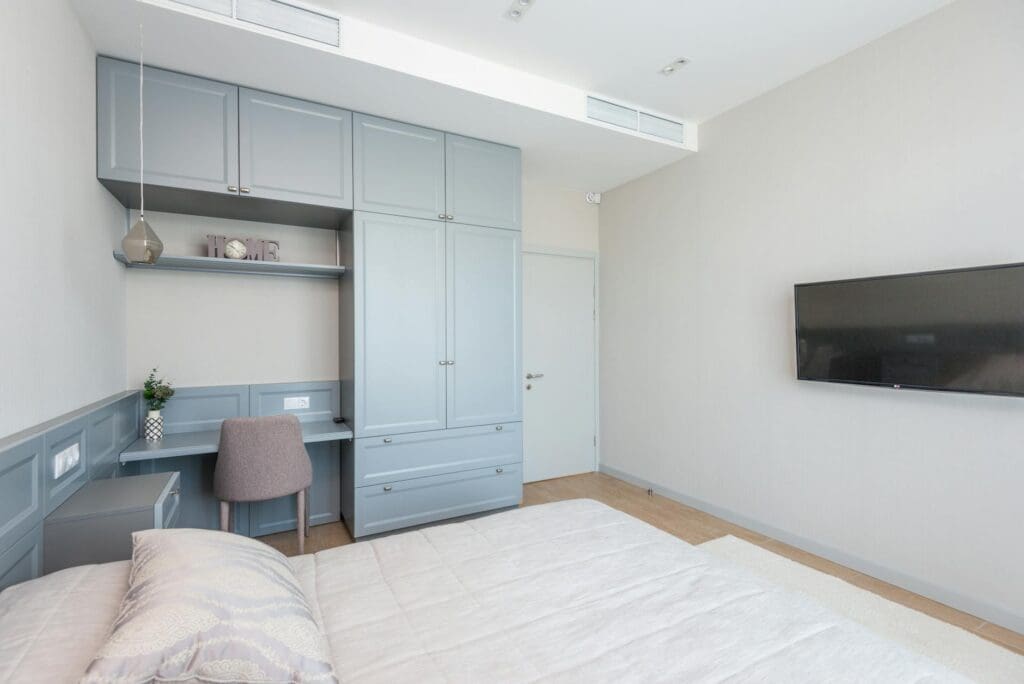
Credenzas and storage cabinets with doors hide the visual clutter of supplies, charging cables, and equipment you don’t use daily. Closed storage makes a dramatic difference in how calm your office feels, even when you’re busy.
The Right Office Chair and Layout Make Organization Sustainable
Here’s something often overlooked: if your chair doesn’t roll smoothly or your desk layout makes you twist awkwardly to reach things, you’ll naturally let things pile up rather than putting them away. Ergonomics and organization go hand in hand.
Position your desk so frequently-used items—your computer, phone, notepads—sit within easy reach. Storage for archive materials or seasonal supplies can live farther away in a closet or cabinet. This “zones” approach means you’re not constantly getting up or stretching, making it easier to maintain systems.
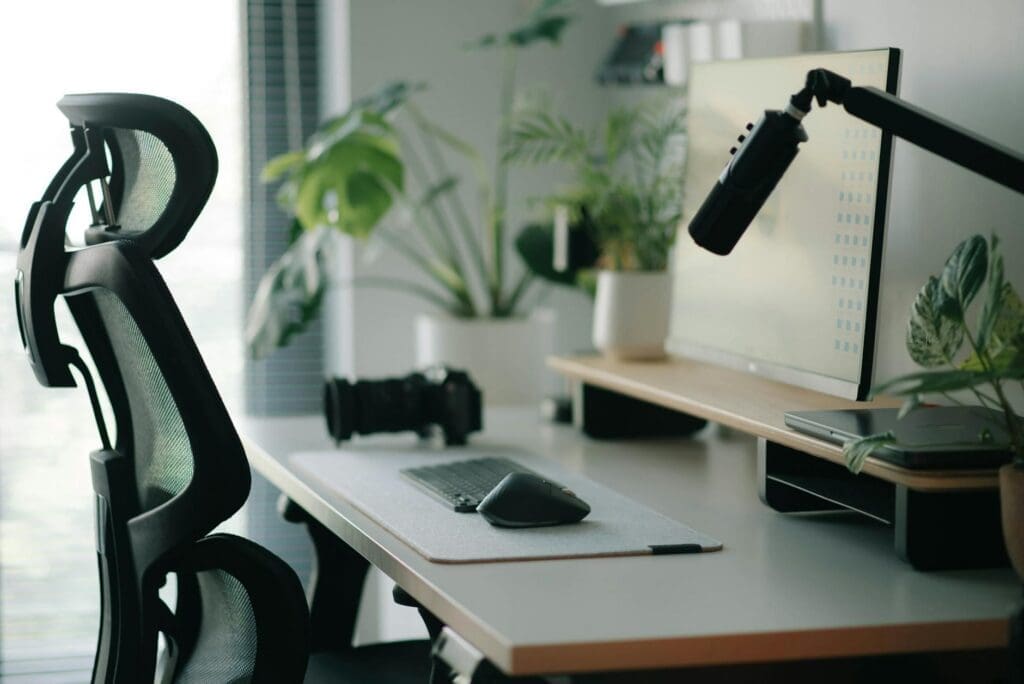
Your office chair matters too. A chair with good mobility lets you glide between your desk, filing cabinet, and printer without friction. Mesh task chairs start around $150-$250, while ergonomic models with lumbar support and adjustability range from $400-$700. Leather executive chairs can exceed $1,000 but last for years.
Cable Management and Desktop Accessories Complete the Picture
Even with great furniture, tangled cables and scattered supplies create visual chaos. Cable management boxes, under-desk trays, and simple velcro straps (often under $30 total) make a surprising difference. When cables are controlled, your entire office looks more intentional.
Desktop organizers, drawer dividers, and monitor stands with storage underneath give small items a proper home. A simple three-tier desk organizer costs $25-$50 but prevents that avalanche of sticky notes, pens, and random papers.
An organized home office happens when your furniture does the work for you. Choose pieces with the right storage for your actual needs, arrange them to support your natural workflow, and add small organizing tools to maintain the system. You’ll spend less time hunting for things and more time actually getting work done—which is the whole point.
Your home office deserves better than a jumble of mismatched shelves and that filing cabinet you’ve been meaning to replace. A storage wall unit can transform your workspace from chaotic to composed, giving you dedicated spots for books, supplies, tech equipment, and all those things that currently live in piles. The trick is finding one […]
If you’re drowning in papers, sticky notes, and file folders that haven’t been touched in months, you’re not alone. The promise of a paper-free office isn’t just about going digital—it’s about choosing furniture and storage solutions that support a cleaner, more organized way of working. The right setup makes it easier to maintain that clutter-free […]
Your back is telling you it’s time. After months of working from home in a dining chair or that hand-me-down seat from college, you’re ready to invest in a proper office chair. The good news? You don’t need to spend $800 on a Herman Miller to get real ergonomic support. The under-$300 market is packed […]