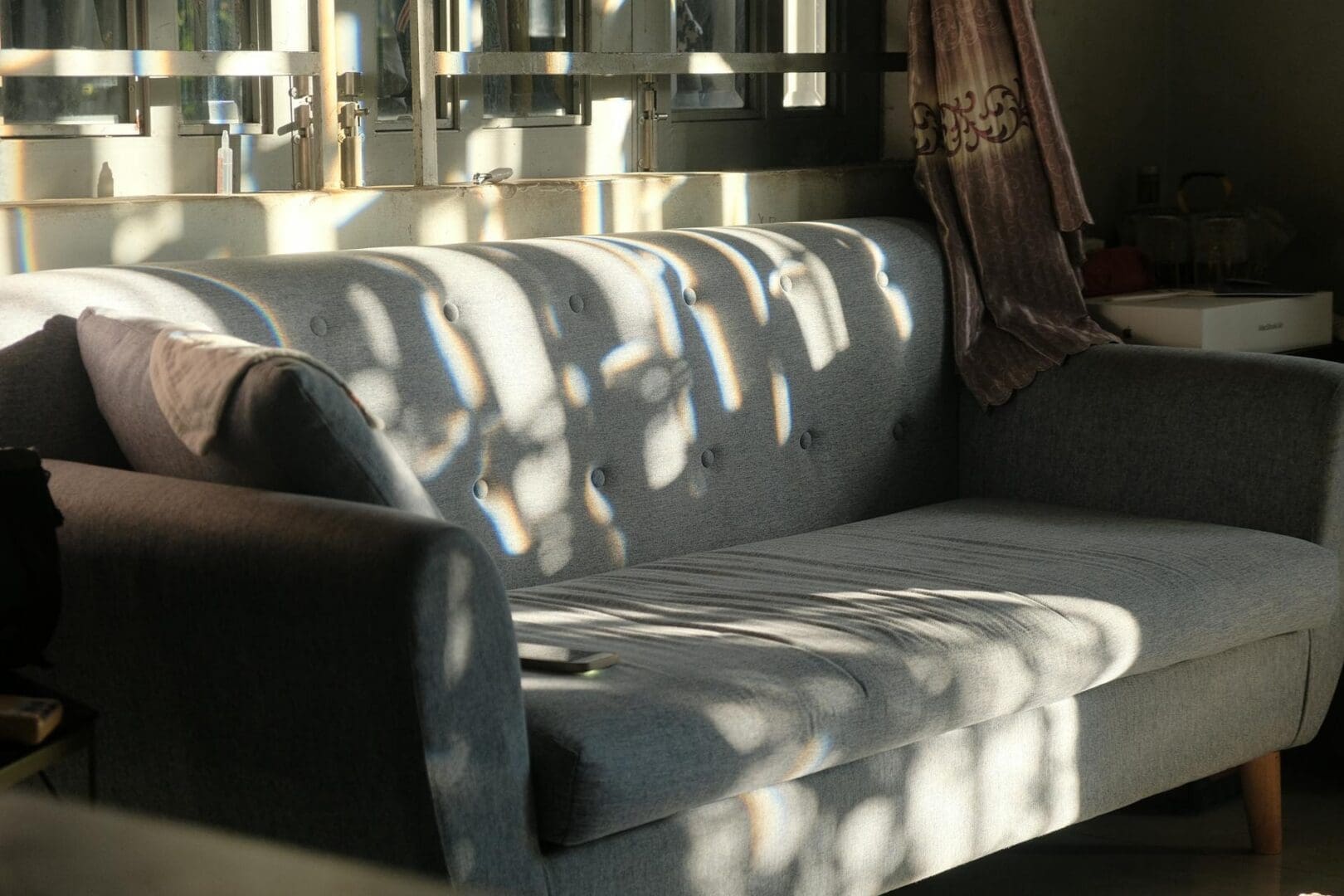
There’s nothing quite like sinking into your favorite spot on the sofa, only to realize you’re sinking a little too much. Sagging cushions are one of the most common complaints about sofas, and they can make even a beautiful piece look tired and uninviting. The good news? You don’t always need to replace your entire sofa. Let’s walk through your options, from quick fixes to more permanent solutions.
Understanding Why Cushions Sag
Before you start fixing anything, it helps to understand what’s happening. Most sofa cushions contain foam, down, polyester fiber fill, or a combination of materials. Over time, foam compresses and loses its resilience, down clusters flatten, and fiber fill shifts and clumps. How quickly this happens depends on the quality of materials, how often the sofa gets used, and whether cushions are regularly flipped or rotated.
High-density foam (1.8 pounds per cubic foot or higher) typically lasts 5-10 years before showing significant wear, while lower-density foam might start sagging within 2-3 years. Down and down-blend cushions require more maintenance but can last decades if properly cared for.
Quick Fixes That Buy You Time
If your cushions are only mildly saggy or you’re not ready for a bigger investment, these solutions can help:
Flip and rotate regularly: If your cushions are reversible, flip them over and rotate their positions weekly. This distributes wear more evenly.
Add a support board: Slide a 1/2-inch plywood board between the cushions and the sofa deck. This prevents cushions from sinking into worn-out springs or webbing underneath. You can find pre-cut sofa support boards for $30-60.
Plump and reshape: For down or fiber-filled cushions, unzip the covers and manually redistribute the filling. Fluff vigorously and karate-chop the tops to create that crisp look.
Use cushion inserts: Foam cushion inserts or batting wraps can add temporary lift. Wrap your existing cushion in a layer of polyester batting ($15-25 per cushion) before putting the cover back on.
Replacement Options Worth Considering
When quick fixes aren’t cutting it anymore, replacing the cushion filling gives your sofa a new lease on life. Most upholstery shops and online foam retailers can cut custom cushions to your exact dimensions.
Foam replacement is the most popular route. High-density polyurethane foam (1.8-2.5 pounds density) costs $50-150 per seat cushion depending on size. For even better support, consider high-resilience (HR) foam, which bounces back better than standard foam and resists sagging longer. Expect to pay $80-200 per cushion for HR foam.
Down and feather inserts create that sink-in, luxurious feel but require regular fluffing. A quality down-blend insert runs $100-250 per cushion. Some people opt for a foam core wrapped in down for the best of both worlds—support with softness.
Latex foam is the premium option at $150-300 per cushion. It’s naturally resilient, hypoallergenic, and can last 20+ years without significant compression. If you’re planning to keep your sofa for the long haul and love the frame, latex might be worth the splurge.
When to Consider a New Sofa Instead
Sometimes the cushions aren’t the real problem. If your sofa frame is cracked, the springs are shot, or the fabric is beyond saving, you’re looking at repairs that could cost 50-70% of a new sofa’s price. Press down on different areas of your sofa deck (the part under the cushions). If you feel broken springs, significant sagging, or hear creaking and cracking, the structural issues might not be worth fixing.
Similarly, if you paid under $800 for your sofa originally, it likely has lower-quality construction that won’t justify expensive repairs. In that case, investing in a better-quality replacement makes more financial sense.
Fixing sagging cushions can absolutely extend your sofa’s life and restore your comfort. Start with the simplest solution that matches your timeline and budget—whether that’s a $40 support board or $600 worth of new foam cushions. Your back (and your living room’s appearance) will thank you.
You need more storage in your living room, but a bulky bookcase feels too heavy and floating shelves aren’t cutting it. A credenza might be exactly what you’re looking for—it’s that low-profile cabinet that gives you tons of hidden storage while creating a beautiful surface for lamps, plants, and the things you actually want to […]
If you’ve been hitting snooze repeatedly or dragging yourself out of bed feeling groggy, you’re not alone. Waking up to a jarring alarm in a dark room works against your body’s natural rhythms, especially during winter months. A sunrise alarm clock mimics natural dawn, gradually filling your room with light to ease you awake. But […]
Waking up at 3 a.m. with a sweaty neck and flipping your pillow to the cool side for the fourth time isn’t just annoying—it’s robbing you of quality sleep. If you’re a hot sleeper, your pillow might be trapping heat against your head and neck all night long. The good news? The right cooling pillow […]