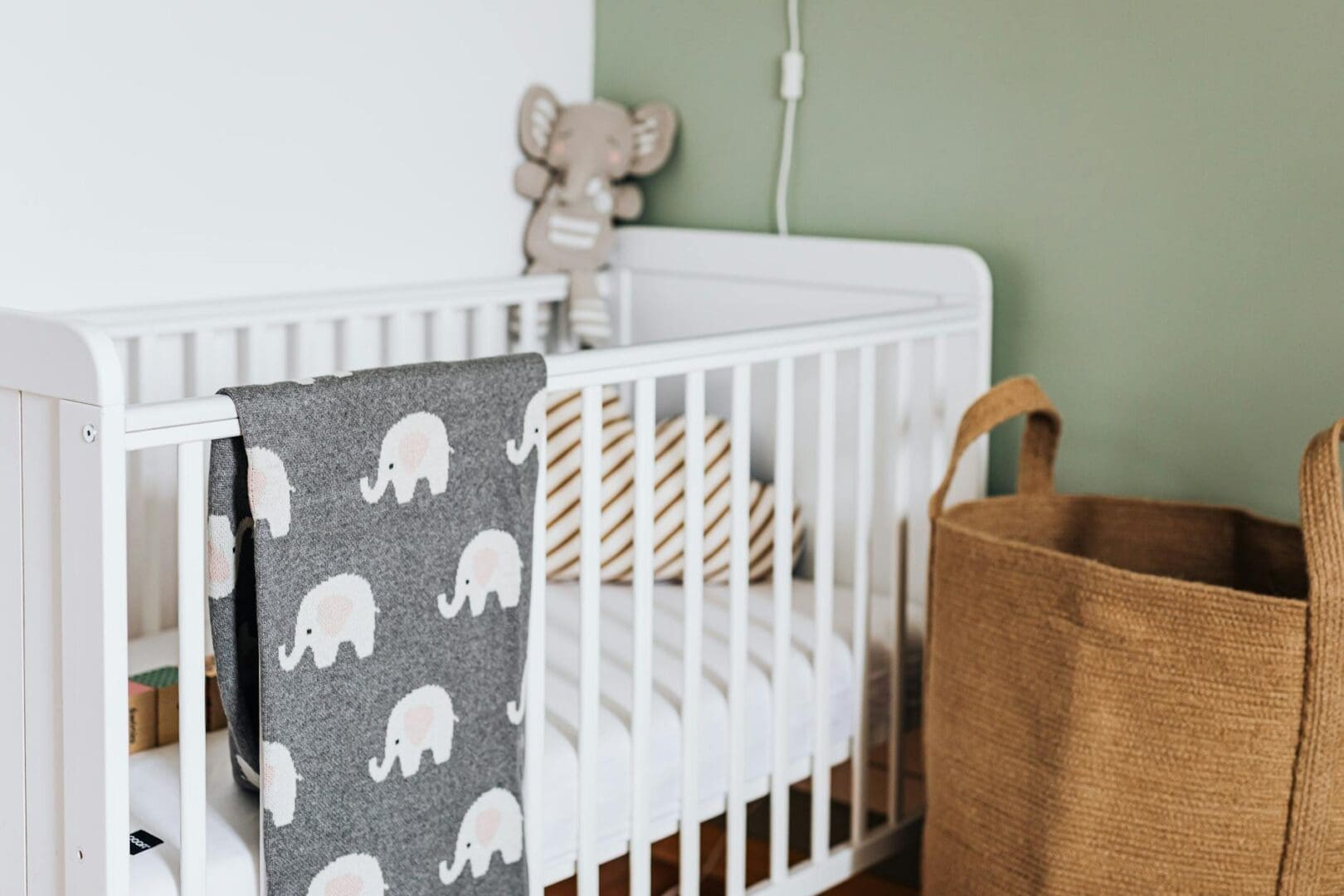
Preparing for a baby is expensive enough without dropping thousands on a picture-perfect nursery. The good news? You can create a safe, cozy, and Instagram-worthy space for your little one without draining your savings account. With some smart planning and a few strategic choices, you’ll have a nursery that works beautifully for both baby and budget.
Start With the Essential Furniture Only
Here’s what your baby actually needs from day one: a safe place to sleep, somewhere to store clothes and diapers, and a comfortable spot for you during those 2am feedings. That’s it. A crib, a dresser, and a chair. Everything else can wait or be improvised.
For cribs, you’ll find basic models starting around $100-150 that meet all safety standards just as well as $800 convertible options. If you want a crib that converts to a toddler bed later, expect to spend $250-400 in the mid-range. The main difference at higher price points is usually styling and brand name, not safety or durability.
Skip the dedicated changing table. A changing pad on top of a regular dresser works perfectly and saves you $150-300. Look for a sturdy three-drawer dresser in the $150-250 range that can grow with your child long after the diaper days are over. For your nursing chair, consider a secondhand glider or even a comfortable armchair you already own with an added footstool.
Choose a Simple Wall Treatment Instead of a Theme
Themed nurseries with matching bedding sets, wall decals, and coordinating accessories look adorable but add up quickly. A better approach: pick two or three colors and keep your walls simple. A single accent wall in a soft, gender-neutral tone like sage green, warm gray, or pale yellow costs $30-50 in paint and creates instant impact.
If you’re renting or don’t want to commit to paint, try peel-and-stick wallpaper on one wall. You’ll spend $40-80 for enough to cover a standard accent wall, and it removes cleanly when you’re ready for a change. Add personality with budget-friendly touches like a $20-30 wall decal, framed fabric scraps, or your own painted canvas art.
Remember that babies can’t see detailed patterns well anyway. What matters more is creating a calm environment that helps both of you during nighttime wake-ups.
Get Creative With Storage and Organization
Babies come with a shocking amount of stuff, but you don’t need custom storage solutions to contain it. Fabric storage cubes ($10-15 each) fit perfectly in cube organizers and keep small items sorted. Wall-mounted shelves ($15-30 each) display books and keep them accessible without taking up floor space.
Use attractive baskets on open shelving to hide less-photogenic necessities like diaper cream and burp cloths. You can find decent-looking options at discount stores for $10-25 each. A simple tension rod inside the closet ($8-12) gives you space to hang those tiny outfits without installing permanent fixtures.
Consider multi-purpose pieces: an ottoman with storage inside, a bookshelf that can hold toys later, or baskets that might eventually organize craft supplies. Every dollar you spend should work hard and adapt as your child grows.
Know Where to Save and Where to Spend
Put your money into items that affect safety and sleep quality. A firm crib mattress in the $80-150 range is worth it. Same with blackout curtains ($25-60) that help establish good sleep habits. A white noise machine ($20-40) is a budget-friendly sleep aid that many parents swear by.
Feel free to save on decorative items. That $60 wall hanging does the same job as a $15 one. Hunt secondhand shops for artwork, rugs, and accessories. Just avoid used cribs (safety standards change) and used mattresses (hygiene concerns).
A realistic budget for a complete nursery runs $500-800 if you’re careful, $1,000-1,500 for mid-range choices with some flexibility. That includes crib, mattress, dresser, chair, and all the finishing touches.
Your baby won’t remember their nursery or care whether it cost $500 or $5,000. What matters is that it’s safe, functional, and feels peaceful to you during those long nights. Focus on the essentials first, add personality with affordable touches, and remember that you can always upgrade or change things as you figure out what actually works for your family. You’ve got this.
You need more storage in your living room, but a bulky bookcase feels too heavy and floating shelves aren’t cutting it. A credenza might be exactly what you’re looking for—it’s that low-profile cabinet that gives you tons of hidden storage while creating a beautiful surface for lamps, plants, and the things you actually want to […]
If you’ve been hitting snooze repeatedly or dragging yourself out of bed feeling groggy, you’re not alone. Waking up to a jarring alarm in a dark room works against your body’s natural rhythms, especially during winter months. A sunrise alarm clock mimics natural dawn, gradually filling your room with light to ease you awake. But […]
Waking up at 3 a.m. with a sweaty neck and flipping your pillow to the cool side for the fourth time isn’t just annoying—it’s robbing you of quality sleep. If you’re a hot sleeper, your pillow might be trapping heat against your head and neck all night long. The good news? The right cooling pillow […]