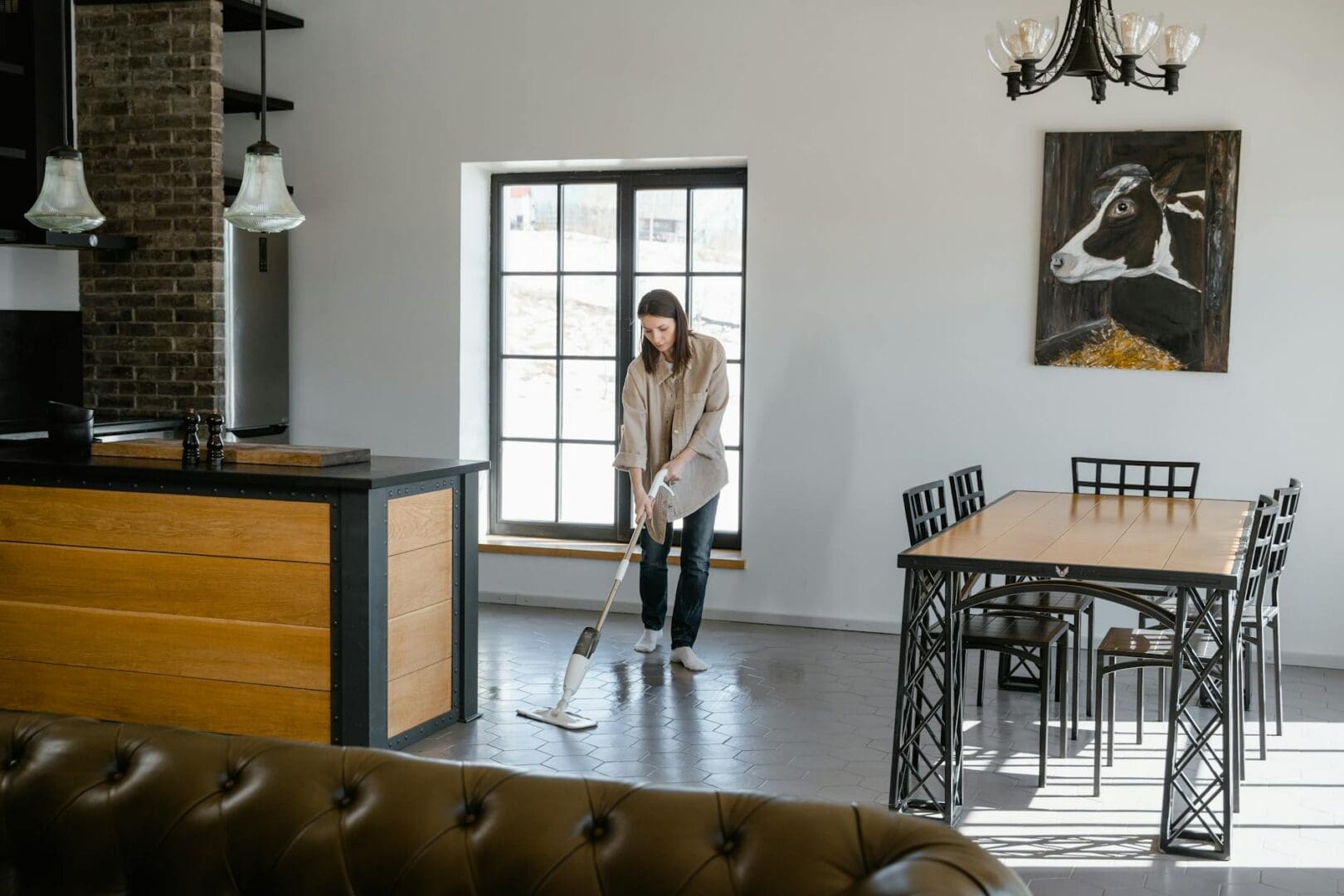
Your hardwood floors have been looking a bit dull lately, haven’t they? Regular sweeping and quick mopping help with daily maintenance, but eventually every wood floor needs a proper deep clean to remove the buildup of grime, cleaning product residue, and traffic patterns that make even well-maintained floors look tired. The challenge is doing it thoroughly without damaging the finish or leaving streaks behind.
Deep cleaning hardwood floors isn’t complicated, but it does require the right approach. Use the wrong products or too much water, and you could dull the finish or even cause warping. Here’s how to do it properly.
Know Your Floor Finish First
Before you start, you need to know whether your floors have a surface seal (polyurethane, urethane, or polyacrylic) or a penetrating seal (oil-based). Most modern hardwood floors installed in the last 20 years have surface-sealed finishes, which create a protective coating on top of the wood. These are more forgiving and easier to clean.
To test, rub your finger across the floor in an inconspicuous spot. If no smudge appears, you likely have a surface seal. You can also try the water droplet test: place a small drop of water on the floor. If it beads up, it’s surface-sealed. If it soaks in within a few minutes, you have a penetrating seal that requires oil-based cleaners and more careful handling.
Surface-sealed floors can handle pH-neutral hardwood cleaners and slightly damp mopping. Penetrating seals need specialized products and should never be wet mopped.
Choose the Right Cleaning Products and Tools
Skip the vinegar, steam mops, and all-purpose cleaners—they’re too harsh for hardwood finishes. Instead, look for cleaners specifically formulated for hardwood floors with a neutral pH.
For budget-friendly options ($8-15), Bona Hardwood Floor Cleaner and Bruce Hardwood Floor Cleaner work well and don’t require rinsing. Mid-range options ($15-25) include concentrated formulas like Method Squirt + Mop that last longer. If you want to splurge ($25-40), products like Rubio Monocoat Surface Care or Pallmann Clean offer professional-grade results.
For tools, you’ll need:
A microfiber dust mop or vacuum with hardwood attachment (no beater bar)
A spray mop or bucket with a microfiber mop head that wrings out well
Several clean microfiber cloths for buffing
A soft-bristle brush for stubborn spots
Avoid string mops and sponge mops—they hold too much water and are harder to control.
The Deep Cleaning Process
Start by removing all furniture and area rugs, or work in sections if that’s not practical. Vacuum or dust mop thoroughly to remove all loose dirt and debris. Any grit left behind will get pushed around during wet cleaning and can scratch the finish.
Next, prepare your cleaning solution according to the product directions. The golden rule for hardwood is to use as little water as possible—your mop should be damp, not wet. Wring it out thoroughly before touching the floor.
Work in 4×6 foot sections, mopping along the grain of the wood. Don’t let water pool or sit on the surface. If you notice any excess moisture, wipe it up immediately with a dry microfiber cloth. For stubborn spots or scuff marks, apply a small amount of cleaner directly to the spot and use a soft brush or cloth to gently work it out.
After cleaning each section, use a clean, dry microfiber cloth to buff the floor. This removes any remaining moisture and helps restore shine. Allow the floor to air dry completely (usually 5-10 minutes) before walking on it or replacing furniture.
When to Consider Professional Refinishing
If your floors still look dull after a thorough deep cleaning, the issue might be a worn finish rather than surface dirt. Scratches, worn traffic patterns, or a finish that feels rough to the touch are signs you might need more than cleaning can provide.
Before committing to a full refinish (which can cost $3-8 per square foot), consider a professional deep clean and recoat service ($1-3 per square foot), which adds a fresh coat of finish without sanding. This is perfect for floors that are structurally sound but cosmetically tired.
Your hardwood floors are a significant investment and one of the most beautiful features in your home. Taking the time to deep clean them properly—using the right products, minimal water, and a methodical approach—will keep them looking gorgeous for years and help you avoid costly repairs down the road. Set aside a weekend morning, gather your supplies, and give those floors the attention they deserve.
You need more storage in your living room, but a bulky bookcase feels too heavy and floating shelves aren’t cutting it. A credenza might be exactly what you’re looking for—it’s that low-profile cabinet that gives you tons of hidden storage while creating a beautiful surface for lamps, plants, and the things you actually want to […]
If you’ve been hitting snooze repeatedly or dragging yourself out of bed feeling groggy, you’re not alone. Waking up to a jarring alarm in a dark room works against your body’s natural rhythms, especially during winter months. A sunrise alarm clock mimics natural dawn, gradually filling your room with light to ease you awake. But […]
Waking up at 3 a.m. with a sweaty neck and flipping your pillow to the cool side for the fourth time isn’t just annoying—it’s robbing you of quality sleep. If you’re a hot sleeper, your pillow might be trapping heat against your head and neck all night long. The good news? The right cooling pillow […]