Walk into a professionally designed room and you’ll immediately feel something different—even if you can’t quite put your finger on it. Nine times out of ten, it’s the lighting. A single overhead fixture might get the job done, but it’s the thoughtful layering of ambient, task, and accent lighting that makes a space feel complete, functional, and genuinely inviting.
The good news? You don’t need an interior designer’s budget to get this right. You just need to understand what each lighting layer does and how they work together.
Understanding the Three Layers
Think of lighting like getting dressed. Ambient lighting is your base layer—it provides overall illumination for the room. Task lighting is your practical middle layer—it helps you actually do things. Accent lighting is the accessory that adds personality and depth.
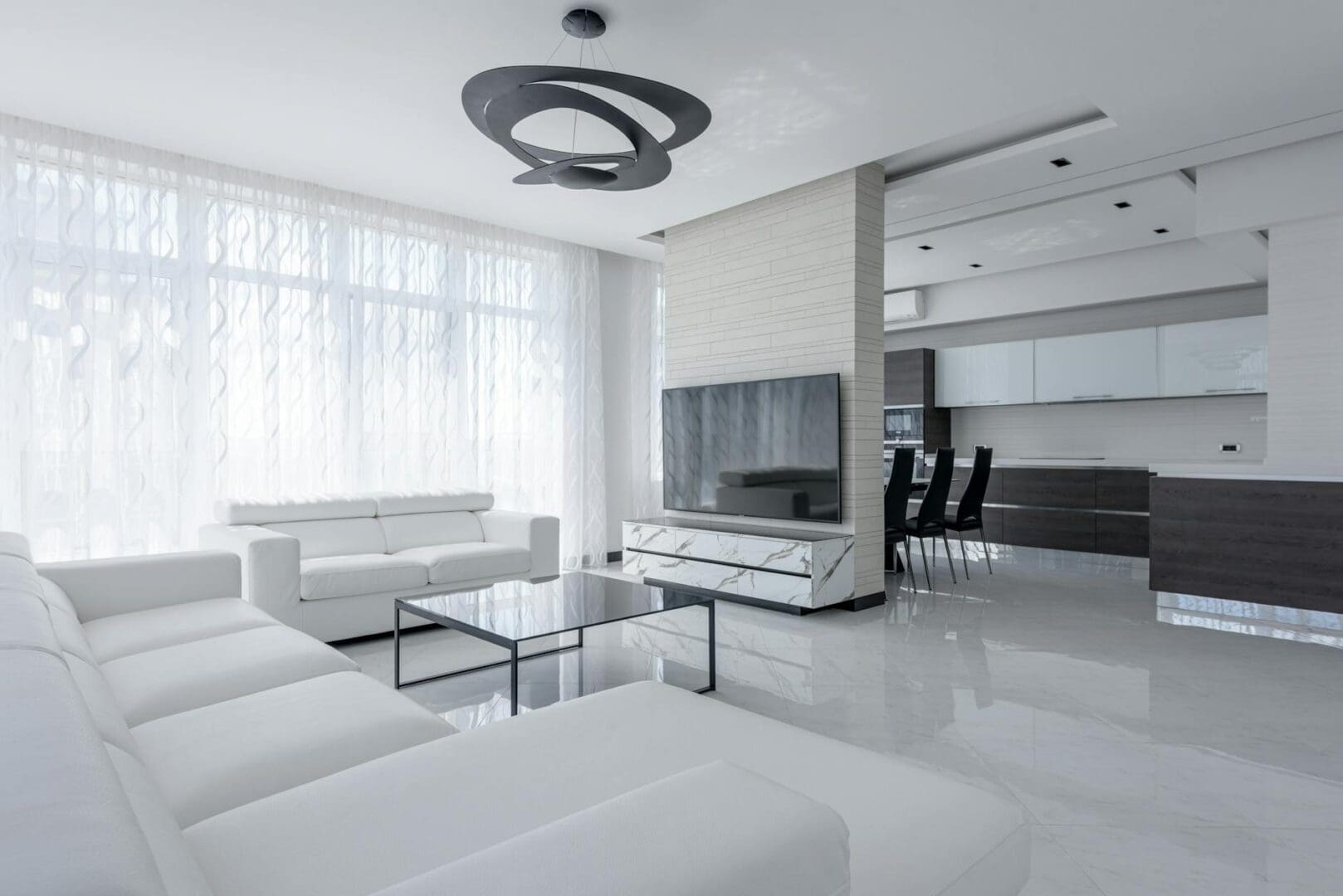
Ambient lighting typically comes from ceiling fixtures, chandeliers, or recessed lights. This is your room’s foundation, providing enough light to move around safely and see the space as a whole. In a living room, this might be a ceiling fixture or track lighting. In a bedroom, it could be a semi-flush mount or a statement chandelier. Expect to spend anywhere from $80 for basic flush mounts to $400+ for statement pieces that double as focal points.
Task lighting focuses light exactly where you need it for specific activities. Reading lamps beside your sofa, under-cabinet lights in the kitchen, desk lamps in your home office, or pendant lights over a kitchen island all fall into this category. These fixtures usually range from $50 for basic table lamps to $200-300 for quality floor lamps or pendant lights.
Accent lighting creates visual interest and draws attention to architectural features, artwork, or treasured objects. Picture lights, wall sconces, LED strip lights, and uplights all serve this purpose. Budget-friendly options start around $30-40, while designer sconces can run $150-400 each.
Planning Your Layout Room by Room
Start with ambient lighting and work your way down. Your overhead lighting should provide enough illumination that you can navigate the room comfortably, but it doesn’t need to—and shouldn’t—do all the heavy lifting.
In living rooms, place table lamps or floor lamps at opposite corners to create balance. Add a reading lamp next to your favorite chair. If you have artwork or built-in shelving, wall sconces or picture lights add that third layer. The key is creating multiple pools of light at different heights rather than relying on one bright ceiling fixture.
Bedrooms benefit from bedside table lamps (task lighting for reading), a ceiling fixture or pendant (ambient), and perhaps a small accent light highlighting a piece of art or architectural detail. If you’re working with limited nightstand space, swing-arm wall sconces mounted beside the bed work beautifully for task lighting.
In dining rooms, your chandelier or pendant serves as ambient lighting—hang it 30-36 inches above the table surface. Add a dimmer switch so you can adjust the mood. Then layer in accent lighting with a buffet lamp or wall sconces to keep the room from feeling flat when the chandelier is dimmed.
Choosing the Right Bulbs and Controls
The fixtures are only half the equation. The bulbs you choose dramatically affect how your layered lighting performs. For ambient lighting, aim for 2700-3000K (warm white) LED bulbs. Task lighting can go slightly cooler at 3000-3500K for better visibility. Accent lights often work best with warmer temperatures around 2700K to create that cozy glow.
Dimmer switches are non-negotiable for effective lighting layers. They let you adjust each layer independently, changing the room’s mood from bright and energetic to soft and relaxing. Smart dimmers (ranging from $40-100 per switch) let you create preset scenes—”movie night,” “dinner party,” “reading”—at the tap of your phone.
Don’t forget about the practical side: all your task lighting should be on separate switches from ambient lighting. You don’t want to turn on every light in the room just to read a book.
Pulling It All Together
The magic happens when all three layers work in harmony. During the day, you might rely mostly on natural light with minimal ambient lighting. Early evening might call for ambient and task lighting as you cook dinner or help kids with homework. Late evening is when accent lighting shines—literally—creating a warm, layered glow perfect for unwinding.
Start by auditing what you already have, then add one layer at a time. Most rooms improve dramatically with just the addition of one or two table lamps or a pair of sconces. You’re not redesigning from scratch—you’re enhancing what’s there. And unlike a new sofa, lighting changes offer immediate impact for a relatively modest investment.
If you’ve been hitting snooze repeatedly or dragging yourself out of bed feeling groggy, you’re not alone. Waking up to a jarring alarm in a dark room works against your body’s natural rhythms, especially during winter months. A sunrise alarm clock mimics natural dawn, gradually filling your room with light to ease you awake. But […]
Waking up at 3 a.m. with a sweaty neck and flipping your pillow to the cool side for the fourth time isn’t just annoying—it’s robbing you of quality sleep. If you’re a hot sleeper, your pillow might be trapping heat against your head and neck all night long. The good news? The right cooling pillow […]
If you’re working from home or spending hours at your desk, you’ve probably noticed that not all chairs are created equal. That bargain office chair seemed fine at first, but now your back aches by mid-afternoon. You’ve been eyeing ergonomic chairs, but with price tags that can run three to ten times higher than regular […]