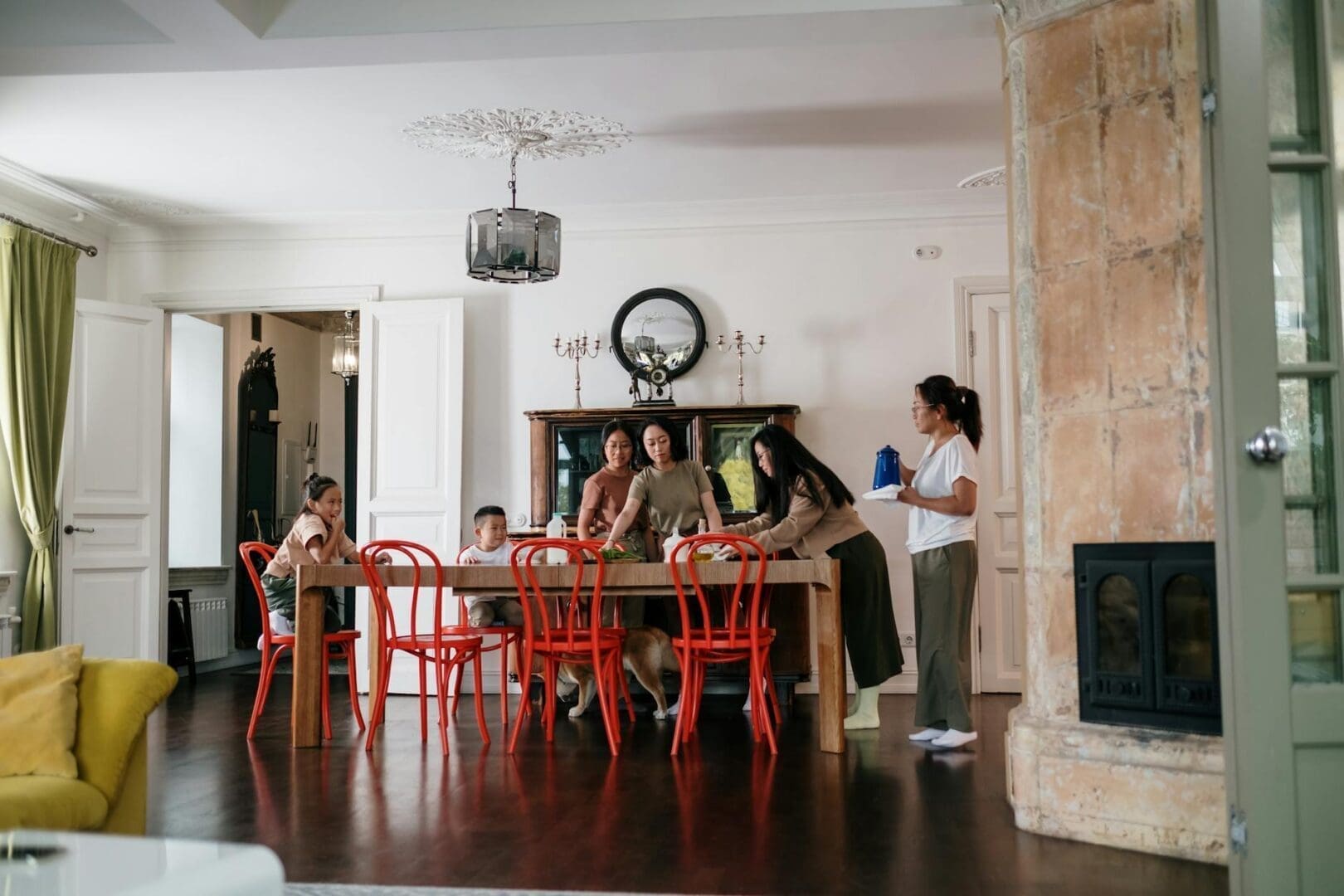
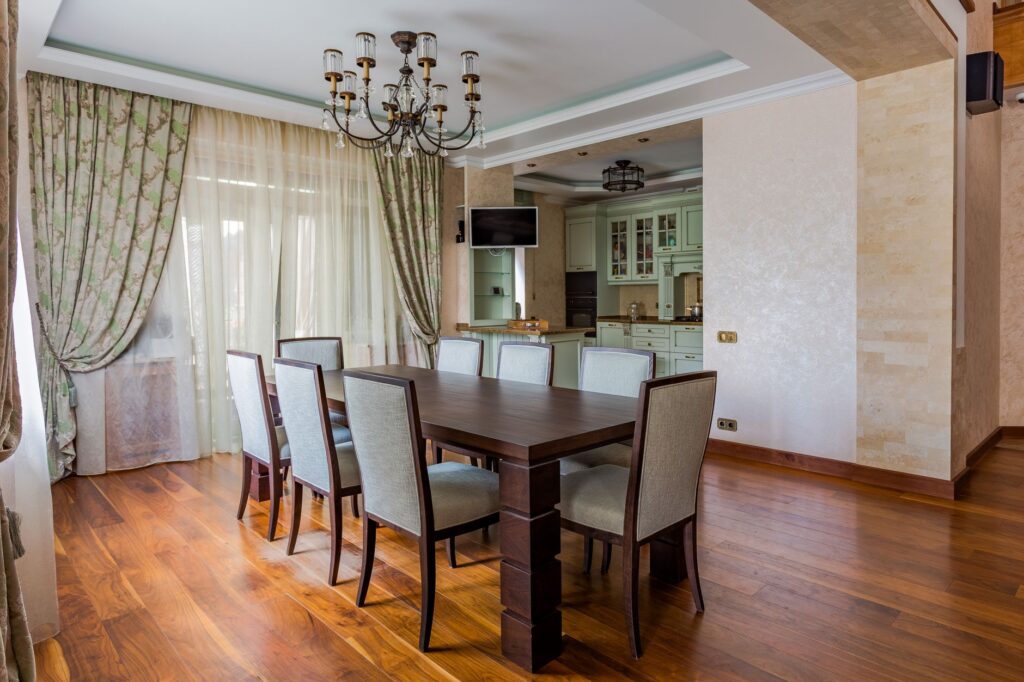
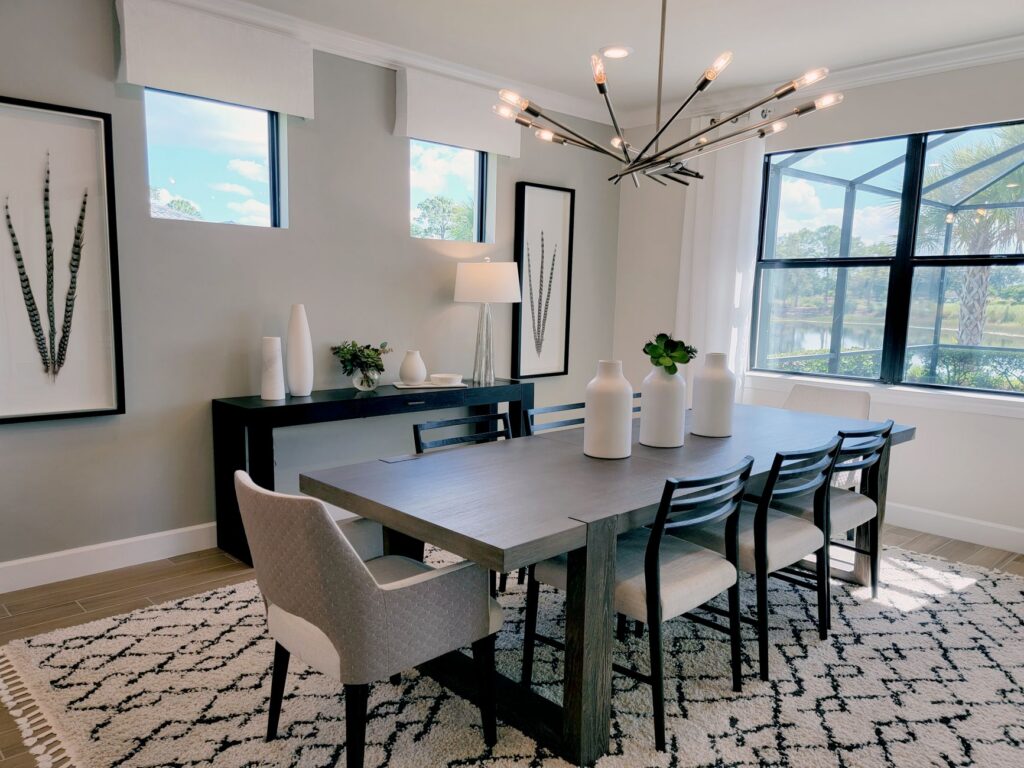
Let’s be honest: dining rooms with kids look nothing like those pristine magazine spreads. Between marker mishaps, juice spills, and chairs that double as jungle gyms, your dining space needs to work hard while still looking good. The good news? You don’t have to sacrifice style for durability. With the right furniture choices and a few strategic decisions, you can create a dining room that handles daily chaos and still impresses when company comes over.
Choose Materials That Can Take a Beating
Your dining table will endure more than just meals. It’s where kids do homework, create art projects, and occasionally test the laws of physics with their silverware. Skip delicate wood finishes that show every water ring and opt for materials that forgive.
Solid wood tables with a distressed or matte finish hide scratches far better than glossy lacquered surfaces. Better yet, consider tables with laminate or sealed wood tops that wipe clean without special treatments. Marble and glass might look elegant, but they’re unforgiving with hard toys and require constant cleaning to avoid streaks and chips.
For chairs, look beyond fabric upholstery unless you’re prepared for stain treatments every few months. Leather and faux leather wipe clean easily and actually age well with a few scuffs. Wood chairs are nearly indestructible, though you might want cushions for comfort. If you love the look of upholstered chairs, choose performance fabrics designed to repel liquids and stains—they’re worth the extra investment. Budget-friendly sets start around $400-600, while mid-range options with better materials run $800-1,500. If you’re splurging on a statement table ($2,000+), make sure it’s built to last.
Think About Size and Layout
A cramped dining room becomes chaotic fast when kids need to squeeze past chairs or can’t move around safely. Leave at least 36 inches between your table edge and the walls or other furniture—48 inches is even better if you have the space. This gives kids room to push back chairs without crashing into things and makes it easier for you to navigate when you’re carrying hot dishes.
Round or oval tables eliminate sharp corners that little heads seem to find during roughhousing. They also encourage conversation and make it easier for younger kids to see everyone at the table. That said, rectangular tables maximize seating capacity and work better in narrow rooms. If you go rectangular, consider adding corner guards until your kids are past the wobbly toddler phase.
An extendable table offers flexibility for everyday family meals versus holiday gatherings. You’re not stuck with a massive table when it’s just the four of you on Tuesday night, but you’ve got room when grandparents visit.
Pick Storage That Keeps Clutter at Bay
Kid-friendly doesn’t mean toys scattered across the dining room, but it does mean having a place for the stuff that inevitably migrates there. A buffet or sideboard gives you storage for placemats, napkins, and serving pieces up high, while lower cabinets or drawers can hold coloring books, crayons, and puzzles that keep kids occupied before meals arrive.
Open shelving works if you’re naturally organized, but closed storage hides the visual clutter that comes with family life. Look for pieces with soft-close drawers so little fingers don’t get pinched and doors stay intact when they’re shut a bit too enthusiastically.
Add Style Without the Stress
Just because your dining room needs to be practical doesn’t mean it has to look like a daycare center. Save your decorative touches for areas kids can’t reach. A statement light fixture, artwork hung at adult eye level, or a beautiful rug positioned under the table (not extending into the traffic zone) all add personality without being in the line of fire.
Skip the fancy centerpiece that needs constant adjusting. A simple wooden bowl or a small potted plant in an unbreakable container adds warmth without creating one more thing to worry about during meals. Window treatments should be durable too—consider washable curtains or easy-to-clean blinds rather than elaborate drapes.
Creating a dining room that works for kids and adults means making intentional choices about what you bring into the space. Focus on furniture that’s built to handle real life, arrange things so everyone can move comfortably, and save your decorative energy for elements that stay out of reach. The result is a room where you can actually relax and enjoy family meals instead of constantly worrying about the next spill or scratch.
There’s something about farmhouse chandeliers that just works in a dining room—they bring warmth without being fussy, character without feeling overdone. But with so many styles calling themselves “farmhouse,” from sleek metal cages to chunky wood beam fixtures, figuring out which one belongs above your table can feel surprisingly tricky. The right chandelier should anchor […]
A sputnik chandelier makes a serious statement in a dining room—all those radiating arms and exposed bulbs create instant drama and mid-century appeal. But with so many variations in size, arm count, and finish, choosing the right one for your space can feel overwhelming. Get it right, though, and you’ve got a showstopper that pulls […]
When every square foot counts, bringing furniture into a small apartment feels like a high-stakes game of Tetris. You need storage desperately, but you’re terrified of making your space feel even more cramped. A sideboard can be the perfect solution—if you choose the right one. Let’s walk through exactly what to look for so you […]