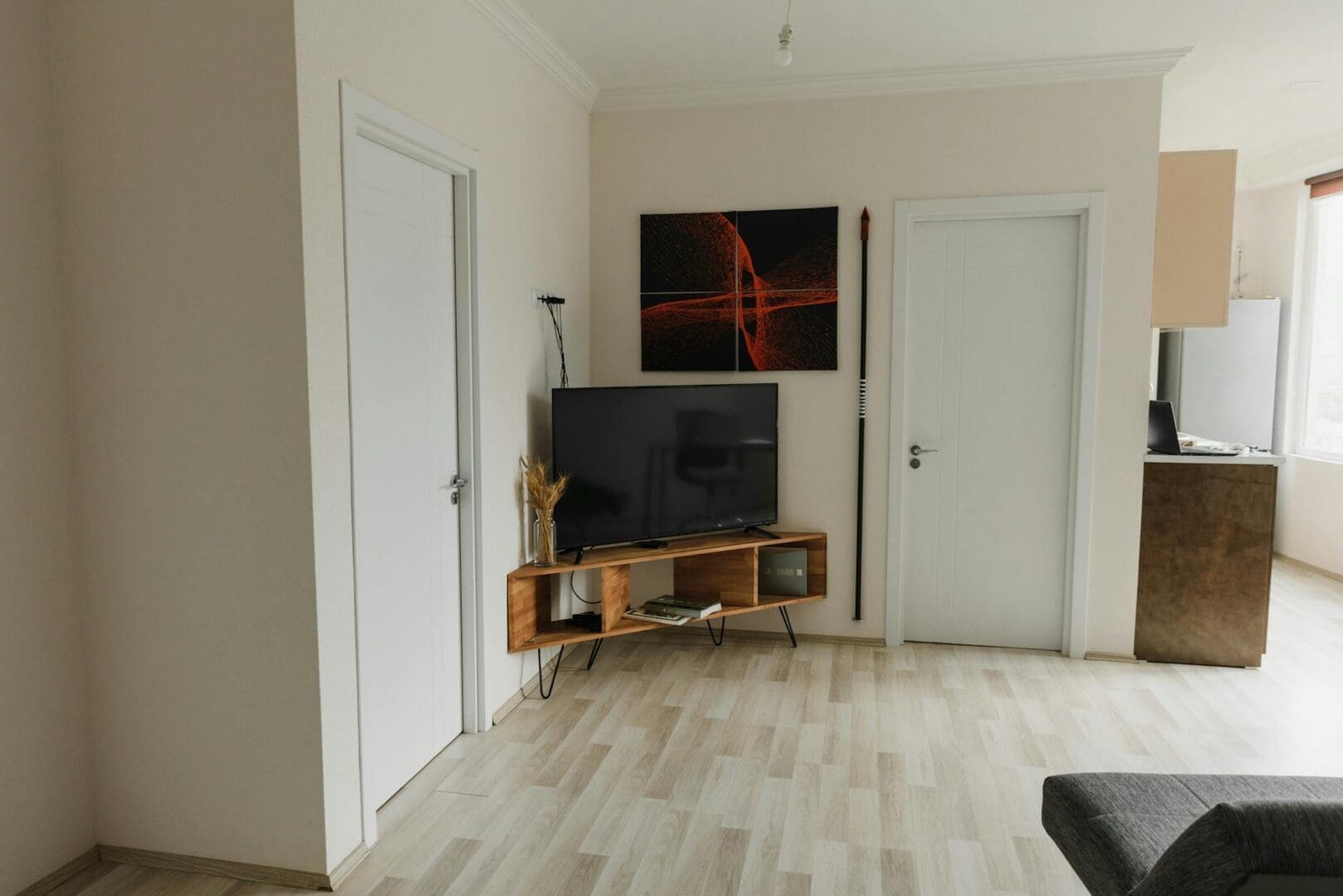
Nothing throws off a room quite like a TV stand that’s too small for the television perched precariously on top, or one that’s so oversized it dominates the entire wall. Getting the proportions right matters—not just for aesthetics, but for safety and functionality too. The good news? Choosing the right TV stand size comes down to a few straightforward measurements and considerations.
Measure Your TV First (The Width Rule)
Your TV stand should be wider than your television—ideally by at least 2-4 inches on each side. This creates visual balance and provides a stable base that prevents tipping hazards. If you have a 55-inch TV (measured diagonally), the screen width is typically around 48 inches, so you’d want a stand that’s at least 52-56 inches wide.
That said, going even wider often looks better. A stand that’s 6-12 inches wider than your TV creates breathing room and gives you space for soundbars, decorative objects, or media components. Just avoid going so wide that the stand dwarfs your TV—a 65-inch stand is plenty for most 55-inch televisions, but an 80-inch stand might make that same TV look lost.
Here’s a quick reference:
32-43 inch TV: 40-50 inch stand
50-55 inch TV: 55-65 inch stand
60-65 inch TV: 65-75 inch stand
70+ inch TV: 75+ inch stand
Consider Your Room Dimensions and Layout
The right TV stand size also depends on your available wall space and viewing distance. Measure the width of your wall or the area where you plan to place the stand. A good rule of thumb is to keep at least 6-12 inches of clearance on each side—your stand shouldn’t stretch from corner to corner unless that’s an intentional built-in look.
Think about your viewing distance too. If you’re sitting 8-10 feet from the screen, you have more flexibility with stand width. Closer viewing distances (5-7 feet) work better with more compact arrangements where the stand doesn’t extend dramatically beyond the TV.
For narrow rooms or small apartments, a minimalist stand that’s just slightly wider than your TV maximizes space. In larger living rooms with expansive walls, a longer console-style stand (70-80 inches) can anchor the space and provide valuable storage without overwhelming the room.
Height and Storage Depth Matter Too
Width gets the most attention, but height affects your viewing comfort. When seated, your eye level should align with the middle to lower third of the screen. Most TV stands sit 16-24 inches high, which works well for standard sofas and chairs. Low-profile stands (under 18 inches) suit floor seating or low-slung modern furniture, while taller stands (24-30 inches) pair better with higher seating or bar-style arrangements.
Depth typically ranges from 15-20 inches. Measure your TV’s base depth—your stand needs to be deep enough to fully support it with a few inches to spare. Deeper stands (18-20 inches) offer more storage but protrude further into the room, which matters in smaller spaces or narrow walkways. Budget stands typically run $100-250, mid-range options with better materials and storage hit $250-600, and splurge-worthy solid wood or designer pieces start around $600.
Test the Proportions Before You Buy
Before committing, use painter’s tape to mark out the stand’s footprint on your floor and wall. This simple trick reveals whether the size feels right in your actual space—sometimes what sounds perfect on paper looks too large or too small in reality.
Also consider what else needs to fit. Soundbars add height, gaming consoles need ventilation space, and if you’re someone who displays books or plants, you’ll want those extra inches of width. Cable management features and adjustable shelving add functionality worth considering once you’ve nailed down the right size.
Getting your TV stand size right creates a cohesive, balanced look that makes your whole room feel more pulled together. Take the measurements, consider your space, and you’ll find a stand that’s just right—not too big, not too small, but perfectly proportioned for both your TV and your room.
You need more storage in your living room, but a bulky bookcase feels too heavy and floating shelves aren’t cutting it. A credenza might be exactly what you’re looking for—it’s that low-profile cabinet that gives you tons of hidden storage while creating a beautiful surface for lamps, plants, and the things you actually want to […]
If you’ve been hitting snooze repeatedly or dragging yourself out of bed feeling groggy, you’re not alone. Waking up to a jarring alarm in a dark room works against your body’s natural rhythms, especially during winter months. A sunrise alarm clock mimics natural dawn, gradually filling your room with light to ease you awake. But […]
Waking up at 3 a.m. with a sweaty neck and flipping your pillow to the cool side for the fourth time isn’t just annoying—it’s robbing you of quality sleep. If you’re a hot sleeper, your pillow might be trapping heat against your head and neck all night long. The good news? The right cooling pillow […]