Staring at that blank wall or outdated entertainment center, wondering if a 65-inch TV is too big or a 55-inch too small? You’re not alone. Choosing the right TV size involves more than guessing—it’s about matching screen dimensions to your actual viewing habits and room layout. Get it right, and movie nights feel immersive without being overwhelming. Get it wrong, and you’ll either squint at a too-small screen or feel like you’re sitting courtside when you just wanted to watch the news.
Start With Viewing Distance
The distance between your sofa and where your TV will sit is the single most important measurement you’ll make. The general rule: divide your viewing distance (in inches) by 1.5 to get your ideal screen size. Sitting 8 feet away? That’s 96 inches, divided by 1.5, which suggests a 64-inch screen. For 10 feet, you’re looking at around 80 inches.
That said, today’s 4K TVs let you sit closer than older HD models without seeing pixelation, so these guidelines are actually conservative. If you watch a lot of sports or movies, you might prefer going slightly larger. If your TV time is mostly background news while you fold laundry, you can comfortably size down.
Here’s a quick reference:
6-7 feet away: 42-50 inches
7-8 feet away: 50-60 inches
8-10 feet away: 60-75 inches
10+ feet away: 75-85+ inches
Consider Your Room Layout and Furniture Arrangement
Your seating arrangement matters as much as distance. If you have a sectional where some seats are angled or off to the side, a larger screen helps everyone see comfortably without craning their necks. Open-concept spaces where the living area flows into the kitchen or dining room often benefit from bigger screens since people watch from various distances.
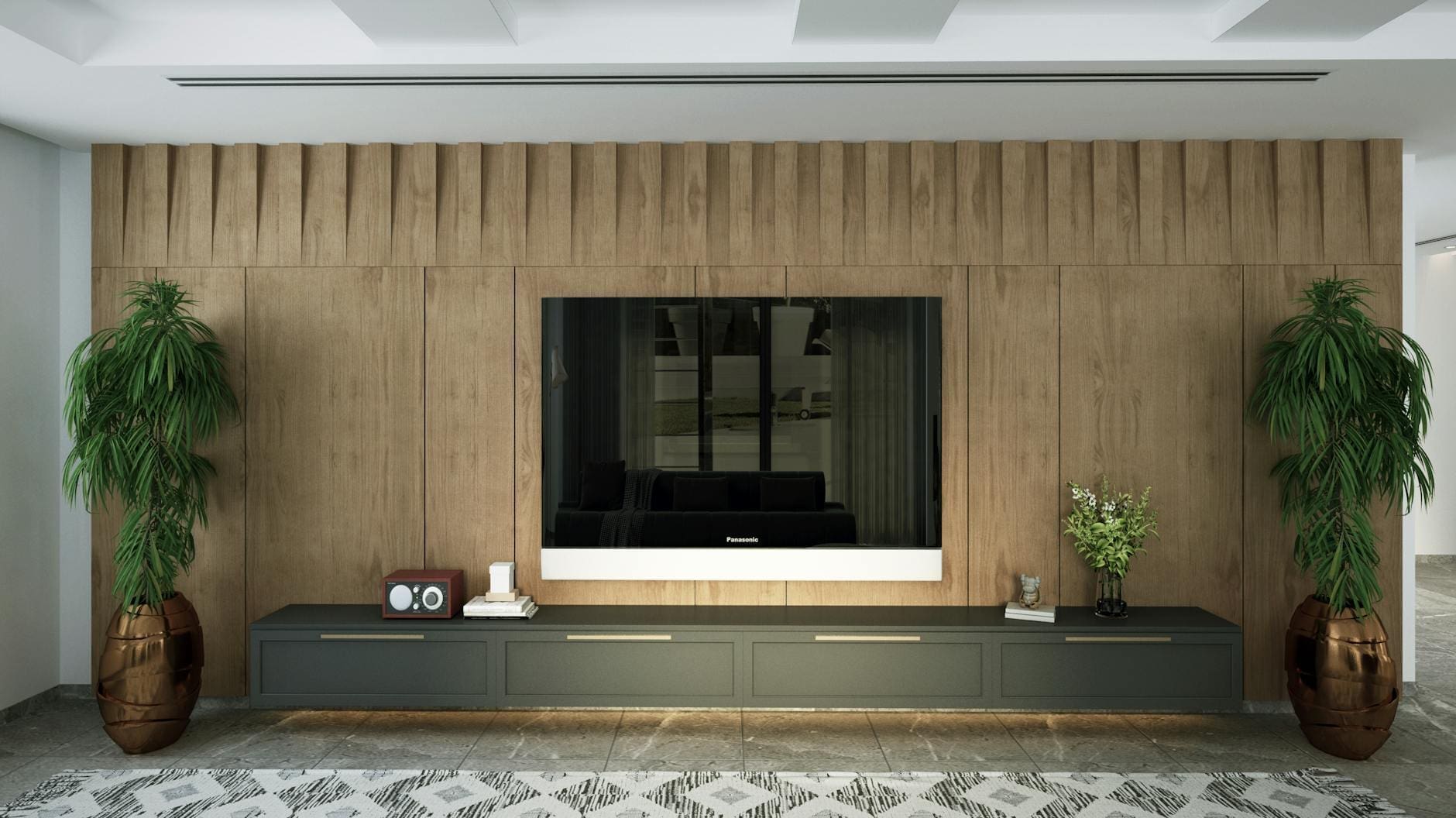
Look at your entertainment center or media console, too. Your TV should be proportional—a 43-inch TV on a 72-inch console looks lost, while an 85-inch screen on a 50-inch stand looks precarious (and actually might be). As a rule of thumb, your TV should be no wider than your console, and ideally about two-thirds the width for balanced proportions.
Mounting height plays into this as well. Whether you’re using a TV stand or wall mount, the center of the screen should sit at eye level when you’re seated. Larger TVs mounted too high create neck strain, which is worth considering before you super-size.
Match Screen Size to Your Content and Habits
How you actually use your TV should influence your size choice. Gamers often prefer larger screens (65 inches and up) for immersive gameplay, especially with newer consoles that support 4K. Sports fans similarly benefit from bigger displays where you can track the action across the field or court.
If you’re primarily streaming shows and movies, a mid-range size (55-65 inches) hits the sweet spot for most living rooms. These screens are large enough to appreciate cinematic details without overwhelming smaller spaces. For casual viewing—morning news, cooking shows, background TV—even a 43-50 inch screen provides a perfectly comfortable experience.
Budget considerations matter here, too. Expect to pay around $300-500 for quality 50-55 inch models, $500-800 for 65-inch screens, and $1,000+ as you move into the 75-85 inch range. Larger doesn’t always mean better if it strains your budget or doesn’t match how you watch.
Think About Future-Proofing
Most people keep their TVs for 7-10 years, so it’s worth thinking slightly ahead. Streaming services increasingly produce content optimized for larger screens, and 4K has become the standard rather than the premium option. If you’re between two sizes and the larger one fits your space and budget, it’s usually the safer bet.
That said, don’t let FOMO push you into a screen that dwarfs your room. A TV that felt thrilling in the store showroom can feel absurdly large when you’re watching it from your couch every evening. When in doubt, use painter’s tape to outline the dimensions on your wall—it’s a surprisingly effective reality check.
The right TV size balances your room’s dimensions, your viewing distance, and how you actually spend time in that space. Measure twice, consider your typical viewing habits, and trust that the screen size that fits your room comfortably will deliver a better experience than the biggest option you can technically squeeze in.
You need more storage in your living room, but a bulky bookcase feels too heavy and floating shelves aren’t cutting it. A credenza might be exactly what you’re looking for—it’s that low-profile cabinet that gives you tons of hidden storage while creating a beautiful surface for lamps, plants, and the things you actually want to […]
If you’ve been hitting snooze repeatedly or dragging yourself out of bed feeling groggy, you’re not alone. Waking up to a jarring alarm in a dark room works against your body’s natural rhythms, especially during winter months. A sunrise alarm clock mimics natural dawn, gradually filling your room with light to ease you awake. But […]
Waking up at 3 a.m. with a sweaty neck and flipping your pillow to the cool side for the fourth time isn’t just annoying—it’s robbing you of quality sleep. If you’re a hot sleeper, your pillow might be trapping heat against your head and neck all night long. The good news? The right cooling pillow […]