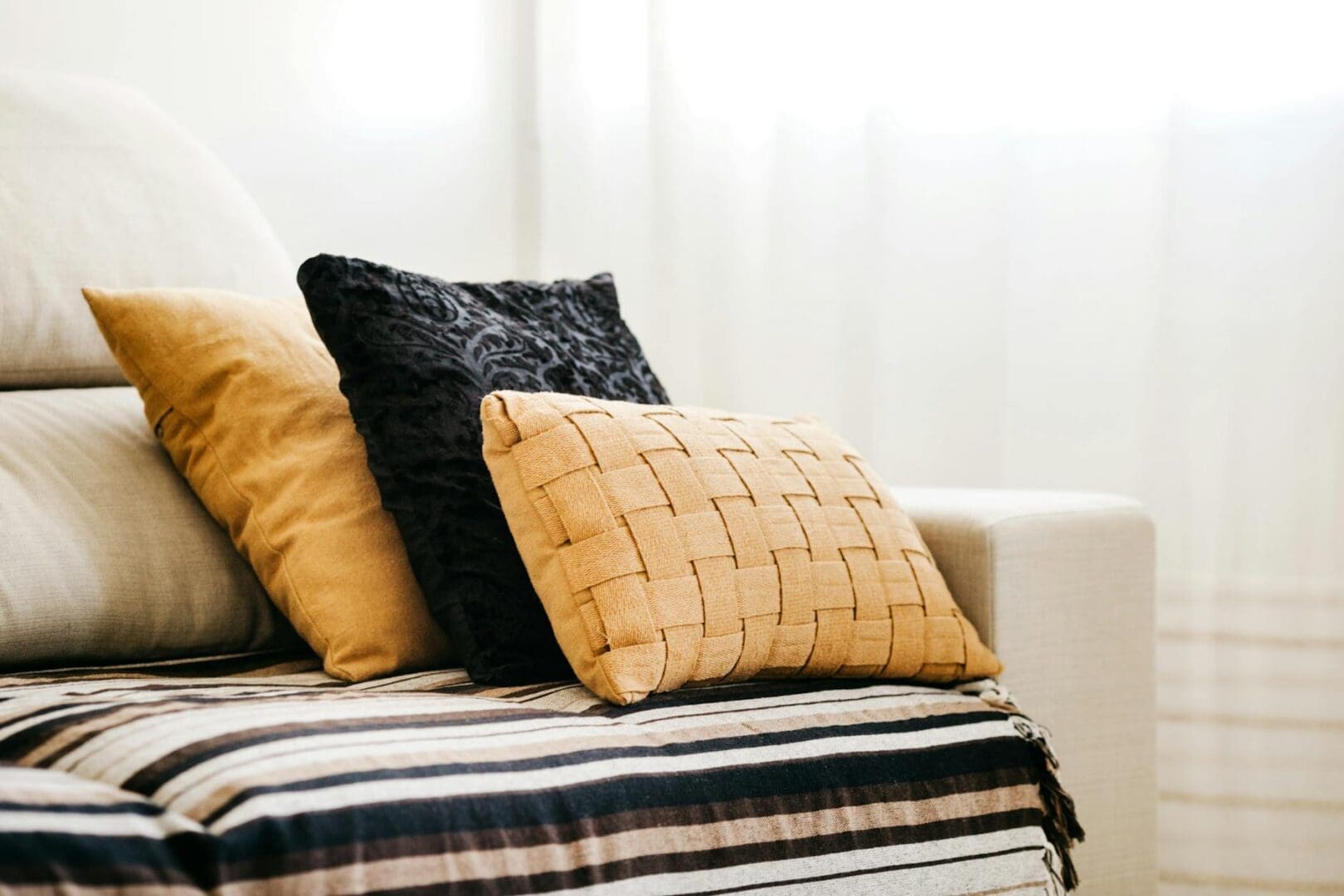
You’ve got the sofa. It’s perfectly positioned in your living room. But somehow it looks… unfinished. A little flat. That’s where throw pillows come in—they’re the easiest way to add personality, color, and comfort to your space. The tricky part? With endless options in size, pattern, and texture, it’s easy to either overthink it or grab a few pillows that don’t quite work together. Let’s break down exactly what to look for so your sofa looks pulled-together without feeling overdone.
Getting the Size and Number Right
Start with size, because it matters more than you might think. For most standard sofas (around 84 inches long), you’ll want 3 to 5 pillows. Go with larger pillows—20×20 or 22×22 inches—as your anchors on the ends, then layer in smaller 18×18 or lumbar pillows (12×20 or 14×24 inches) toward the center.
If you have a sectional, treat each section like its own sofa. A three-seater section can handle 3-4 pillows, while a chaise might only need one or two. For apartment-sized sofas or loveseats, stick with 3 pillows maximum—otherwise you’ll be moving them every time you sit down, which defeats the purpose.
One quick reality check: if you’re constantly tossing pillows on the floor to make room, you have too many. Throw pillows should enhance comfort, not compete with it.
Mixing Colors, Patterns, and Textures
This is where people freeze up, but there’s a simple formula that works every time. Start with your room’s color palette—pull 2-3 colors from your rug, curtains, or artwork. One should be your dominant color, one an accent, and one neutral.
For patterns, use the “rule of three”: combine one large-scale pattern, one medium or small-scale pattern, and one solid or subtle texture. A bold floral or geometric print pairs beautifully with a smaller stripe or dot, plus a solid velvet or linen. If you’re pattern-shy, skip them entirely and focus on mixing textures instead—a chunky knit, smooth velvet, and nubby linen in coordinating colors creates plenty of visual interest.
Budget-friendly pillow covers typically run $15-30 each, mid-range designer options land around $40-70, and luxury picks (think high-end fabrics or custom prints) start at $80 and climb from there. Most people find the sweet spot mixing a couple splurge-worthy statement pillows with more affordable basics.
Choosing the Right Fill and Construction
The cover gets all the attention, but the insert makes or breaks comfort. Down and feather inserts are the gold standard—they’re plush, moldable, and look naturally full. Expect to pay $20-40 per insert depending on size. Down alternative (polyester) runs $10-20 and works well for allergy sufferers, though it won’t have quite the same sink-in softness.
Whatever you choose, buy inserts 1-2 inches larger than your cover. A 20×20 cover should get a 22×22 insert. This creates that professionally stuffed look instead of a sad, flat pillow.
Look for covers with hidden zippers (not visible from the front) and double-stitched seams. If you have kids or pets, choose removable covers that are machine washable. Performance fabrics with stain resistance cost a bit more upfront but save you stress down the line.
Practical Styling That Actually Works
Here’s a foolproof arrangement for a standard sofa: place your two largest pillows in the back corners, angled slightly outward. Add a medium pillow in front of each large one, then finish with a lumbar pillow in the center. This creates a balanced, layered look that still leaves sitting room.
For a more relaxed vibe, use odd numbers and vary the heights slightly. Three pillows—two large and one medium—works perfectly for casual spaces. Symmetry feels formal; asymmetry feels collected and lived-in.
Don’t forget about seasonality. Swapping pillow covers twice a year (lighter linens and cottons for spring/summer, richer velvets and chunky knits for fall/winter) refreshes your entire room for minimal effort and cost.
The right throw pillows transform your sofa from furniture into a focal point. Start with proper sizes, stick to a cohesive color story, mix in varied textures, and don’t skimp on quality inserts. Whether you go bold with patterns or keep it simple with textured solids, choose pillows that make you happy every time you walk into the room—because that’s what good design actually does.
You need more storage in your living room, but a bulky bookcase feels too heavy and floating shelves aren’t cutting it. A credenza might be exactly what you’re looking for—it’s that low-profile cabinet that gives you tons of hidden storage while creating a beautiful surface for lamps, plants, and the things you actually want to […]
If you’ve been hitting snooze repeatedly or dragging yourself out of bed feeling groggy, you’re not alone. Waking up to a jarring alarm in a dark room works against your body’s natural rhythms, especially during winter months. A sunrise alarm clock mimics natural dawn, gradually filling your room with light to ease you awake. But […]
Waking up at 3 a.m. with a sweaty neck and flipping your pillow to the cool side for the fourth time isn’t just annoying—it’s robbing you of quality sleep. If you’re a hot sleeper, your pillow might be trapping heat against your head and neck all night long. The good news? The right cooling pillow […]