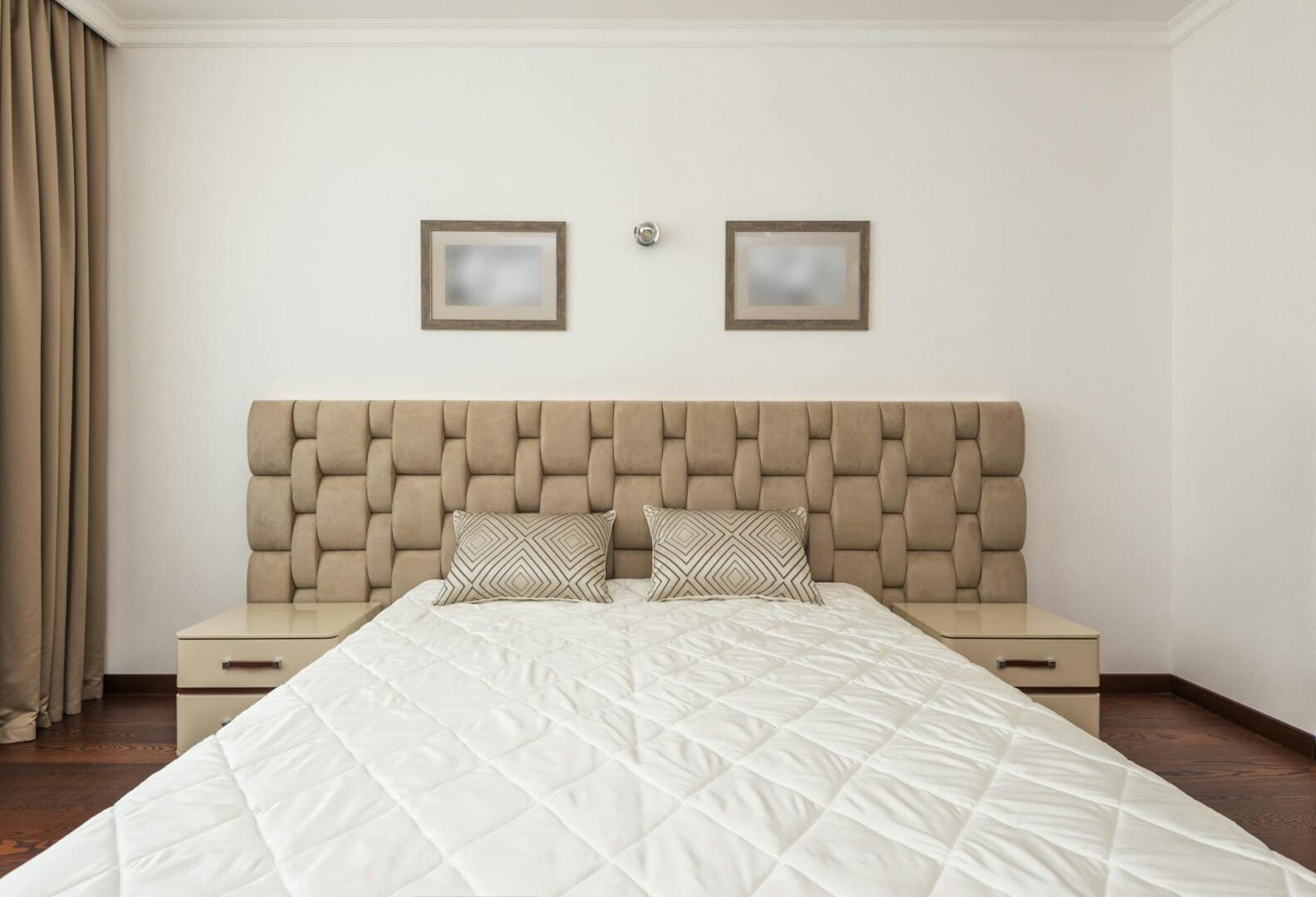
Your bed takes up more visual real estate than any other piece of furniture in your bedroom, so why let it fade into the background? A statement headboard transforms your bed from a functional sleeping spot into the room’s focal point. Whether you’re working with a builder-grade bedroom that needs personality or simply want to refresh your space without a full renovation, the right headboard does the heavy lifting.
The challenge is figuring out what “statement” means for your space. Let’s walk through what actually matters when you’re shopping.
Size and Scale: Bigger Really Is Better
If you want your headboard to make a statement, thinking bigger than standard height is your first move. Traditional headboards sit around 48 to 52 inches from the floor, which is fine but hardly dramatic. Statement headboards typically reach 60 to 72 inches tall, and some floor-to-ceiling designs stretch even higher.
Here’s what to consider for your bed size:
Queen beds: Look for headboards at least 60 inches wide and 60+ inches tall for impact
King beds: Go for 76-80 inches wide minimum; height of 65+ inches prevents the headboard from looking stubby
California King: Similar width to standard king, but the extra length means you can push the height to 70+ inches
Room height matters too. In spaces with 8-foot ceilings, stop around 65 inches. With 9 or 10-foot ceilings, you can confidently go taller without the headboard overwhelming the room. Measure your wall space and visualize the proportions before committing.
Style That Commands Attention
Statement headboards earn their name through distinctive design elements. Upholstered headboards with channel tufting, wingback shapes, or curved silhouettes add architectural interest your walls probably lack. Vertical channels create height emphasis, while horizontal tufting adds width perception.
Wood and metal headboards make statements differently. Look for carved wood designs, geometric metal frameworks, or natural wood headboards with live edges and visible grain. Cane and rattan bring texture that photographs beautifully and works across traditional and contemporary spaces.
Color plays a role too. Neutral upholstery in linen or velvet works if the shape is interesting enough, but jewel tones like emerald, sapphire, or deep rust immediately draw the eye. For longevity, choose bold shapes over bold colors—you can always change your bedding and wall color, but swapping a headboard is a bigger project.
Materials That Balance Beauty and Budget
Your material choice affects both aesthetics and your wallet. Upholstered headboards in performance fabrics start around $300-500 for queen size in budget lines, $600-1,200 for mid-range options with better foam density and fabric quality, and $1,500+ for luxury materials like Belgian linen or Italian leather.
Solid wood headboards with meaningful detail work begin around $500-700, hit their sweet spot at $900-1,500, and climb past $2,000 for premium hardwoods and custom finishes. Metal and mixed-material designs often land in the $400-1,000 range depending on finish quality and design complexity.
Consider maintenance realistically. Velvet upholstery shows every touch but looks incredibly luxe. Leather ages beautifully but comes with a price tag. Painted wood finishes need occasional touch-ups. Natural rattan is stunning but can snag bedding if you’re not careful.
Installation and Practical Details
Before you fall in love with a floor-to-ceiling stunner, figure out installation. Wall-mounted headboards create the cleanest look and work best for tall statement pieces—they distribute weight properly and won’t tip. You’ll need to locate studs and feel comfortable with a drill, or budget for professional installation at $75-150.
Frame-mounted headboards attach directly to your bed frame with brackets. They’re easier to install but limit your height options, since structural stability becomes an issue above 60 inches or so.
Freestanding headboards sit behind your bed without attachment. They work for renters or anyone hesitant about wall holes, but tall statement pieces can shift or lean, so they’re better for headboards under 55 inches.
A statement headboard changes how your bedroom feels the moment you walk in. When you’ve measured your space, considered your style preferences, and set a realistic budget, you’re ready to find the piece that makes your bed—and your entire room—look intentionally designed rather than just furnished. Take the time to get this right, and you’ll love your bedroom for years.
You need more storage in your living room, but a bulky bookcase feels too heavy and floating shelves aren’t cutting it. A credenza might be exactly what you’re looking for—it’s that low-profile cabinet that gives you tons of hidden storage while creating a beautiful surface for lamps, plants, and the things you actually want to […]
If you’ve been hitting snooze repeatedly or dragging yourself out of bed feeling groggy, you’re not alone. Waking up to a jarring alarm in a dark room works against your body’s natural rhythms, especially during winter months. A sunrise alarm clock mimics natural dawn, gradually filling your room with light to ease you awake. But […]
Waking up at 3 a.m. with a sweaty neck and flipping your pillow to the cool side for the fourth time isn’t just annoying—it’s robbing you of quality sleep. If you’re a hot sleeper, your pillow might be trapping heat against your head and neck all night long. The good news? The right cooling pillow […]