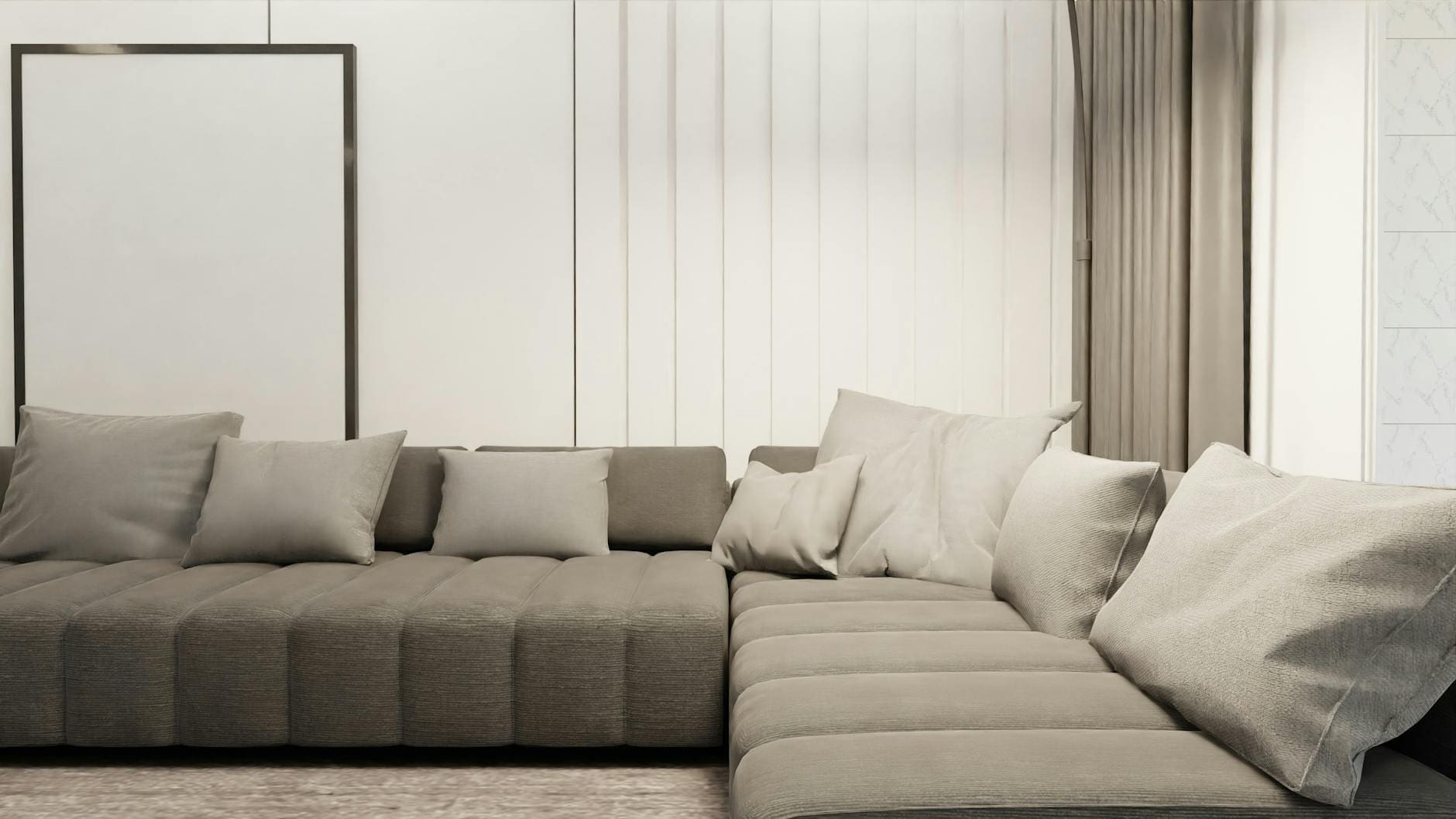
You’ve decided a sectional is right for your space, but now comes the tricky part: figuring out which configuration actually fits. L-shape? U-shape? With a chaise or without? The layout you choose affects everything from traffic flow to how many people can comfortably watch a movie together. Let’s walk through how to match the right sectional layout to your specific room and lifestyle.
Measure Your Space (and Leave Room to Move)
Before you fall in love with any particular layout, grab a measuring tape. You’ll need your room’s dimensions plus the exact measurements of any sectional you’re considering—length, depth, and the footprint of each section.
Here’s the rule most people forget: leave at least 18 inches between your sectional and walls or other furniture for comfortable passage. If your sectional backs up to a walkway between rooms, aim for 30 to 36 inches of clearance. Also measure doorways and stairwells—many sectionals arrive in separate pieces, but some configurations are surprisingly bulky.
A helpful trick: use painter’s tape on your floor to map out the sectional’s footprint. Live with it for a day or two. You’ll quickly discover if it blocks natural pathways or makes the room feel cramped.
Match the Layout to Your Room Shape
The best sectional layout works with your room’s natural shape, not against it.
L-shaped sectionals are the most versatile and work beautifully in square or slightly rectangular rooms. They typically fit into a corner, leaving the rest of the space open. Perfect for rooms 12×14 feet or larger. Expect to pay $800-$1,500 for budget options, $1,500-$3,500 for mid-range, and $3,500+ for high-end pieces.
U-shaped sectionals need serious space—think 15×18 feet minimum. They’re ideal for large, rectangular rooms where you want to create a cozy conversation zone in the center. These often seat 6-8 people comfortably.
Curved or wedge sectionals soften angular rooms and work well in open-concept spaces where you want to define the living area without harsh lines.
Chaise sectionals (an L-shape with one extended lounging side) fit nicely in narrower rooms and are great if you prioritize stretching out over maximum seating.
Consider How You Actually Use Your Living Room
Layout isn’t just about fit—it’s about function. Think through your daily routine and entertaining style.
If you host regularly, a U-shaped or large L-shaped sectional creates that “everyone faces everyone” setup that’s ideal for conversation. If it’s mainly you and your partner binge-watching shows, a chaise sectional offers that sprawl-out comfort without wasted seating.
For families with kids, consider layouts that don’t block sightlines to other rooms—you’ll want to keep an eye on little ones playing elsewhere. Open-end sectionals (without arms on one side) can make a space feel less boxed in and easier to supervise.
Also think about focal points. Your sectional layout should orient toward whatever matters most in your room—whether that’s a fireplace, a great window view, or the TV. Avoid configurations that force people to crane their necks or sit sideways.
Modular vs. Fixed: Flexibility Matters
Here’s something worth considering: modular sectionals consist of individual pieces you can rearrange, while fixed sectionals come in predetermined configurations.
Modular sectionals typically cost 15-25% more but offer real advantages if you move frequently, like to refresh your layout seasonally, or aren’t completely sure what configuration works best. You can start with a basic L-shape and add pieces later.
Fixed sectionals are usually more budget-friendly and structurally solid since they’re built as complete units. They’re the better choice if you know exactly what you want and don’t anticipate changing things up.
Your sectional will likely be the largest furniture investment in your living room, so choosing the right layout from the start makes all the difference. Measure carefully, think about how you live in the space, and don’t be afraid to take your time comparing configurations. When you find the layout that fits both your room and your lifestyle, you’ll know—everything just clicks into place.
You need more storage in your living room, but a bulky bookcase feels too heavy and floating shelves aren’t cutting it. A credenza might be exactly what you’re looking for—it’s that low-profile cabinet that gives you tons of hidden storage while creating a beautiful surface for lamps, plants, and the things you actually want to […]
If you’ve been hitting snooze repeatedly or dragging yourself out of bed feeling groggy, you’re not alone. Waking up to a jarring alarm in a dark room works against your body’s natural rhythms, especially during winter months. A sunrise alarm clock mimics natural dawn, gradually filling your room with light to ease you awake. But […]
Waking up at 3 a.m. with a sweaty neck and flipping your pillow to the cool side for the fourth time isn’t just annoying—it’s robbing you of quality sleep. If you’re a hot sleeper, your pillow might be trapping heat against your head and neck all night long. The good news? The right cooling pillow […]