There’s something frustrating about buying a dining room rug only to realize it’s too small, slides around when guests pull out their chairs, or shows every single crumb from Tuesday’s pasta night. The right rug can anchor your dining space beautifully and protect your floors, but getting there means answering a few key questions before you buy.
Getting the Size Right (It’s Bigger Than You Think)
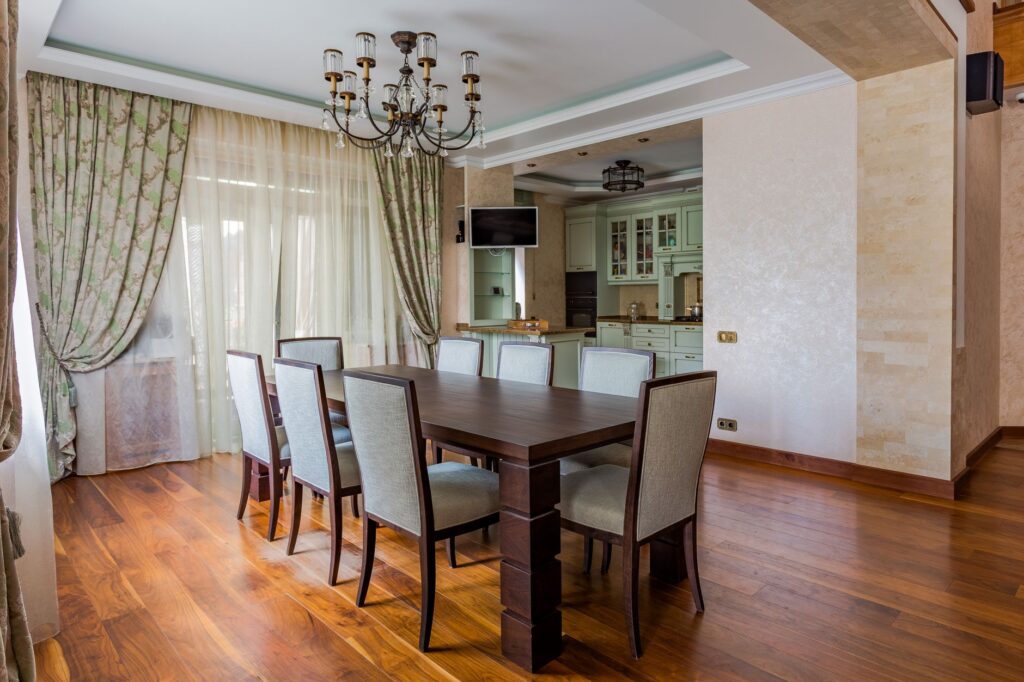
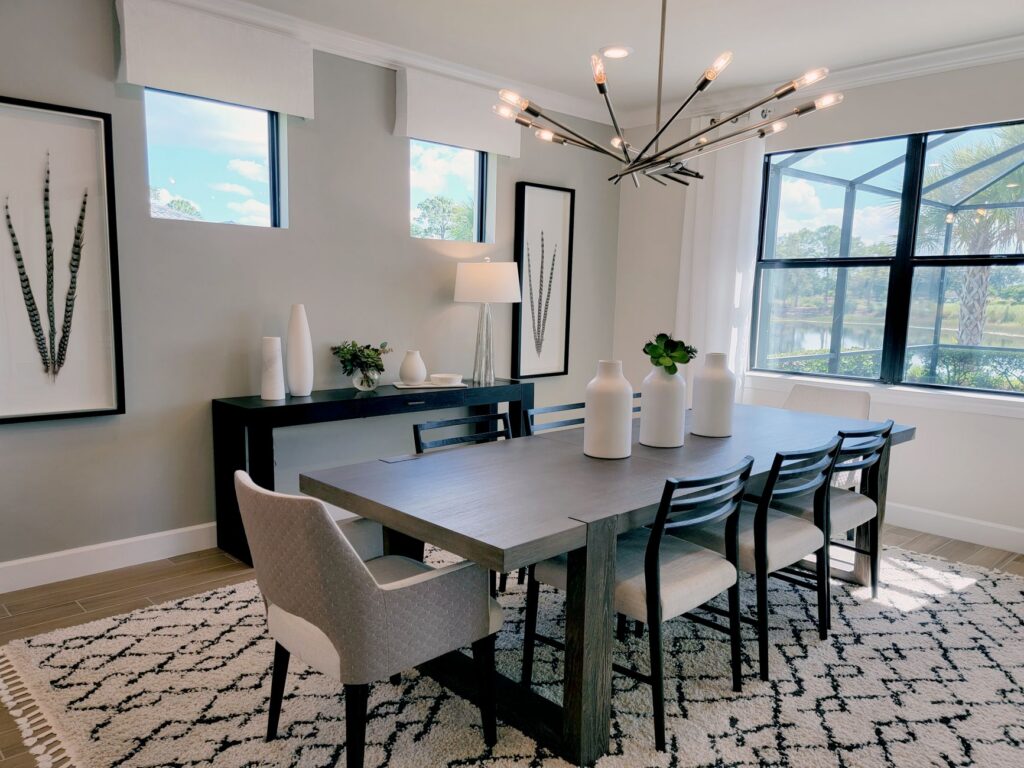
Here’s the golden rule: your rug should extend at least 24 inches beyond all sides of your table. This ensures chairs remain on the rug even when pulled out, preventing that annoying catch when the chair legs hit the rug edge. For a table that seats six, you’re typically looking at an 8×10 rug as your starting point. Larger tables that seat eight to ten often need a 9×12 or even 10×14 rug.
Measure your table, add 48 inches to both length and width, and that’s your minimum rug size. If that dimensions falls between standard sizes, always size up. A rug that’s too small will make your entire dining setup look like it’s floating awkwardly in space. Round tables pair beautifully with round or square rugs, while rectangular tables work with rectangular rugs—though you can break this rule if you know what you’re doing.
Materials That Can Handle Real Life
Dining rooms are high-traffic, high-mess zones. That gorgeous white shag rug? Save it for the bedroom. You want materials that resist stains, clean easily, and hold up to chairs scraping across them multiple times daily.
Wool rugs offer the best balance of durability and elegance. They naturally repel stains and can last decades with proper care. Expect to spend $400-$800 for a quality 8×10 wool rug, or $1,200+ for hand-knotted options. Polypropylene and nylon rugs cost less ($150-$400 for an 8×10) and handle spills even better, though they won’t have the same luxurious feel underfoot.
Natural fibers like jute and sisal look beautiful and casual, but they stain easily and can be scratchy. If you love the look, consider a jute blend with synthetic fibers for easier maintenance. Whatever you choose, skip high-pile rugs entirely—crumbs hide in them, and chair legs get stuck.
Practical Style Considerations
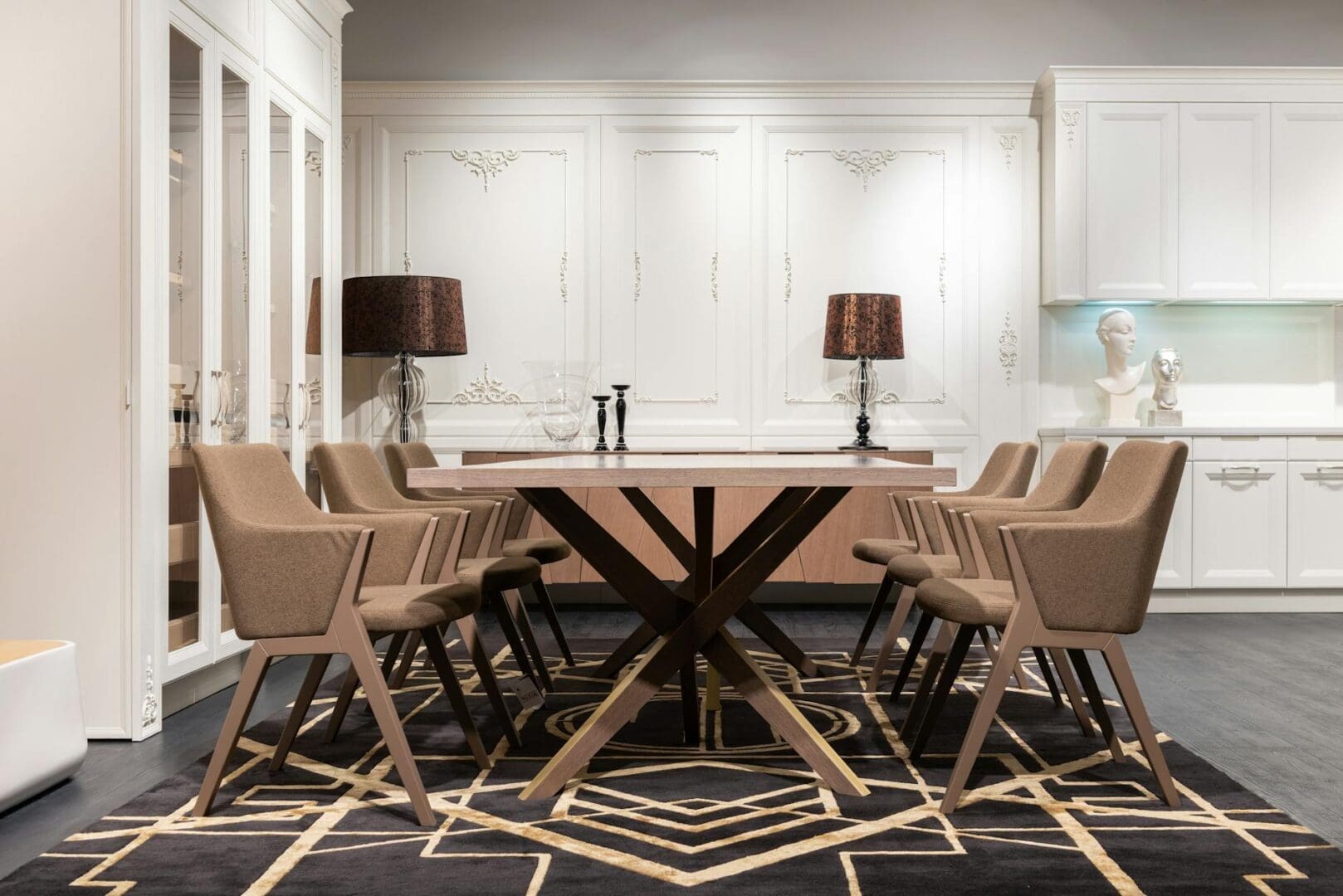
Patterns are your friend in dining rooms. They camouflage inevitable stains and spills far better than solid colors. Geometric patterns, Oriental designs, or subtle variegated tones all work well. Darker colors and medium-tone rugs with visual texture show fewer dirt marks than stark white or solid dark options.
Think about your chairs too. If they have wheels or casters, you need an ultra-durable, low-pile rug that won’t shred. Armless chairs are more forgiving with rug size than chairs with arms, which need extra clearance space.
Your rug should complement your overall design without competing with your table. If you have a statement chandelier or an ornate table, choose a simpler rug pattern. A more basic table setup can handle a bolder rug design.
Budget and When to Splurge
You can find decent synthetic dining room rugs starting around $150 for an 8×10, with solid mid-range options in the $400-$800 range offering better construction and materials. High-end wool, vintage, or hand-knotted rugs run $1,200 to several thousand dollars.
This is one area where mid-range usually makes the most sense. You’re investing in something that will take daily abuse, so durability matters more than having the cheapest option. That said, you don’t need a $3,000 Persian rug unless you’re confident about your family’s track record with red wine.
Look for rugs with stain-resistant treatments, low pile height (under half an inch), and bound or serged edges that won’t fray. A good rug pad is non-negotiable—it prevents slipping, protects both rug and floor, and adds cushioning. Budget another $50-$150 for a quality pad.
The right dining room rug pulls double duty: it protects your floors while defining your dining space as its own intentional zone. Measure carefully, prioritize durability over delicate beauty, and choose a size that looks generous rather than skimpy. Your future self—and your dinner guests—will appreciate the effort you put in now.
There’s something about farmhouse chandeliers that just works in a dining room—they bring warmth without being fussy, character without feeling overdone. But with so many styles calling themselves “farmhouse,” from sleek metal cages to chunky wood beam fixtures, figuring out which one belongs above your table can feel surprisingly tricky. The right chandelier should anchor […]
A sputnik chandelier makes a serious statement in a dining room—all those radiating arms and exposed bulbs create instant drama and mid-century appeal. But with so many variations in size, arm count, and finish, choosing the right one for your space can feel overwhelming. Get it right, though, and you’ve got a showstopper that pulls […]
When every square foot counts, bringing furniture into a small apartment feels like a high-stakes game of Tetris. You need storage desperately, but you’re terrified of making your space feel even more cramped. A sideboard can be the perfect solution—if you choose the right one. Let’s walk through exactly what to look for so you […]