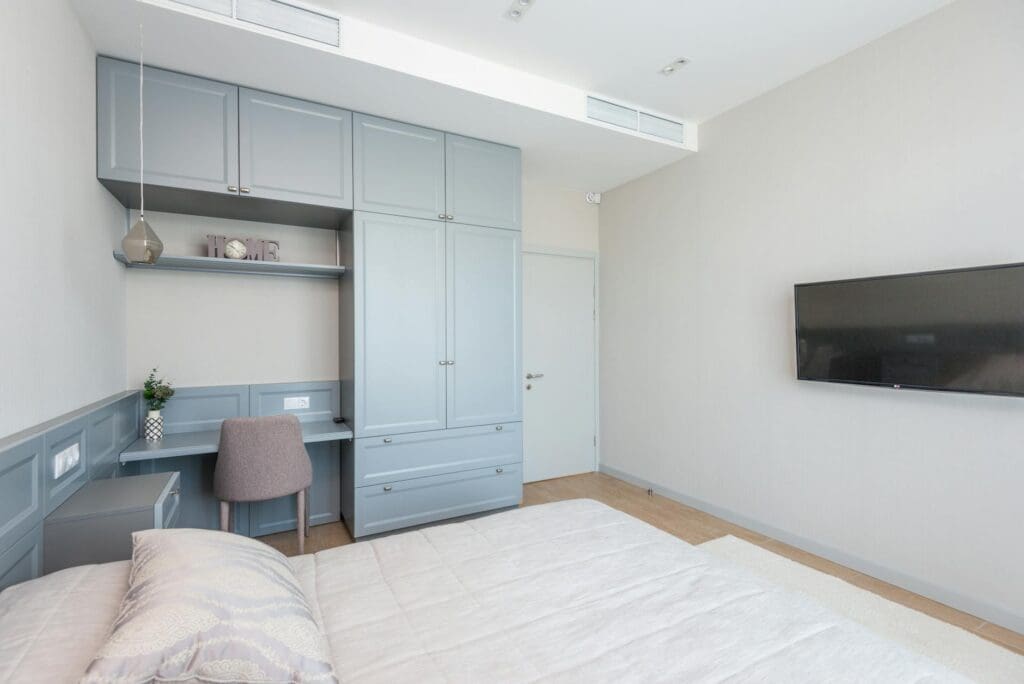
Staring at your laptop balanced on the kitchen table again? Or maybe you’ve been working from that too-small corner desk that seemed fine at first but now has you feeling cramped and frustrated. The right desk can completely transform how you work from home—and finding it doesn’t have to be overwhelming.
Your desk is where you’ll spend hours every day, so it’s worth taking the time to choose one that actually fits your work style, your space, and your budget. Here’s what to consider.
Getting the Size Right for Your Space
Before you fall in love with any desk online, grab a tape measure. You need to know exactly how much space you’re working with—and remember that you’ll need clearance to pull out your chair and move around comfortably.
For most people, a desk between 48-60 inches wide gives you enough surface area for a monitor (or two), a laptop, and some breathing room for notebooks or a coffee cup. If you’re tight on space, a compact writing desk around 36-42 inches can work, especially if you’re mostly on a laptop. Go bigger—up to 72 inches—if you need room for multiple monitors, paperwork, or creative projects.
Depth matters too. Standard desks run 24-30 inches deep, which works well for most setups. If you use large monitors or need extra workspace, look for 30-36 inch depths. Corner desks and L-shaped configurations are smart solutions when you need maximum surface area but have an awkward room layout to work with.
Choosing a Style That Works With Your Home
Your home office desk doesn’t have to scream “corporate cubicle.” The best desks blend seamlessly with the rest of your home while still being functional.
Modern desks with clean lines and minimal hardware suit contemporary spaces and keep the focus on simplicity. Look for waterfall edges, metal frames, or floating designs. Traditional desks with turned legs and rich wood finishes work beautifully in classic homes or if you want your office to feel more formal and established.
Mid-century modern desks hit a sweet spot—they’re stylish without being fussy and tend to have those tapered legs that make a room feel less heavy. Rustic or industrial desks with reclaimed wood and metal accents add character and work especially well if your home has farmhouse or eclectic vibes.
Secretary desks and writing desks are worth considering for multi-purpose rooms. Many can close up to hide work clutter, which is a lifesaver if your office doubles as a guest room or living space.
Material and Durability Considerations
The material you choose affects both how your desk looks and how long it lasts.
Solid wood desks are the most durable option and age beautifully, but they come with higher price tags—typically starting around $400 and climbing past $1,200 for quality pieces. Oak, walnut, and maple are popular choices that can handle daily wear.
Engineered wood or MDF with veneer finishes offers a more budget-friendly option, usually in the $150-$400 range. These can look great and hold up well for years, though they’re less forgiving if you’re rough on furniture or move frequently.
Metal and glass desks bring an contemporary, airy feeling to a space. They’re easy to clean and surprisingly sturdy, though glass requires more maintenance to keep fingerprint-free. These typically range from $200-$600.
Laminate desks are your budget-friendly workhorses, starting under $150. They’re practical and come in countless finishes, but don’t expect them to become heirloom pieces.
Storage and Features That Actually Matter
Think honestly about what you need to store within arm’s reach. If you’re paperless and minimal, a simple table-style desk might be perfect. But if you’re drowning in files, office supplies, and equipment, built-in storage will keep you sane.
Desks with drawers—especially file drawers—help you stay organized and keep surfaces clear. Side pedestals or attached drawer units are great for frequently-used items. Open shelving or hutches work well for books and decorative storage but can look cluttered if you’re not naturally tidy.
Consider cable management features if you have multiple devices. Grommets, wire channels, or back panels with cutouts keep cords from becoming a tangled mess. Adjustable-height desks or standing desk converters are worth the investment if you want flexibility to alternate between sitting and standing—expect to spend $300-$800 for electric models.
Your perfect desk balances the space you have, the work you do, and the style you love. Measure carefully, think about your daily work habits, and choose materials that fit your budget and durability needs. The right desk makes working from home feel less like making do and more like having a real workspace that’s actually yours.
Your home office deserves better than a jumble of mismatched shelves and that filing cabinet you’ve been meaning to replace. A storage wall unit can transform your workspace from chaotic to composed, giving you dedicated spots for books, supplies, tech equipment, and all those things that currently live in piles. The trick is finding one […]
Your back is telling you it’s time. After months of working from home in a dining chair or that hand-me-down seat from college, you’re ready to invest in a proper office chair. The good news? You don’t need to spend $800 on a Herman Miller to get real ergonomic support. The under-$300 market is packed […]
If you’re drowning in papers, sticky notes, and file folders that haven’t been touched in months, you’re not alone. The promise of a paper-free office isn’t just about going digital—it’s about choosing furniture and storage solutions that support a cleaner, more organized way of working. The right setup makes it easier to maintain that clutter-free […]