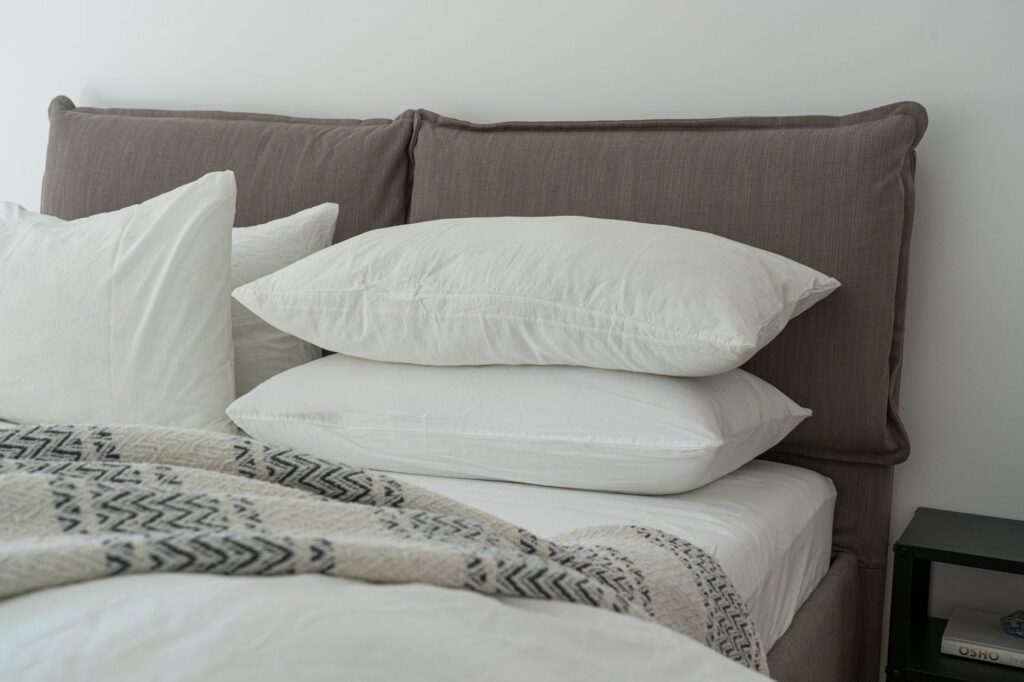
Shopping for a bunk bed mattress isn’t quite the same as choosing one for a standard bed frame. The biggest difference? Safety requirements. The wrong mattress thickness can create a dangerous gap between the sleeping surface and the guardrails, and not every mattress type holds up well on a slatted bunk bed platform. Here’s what you need to know to find a mattress that’s both safe and comfortable.
Thickness Is a Safety Issue, Not Just a Comfort Preference
The most critical factor when choosing a bunk bed mattress is thickness. Consumer safety guidelines recommend that guardrails extend at least 5 inches above the top of the mattress to prevent falls. Since most bunk bed guardrails sit about 11-13 inches above the bed frame, your mattress should be no more than 6 inches thick—and ideally closer to 5 or 6 inches.
Standard mattresses range from 8 to 14 inches thick, which makes them unsafe for the upper bunk. Even an 8-inch mattress can reduce that protective guardrail buffer to just 3-5 inches, creating a real risk for restless sleepers (especially kids). Measure your bunk bed’s guardrail height before shopping, and don’t assume a “low profile” mattress is thin enough—verify the exact measurements.
For the bottom bunk, you have slightly more flexibility since there’s no fall risk, but most people prefer matching mattresses on both bunks. Plus, a thinner mattress on the bottom bunk means more headroom for whoever’s sleeping there.
Memory Foam, Innerspring, or Hybrid: What Works Best
Bunk bed mattresses come in the same basic types as regular mattresses, but they’re engineered to provide support in a thinner profile. Memory foam is the most popular choice because manufacturers can create comfortable, supportive designs at 5-6 inches thick. These mattresses conform to the body without requiring a thick comfort layer, and they’re typically lighter than innerspring options, which makes changing sheets on the top bunk easier.
Innerspring mattresses also work well for bunk beds, especially if you’re concerned about heat retention. The coil construction allows for better airflow than solid foam, which matters for kids who tend to sleep warm. Look for pocketed coil systems rather than traditional Bonnell coils—they provide better motion isolation and support in a thinner design.
Hybrid mattresses combine a thin layer of foam over pocketed coils, giving you some of the pressure relief of memory foam with the breathability and bounce of innerspring. They tend to cost a bit more (usually $200-400 for a twin versus $150-250 for basic foam or innerspring), but they’re a good middle-ground option. Our guide to memory foam vs innerspring mattresses can help you decide which type works best for your bunk bed setup.
Size, Support, and Slat Spacing
Most bunk beds use twin (38″ x 75″) or twin XL (38″ x 80″) mattresses, though some full-over-full and queen-over-queen models exist. Measure your bunk bed frame carefully—mattresses that are too small will shift around, while oversized mattresses won’t fit properly and can interfere with ladders or guardrails.
Pay attention to your bunk bed’s slat spacing, too. If the slats are more than 3 inches apart, you’ll need a mattress with a solid foam construction or a very supportive coil system. Too much space between slats can cause sagging over time, especially with softer memory foam. Some bunk beds benefit from adding a bunkie board (a thin, solid platform) between the slats and mattress for extra support, particularly if you’re using a foam mattress.
Look for mattresses specifically labeled as “bunk bed mattresses” or “low profile” when shopping. These are designed to handle platform bed frames with slats and typically include reinforced edges to prevent rolling off—an important feature for the top bunk.
Budget Considerations and What to Expect
Budget bunk bed mattresses start around $100-150 for a basic twin-size foam or innerspring option. These work fine for occasional use or guest rooms, but if someone’s sleeping on it nightly, expect to spend $200-300 for better quality foam or a hybrid construction that will hold up longer.
Mid-range options ($250-400) typically offer higher-density foam, gel-infused cooling layers, or better coil systems with more supportive edge construction. If you’re furnishing a kids’ room where these mattresses will get years of daily use, this range offers the best balance of comfort, durability, and safety features.
Premium bunk bed mattresses ($400-600) include features like organic materials, advanced cooling technology, or specialized support zones, but they’re usually overkill unless you have specific needs like allergies or a teenager who needs extra support.
Finding the right bunk bed mattress comes down to getting the thickness right for safety, choosing a material that provides adequate support in a thin profile, and making sure it fits your frame properly. Measure your bunk bed’s guardrail height and slat spacing before you shop, and don’t compromise on the 5-6 inch thickness rule for the upper bunk. With the right mattress, your bunk bed setup can be just as comfortable and safe as any standard bed.
A bunk bed mattress should be no more than 6 inches thick to ensure the guardrails extend at least 5 inches above the mattress surface for safety. Most bunk bed mattresses range from 5 to 6 inches thick, which meets safety standards while providing adequate comfort.
Can you use a regular mattress on a bunk bed?
You can only use a regular mattress on a bunk bed if it meets thickness requirements and fits the frame properly. Standard mattresses are typically 8-12 inches thick, which is too tall for the upper bunk and creates a dangerous gap above the guardrails.
What type of mattress is best for a bunk bed?
Memory foam and hybrid mattresses work best for bunk beds because they’re available in low-profile heights and provide good support in thinner designs. Innerspring mattresses can also work well, especially for kids who sleep hot, as they offer better airflow than foam.
Do bunk bed mattresses need to be twin size?
Most bunk beds use twin or twin XL mattresses, but some models accommodate full or queen sizes on the bottom bunk. Always measure your bunk bed frame and check the manufacturer’s specifications before purchasing a mattress to ensure proper fit and safety.
Are bunk bed mattresses less comfortable because they’re thinner?
Modern bunk bed mattresses can be just as comfortable as standard mattresses despite being thinner. Quality materials like high-density foam, gel memory foam, or pocketed coils provide excellent support and comfort even in a 5-6 inch profile.
You just invested in a new mattress—or you’re trying to extend the life of your current one—and now you’re staring at dozens of mattress protectors online wondering if they’re all basically the same. They’re not. A good mattress protector is invisible to your sleep experience while doing serious work behind the scenes. A bad one […]
A four poster bed is one of those furniture pieces that can completely transform a bedroom—but only if you have the space to let it shine. If you’re working with a generous bedroom and want to create a dramatic focal point, a four poster bed might be exactly what you need. The trick is choosing […]
You’ve narrowed down your mattress choice, and now you’re staring at two beautiful bed frames wondering what the actual difference is. One’s called a panel bed, the other’s a platform bed, and honestly, they both look like… beds. The names don’t help much, but the distinctions actually matter quite a bit for your wallet, your […]