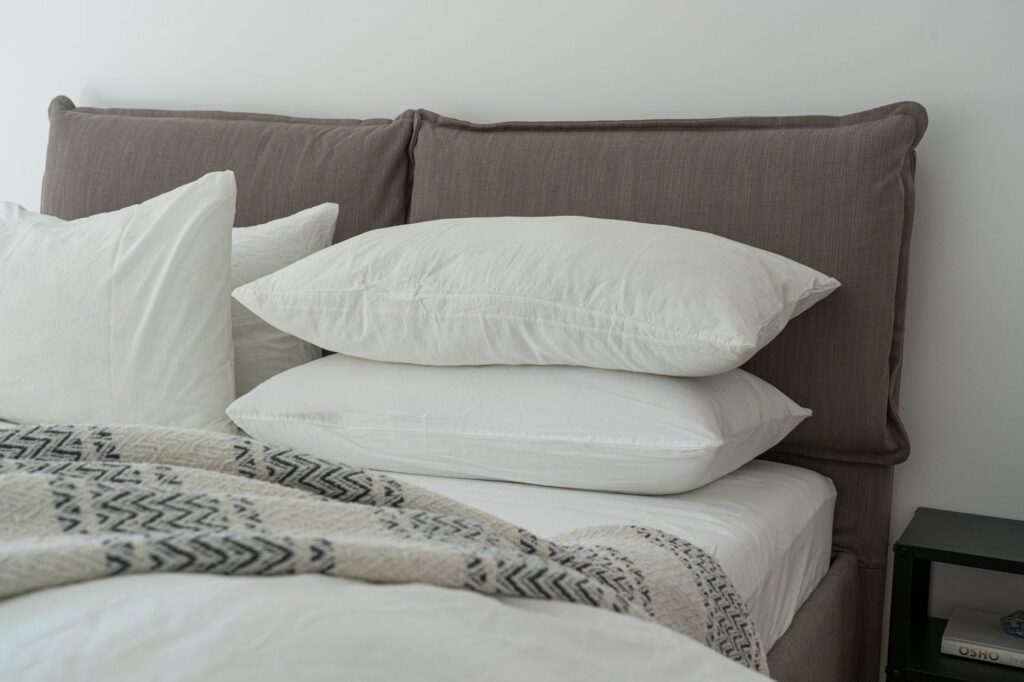
If you’ve been tossing and turning on an old mattress, you already know it’s time for a change. But walk into any mattress store or browse online, and you’re immediately hit with the big question: memory foam or innerspring? Both have passionate fans, and honestly, both can give you great sleep. The real answer depends on how you sleep, what feels comfortable to you, and what you’re willing to spend.
How Each Type Actually Feels
This is where personal preference really matters. Memory foam molds to your body, creating that “hug” sensation that people either love or feel trapped by. When you press into it, it contours around your shape and slowly springs back. This means less motion transfer—if your partner moves around at night, you probably won’t feel it.
Innerspring mattresses have that classic bouncy feel most of us grew up with. They use steel coils for support, topped with layers of padding. You sleep more “on” the mattress rather than “in” it. That responsiveness makes it easier to change positions and get in and out of bed, which matters more as we get older. If you tend to sleep hot or just prefer a firmer, more traditional feel, innerspring might be your answer.
Support and Pressure Relief
Memory foam excels at pressure relief because it distributes your weight evenly across the surface. Side sleepers particularly benefit since it cushions shoulders and hips without creating uncomfortable pressure points. If you deal with back pain or joint issues, that conforming support can make a real difference in how you feel when you wake up.
Innerspring mattresses provide firmer, more uniform support. Higher coil counts (typically 400-900 coils for a queen) generally mean better support and durability. Look for individually wrapped coils rather than traditional Bonnell coils—they reduce motion transfer and conform better to your body. Stomach and back sleepers often prefer the firmer support that keeps your spine aligned without too much sink.
Hybrid mattresses split the difference by combining memory foam comfort layers with innerspring support cores. They’ve become incredibly popular because you get pressure relief without sacrificing that responsive feel. Expect to pay $800-$2,000 for a quality hybrid in queen size.
Durability and Lifespan
A good memory foam mattress lasts 7-10 years, but density matters enormously. Look for foam that’s at least 4 pounds per cubic foot for the support core and 3+ pounds for comfort layers. Cheaper memory foam (under $500 for a queen) often uses lower-density foam that develops body impressions within a couple years. Mid-range options run $700-$1,500, while premium memory foam with cooling technology can reach $2,000-$3,000.
Quality innerspring mattresses also last 7-10 years, though the coils themselves often outlast the comfort layers on top. The padding compresses over time, which is usually why these mattresses start feeling uncomfortable. Budget innerspring mattresses start around $300-$500, mid-range options with better coil systems and pillow tops run $600-$1,200, and luxury models with premium materials can exceed $2,000.
Temperature and Maintenance Considerations
Traditional memory foam sleeps hot—there’s no getting around it. The dense foam traps body heat, which bothers a lot of people. Newer memory foams infused with gel or copper, plus open-cell constructions, help with airflow. If temperature regulation matters to you, be prepared to spend more or consider innerspring instead.
Innerspring mattresses naturally sleep cooler because air circulates through the coil system. The space between coils allows heat to dissipate, making these a better choice for hot sleepers.
Both types benefit from a quality mattress protector, and both should be rotated (but not flipped, unless specifically designed for it) every 3-6 months to promote even wear.
Your best mattress is the one that supports your sleeping position, fits your budget, and feels comfortable to you specifically. If possible, take advantage of sleep trials that let you test a mattress for 90-120 nights. Pay attention to how you actually feel waking up, not just how it felt in the showroom. Your back and your sleep quality will tell you everything you need to know.
You just invested in a new mattress—or you’re trying to extend the life of your current one—and now you’re staring at dozens of mattress protectors online wondering if they’re all basically the same. They’re not. A good mattress protector is invisible to your sleep experience while doing serious work behind the scenes. A bad one […]
A four poster bed is one of those furniture pieces that can completely transform a bedroom—but only if you have the space to let it shine. If you’re working with a generous bedroom and want to create a dramatic focal point, a four poster bed might be exactly what you need. The trick is choosing […]
You’ve narrowed down your mattress choice, and now you’re staring at two beautiful bed frames wondering what the actual difference is. One’s called a panel bed, the other’s a platform bed, and honestly, they both look like… beds. The names don’t help much, but the distinctions actually matter quite a bit for your wallet, your […]