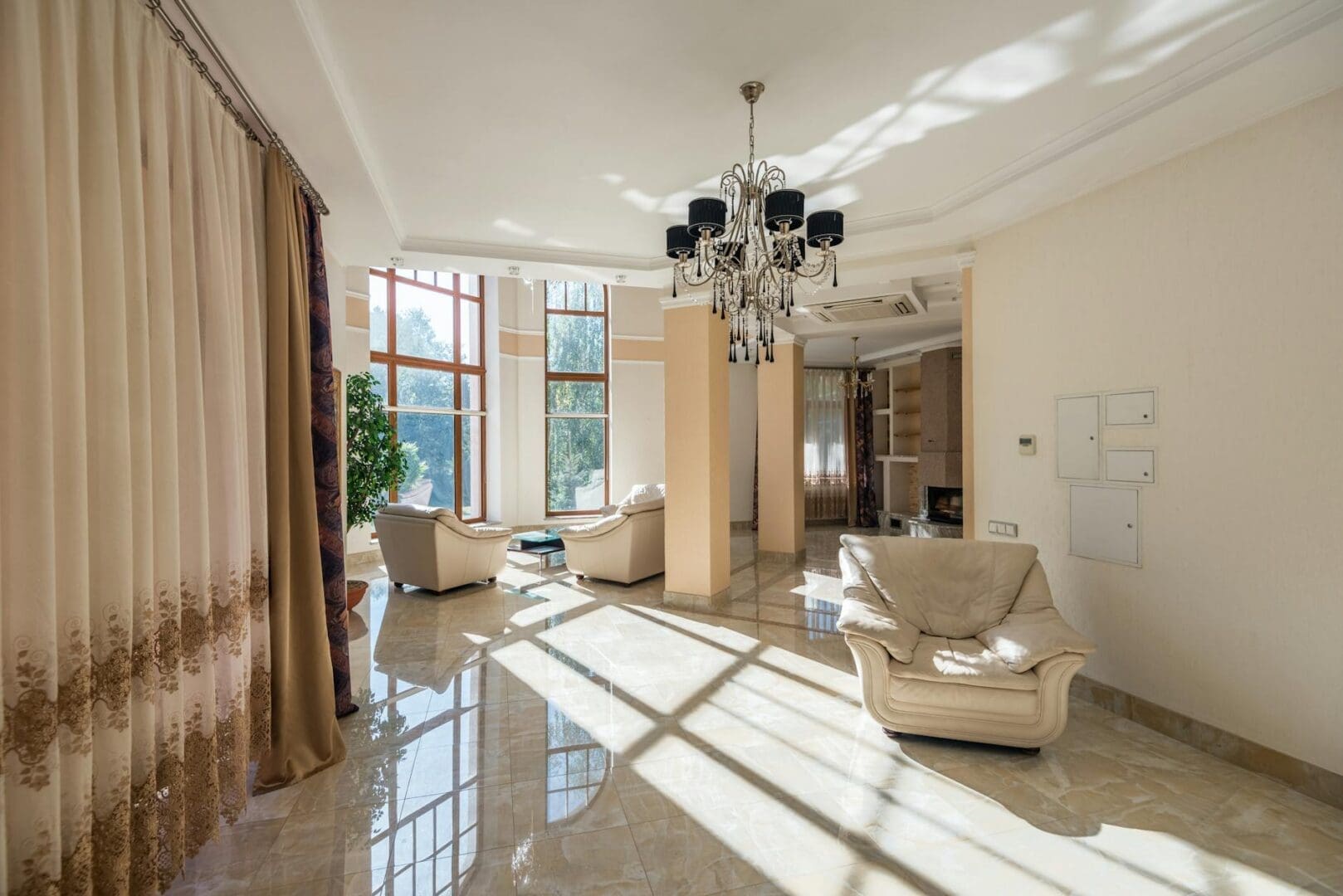
Your living room windows deserve more than an afterthought. The right window treatments can transform harsh afternoon glare into soft, welcoming light, frame your view beautifully, and pull your entire design scheme together. But walk into any home store and you’ll face an overwhelming array of options—curtains, drapes, shades, blinds, shutters—each with dozens of variations. Let’s break down what actually matters so you can choose window treatments that work for how you live.
Light Control and Privacy Needs Come First
Before you fall in love with a fabric pattern, think about how you use your living room throughout the day. Do you need blackout capability for movie marathons or afternoon naps? Or do you prefer filtering natural light while maintaining daytime privacy?
For maximum flexibility, consider layering. Sheer curtains or solar shades let you enjoy natural light during the day while providing modest privacy. Add blackout-lined drapes or cellular shades, and you can darken the room whenever needed. This combo typically runs $150-400 per window depending on size and quality.
If you’re in a private setting with great views, simple sheer panels ($30-100 per panel) might be all you need. For street-facing windows, you’ll want something with more coverage. Roman shades, woven wood shades, and honeycomb shades all offer good privacy with varying light control—expect to spend $80-300 per window for quality options.
Choosing the Right Style for Your Space
Your window treatments should enhance your living room’s style, not fight against it. Floor-length curtains in linen or cotton create a relaxed, contemporary feel and work beautifully in casual spaces. Structured Roman shades suit traditional and transitional rooms, while sleek roller shades complement modern interiors.
Here’s what works for common design styles:
Modern/Contemporary: Crisp roller shades, panel track blinds, or simple solid-colored curtains with minimal hardware
Traditional: Lined drapes with decorative rods, classic Roman shades, or plantation shutters
Farmhouse/Casual: Natural woven shades, linen curtains, or cotton panels in soft neutrals
Transitional: Layered treatments combining shades with curtains, tailored panels, or clean-lined cellular shades
Don’t forget about hardware. The rod, finials, and brackets are part of the overall look. Budget $20-60 for basic hardware or $100-300 for decorative statement pieces.
Fabric and Material Considerations
The material you choose affects both function and maintenance. Cotton and linen curtains offer a soft, lived-in look but may fade in direct sunlight—look for UV-resistant linings if this concerns you. Polyester blends resist fading and wrinkles while costing less, typically $25-80 per panel versus $60-150+ for natural fibers.
For shades and blinds, consider your climate and sun exposure. Faux wood blinds handle humidity better than real wood and cost about half as much ($40-120 versus $100-250 per window). Bamboo and woven wood shades bring warmth and texture but offer less precise light control than cellular or roller shades.
If you have pets or kids, durability matters. Cordless or motorized options eliminate dangling cords—a safety upgrade that adds $50-200 to most treatments. Motorization (starting around $200-400 per window) also makes managing hard-to-reach windows effortless.
Getting the Measurements and Scale Right
Even beautiful window treatments look awkward in the wrong size. For a polished look, curtains should either kiss the floor or puddle slightly—never hover inches above it. Mount your rod 4-6 inches above the window frame and extend it 3-6 inches beyond each side to make windows appear larger and allow panels to clear the glass when open.
For width, use panels that total 1.5 to 2.5 times your window width for proper fullness. Skimping here makes curtains look flat and cheap. For shades and blinds, measure carefully and decide whether you want inside mount (clean and modern) or outside mount (better light blocking and makes windows look larger).
In rooms with multiple windows, matching treatments create cohesion—but they don’t all need to be identical. You might use the same fabric in different styles or coordinate colors across varying window sizes.
Choosing window treatments is part practical decision, part design statement. Focus on how you’ll actually use the room, pick materials that fit your lifestyle, and select a style that feels like you. Whether you invest $100 per window or $500+, getting these fundamentals right means you’ll love the result every time you walk into your living room. Take your time, measure twice, and trust that the right choice will feel obvious once you see it in place.
You need more storage in your living room, but a bulky bookcase feels too heavy and floating shelves aren’t cutting it. A credenza might be exactly what you’re looking for—it’s that low-profile cabinet that gives you tons of hidden storage while creating a beautiful surface for lamps, plants, and the things you actually want to […]
If you’ve been hitting snooze repeatedly or dragging yourself out of bed feeling groggy, you’re not alone. Waking up to a jarring alarm in a dark room works against your body’s natural rhythms, especially during winter months. A sunrise alarm clock mimics natural dawn, gradually filling your room with light to ease you awake. But […]
Waking up at 3 a.m. with a sweaty neck and flipping your pillow to the cool side for the fourth time isn’t just annoying—it’s robbing you of quality sleep. If you’re a hot sleeper, your pillow might be trapping heat against your head and neck all night long. The good news? The right cooling pillow […]