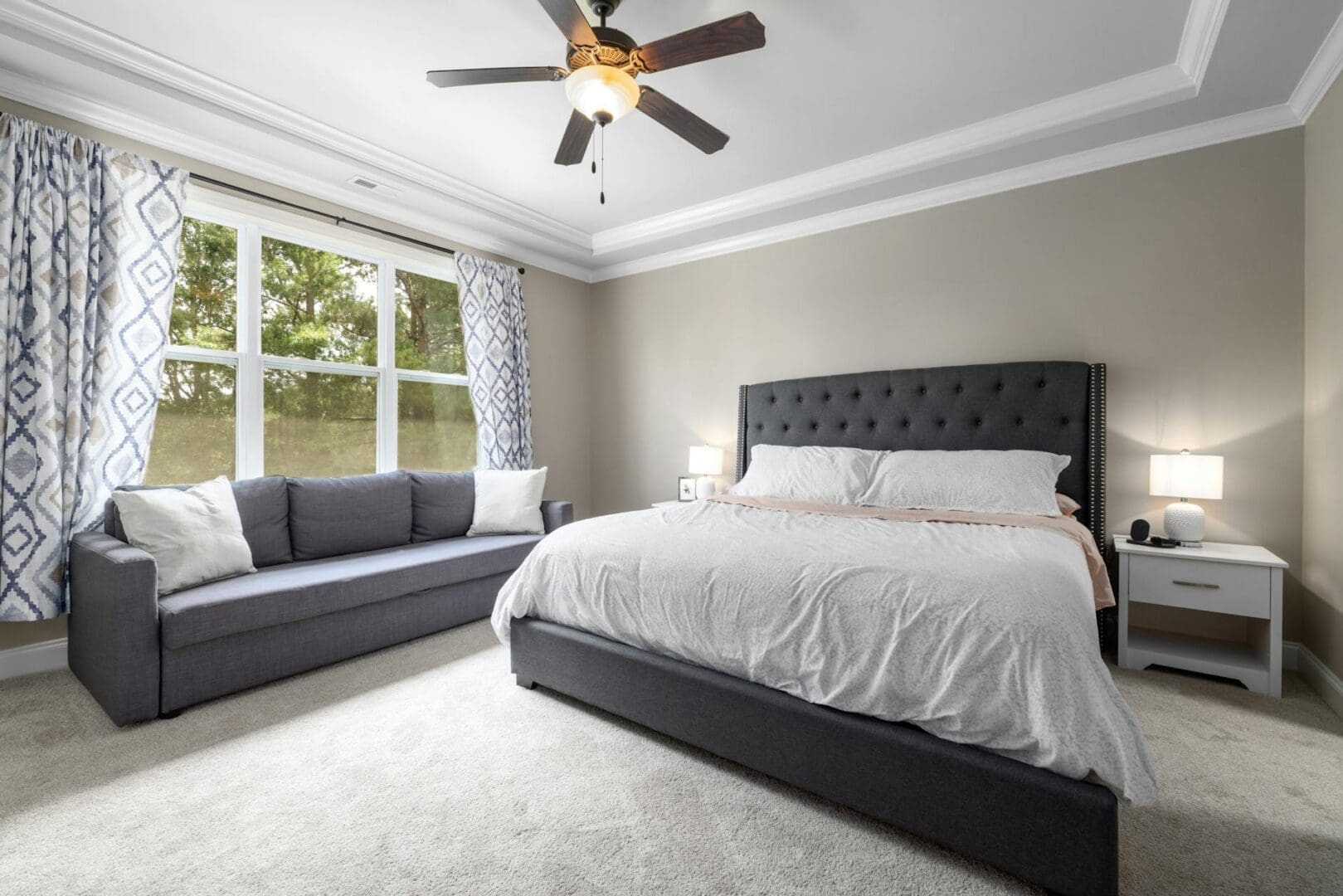
Standing in a mattress showroom or scrolling through bed frames online, the king versus queen question stops a lot of shoppers in their tracks. Both seem spacious, both look luxurious in photos, and the price difference might not seem huge at first glance. But this decision affects your sleep quality, bedroom layout, and wallet more than you might think. Let’s break down what actually matters when you’re choosing between these two popular sizes.
Measure Your Room First (Yes, Really)
Before you fall in love with that gorgeous king bed frame, grab a tape measure. A queen bed measures 60 x 80 inches, while a king sprawls out at 76 x 80 inches. That extra 16 inches of width makes a bigger impact than it sounds.
Here’s the rule designers follow: you want at least 24-30 inches of walking space on each side of the bed and at the foot. For a queen, that means your bedroom should be at least 10 x 10 feet, though 10 x 12 feels more comfortable. A king really needs a 12 x 12 foot room minimum, and 13 x 13 lets you breathe.
Don’t forget to account for nightstands, dressers, and whether your bedroom door will fully open. Plenty of people have squeezed a king into a smaller room only to realize they’re doing a sideways shuffle to get around it every morning. If your room feels cramped with a king, you won’t enjoy the extra sleeping space nearly as much as you’d think.
Who’s Sleeping in It (and How)
A queen gives each person about 30 inches of personal space—roughly the width of a crib. A king bumps that up to 38 inches per person, which is the same width as a twin bed. If you or your partner:
Tosses and turns throughout the night
Is taller than 6 feet and sleeps diagonally
Works different schedules (one person getting in or out of bed at odd hours)
Shares the bed with kids or pets regularly
Then that extra space in a king matters. A lot. On the flip side, some couples actually prefer the cozier feel of a queen, and solo sleepers often find a queen downright roomy. Be honest about your sleep habits rather than defaulting to “bigger is better.”
The Hidden Costs Add Up
The bed frame itself is just the beginning. King-size bedding costs 20-40% more than queen across the board. Budget sheet sets for a queen run $30-60, while king sets start around $50-80. Mid-range quality sheets? Expect $100-150 for queen, $130-200 for king. Even luxury bedding jumps from $300+ for queen to $400+ for king.
Comforters, duvets, mattress protectors, and even the mattress itself all carry that same premium. If you’re replacing seasonal bedding or like having backup sets, those costs multiply quickly. Over the lifetime of your bed, you might spend an extra $1,000-2,000 just on linens and bedding for a king.
Also consider: will the bed fit up your staircase or around tight corners? King mattresses and box springs are notorious for getting stuck. Split box springs solve this (two twins placed side-by-side), but that’s another thing to coordinate.
Resale and Flexibility Matter
Life changes. Maybe you’ll move to a smaller apartment, convert your master bedroom into something else, or need to accommodate a different living situation. Queen beds fit in more spaces and are easier to sell or give away if needed. They’re also the most common size in guest rooms, making them more versatile long-term.
King beds lock you into needing a larger bedroom. If you’re in a forever home with a spacious master, that’s fine. But if there’s any chance you’ll move in the next 5-10 years, think about whether your next place will accommodate a king as comfortably.
Your decision really comes down to three things: your room dimensions, how much personal sleep space you genuinely need, and whether the ongoing costs fit your budget. If your room is 12 x 12 or larger, you sleep with a partner who needs space, and the bedding costs don’t faze you, a king delivers serious comfort. But a queen isn’t a compromise—it’s the sweet spot for most bedrooms, offering plenty of space while keeping your room functional and your bedding budget reasonable. Measure twice, think about your actual sleep habits, and you’ll know which size is right.
You need more storage in your living room, but a bulky bookcase feels too heavy and floating shelves aren’t cutting it. A credenza might be exactly what you’re looking for—it’s that low-profile cabinet that gives you tons of hidden storage while creating a beautiful surface for lamps, plants, and the things you actually want to […]
If you’ve been hitting snooze repeatedly or dragging yourself out of bed feeling groggy, you’re not alone. Waking up to a jarring alarm in a dark room works against your body’s natural rhythms, especially during winter months. A sunrise alarm clock mimics natural dawn, gradually filling your room with light to ease you awake. But […]
Waking up at 3 a.m. with a sweaty neck and flipping your pillow to the cool side for the fourth time isn’t just annoying—it’s robbing you of quality sleep. If you’re a hot sleeper, your pillow might be trapping heat against your head and neck all night long. The good news? The right cooling pillow […]