Staring at paint swatches while trying to imagine how they’ll look on your dining room walls is enough to make anyone’s head spin. The color you choose sets the mood for every family dinner, holiday gathering, and Tuesday night takeout session—so yes, the pressure is real. The good news? With a clear understanding of how light, style, and mood work together, you can narrow down your options and land on a color that makes your dining space feel just right.
Consider Your Natural Light Situation
Before you fall in love with that moody charcoal or sunny yellow, spend a day observing how light moves through your dining room. North-facing rooms tend to have cooler, indirect light that can make colors look more muted and gray. These spaces often benefit from warmer paint colors—think soft creams, warm beiges, or even terra cotta tones that add coziness.
South-facing dining rooms get abundant warm light throughout the day, so they can handle cooler colors like sage green, soft blue, or even crisp white without feeling stark. East and west-facing rooms change dramatically from morning to evening, so test your paint samples at different times of day. What looks perfect at breakfast might feel completely different at dinner time.
Grab sample pots of your top three choices and paint large swatches directly on the wall—those tiny chips lie. Live with them for at least 48 hours before deciding.
Match Your Paint to Your Dining Furniture Style
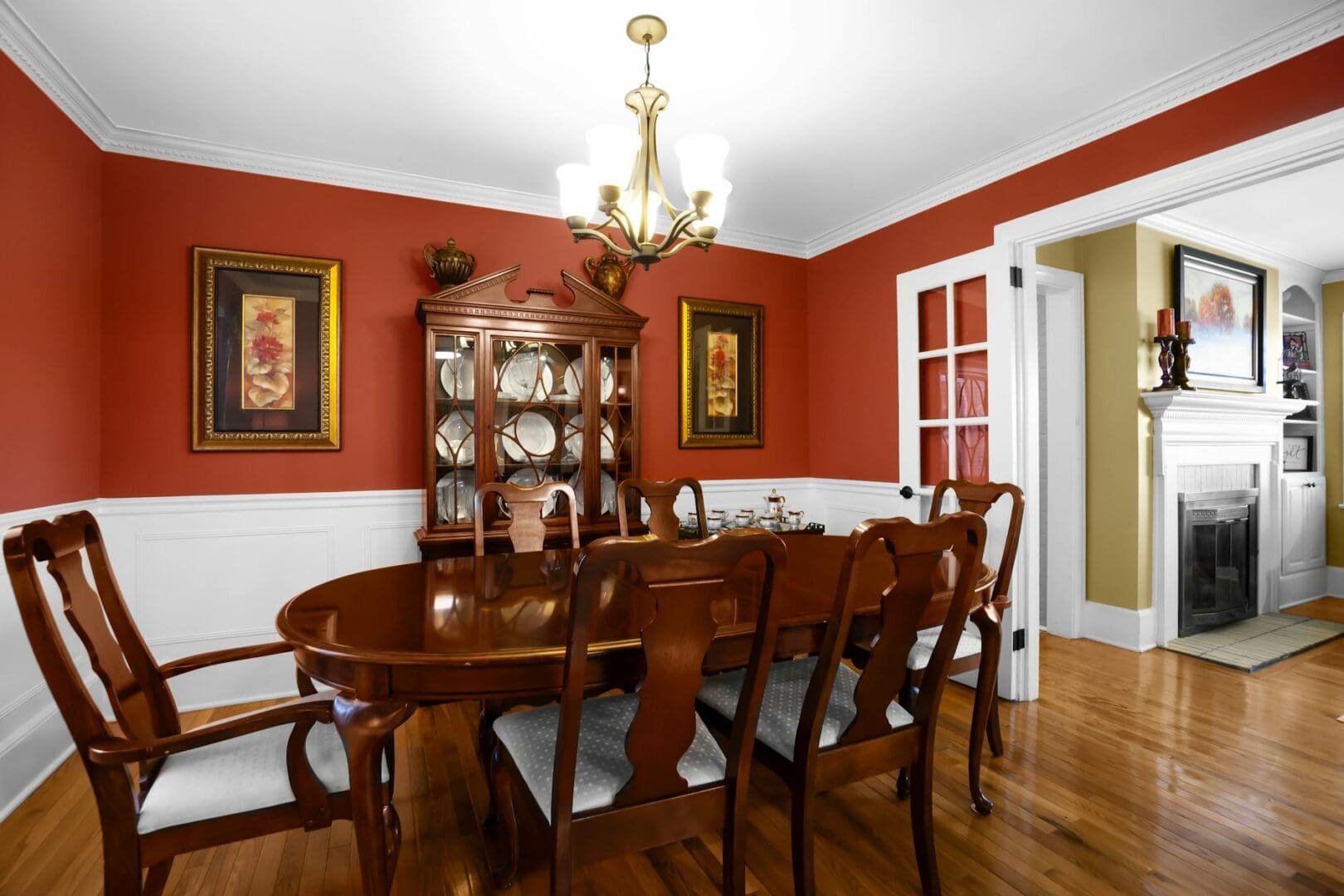
Your dining table and chairs have already made a statement about your style, and your wall color should complement that investment, not compete with it. If you have a substantial dark wood table, rich jewel tones like deep teal, burgundy, or forest green create a sophisticated backdrop without overwhelming the wood’s natural beauty.
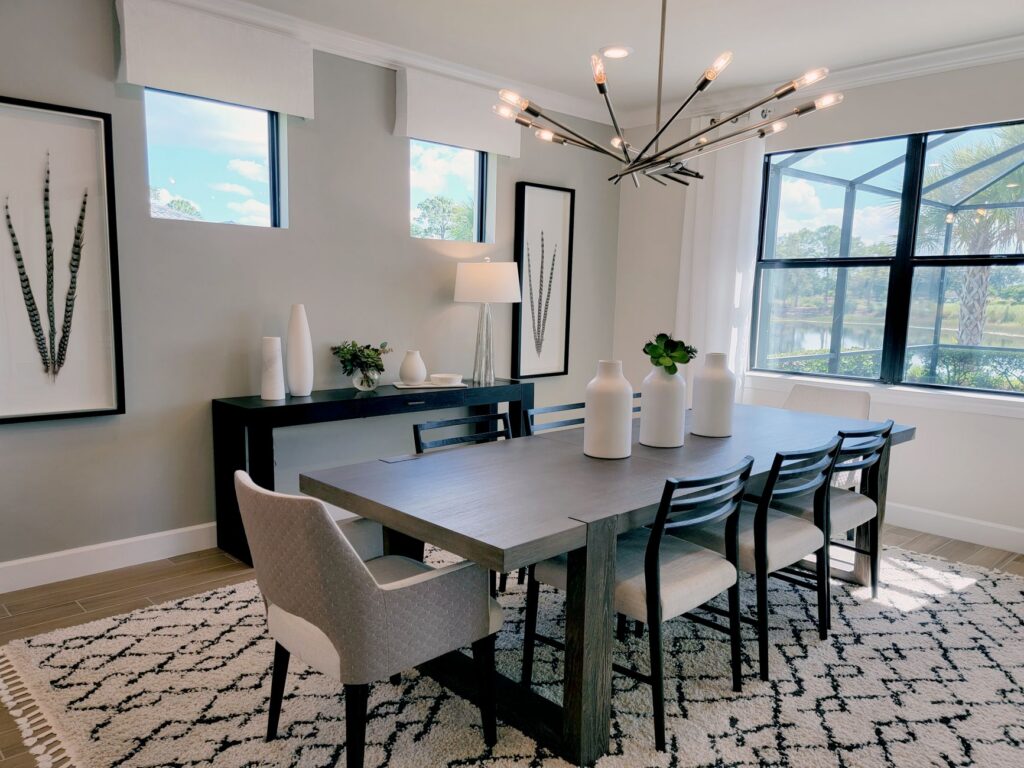
Light wood or Scandinavian-style dining sets pair beautifully with soft neutrals, from greige to warm white to pale dusty blue. These combinations keep the space feeling airy and modern. For glass or metal contemporary tables, you have more flexibility—crisp whites, grays, or even dramatic dark colors can work since the furniture itself has a lighter visual weight.
If your dining chairs are upholstered, pull a shade from the fabric for your walls. Not an exact match (that’s too matchy), but a complementary tone that ties everything together. This approach creates a cohesive look that feels intentional rather than accidental.
Decide What Mood You Want to Create
Dining rooms serve different purposes for different households, and your paint color should reflect how you actually use the space. Warm colors like terracotta, coral, and soft red tones stimulate appetite and conversation—there’s a reason so many restaurants use these shades. They create an intimate, energetic atmosphere perfect for entertaining.
If your dining room doubles as a homework spot or workspace, consider colors that promote focus without being boring. Soft grays, muted blues, and sage greens provide a calming backdrop that works for both dinner parties and daily life.
For formal dining rooms used primarily for special occasions, don’t shy away from dramatic choices. Deep navy, charcoal, emerald, or even black can create a stunning, sophisticated space that feels special every time you use it. Just make sure you have adequate lighting—dramatic dark walls need bright fixtures or wall sconces to prevent the space from feeling cave-like.
Think About Color Flow with Adjacent Rooms
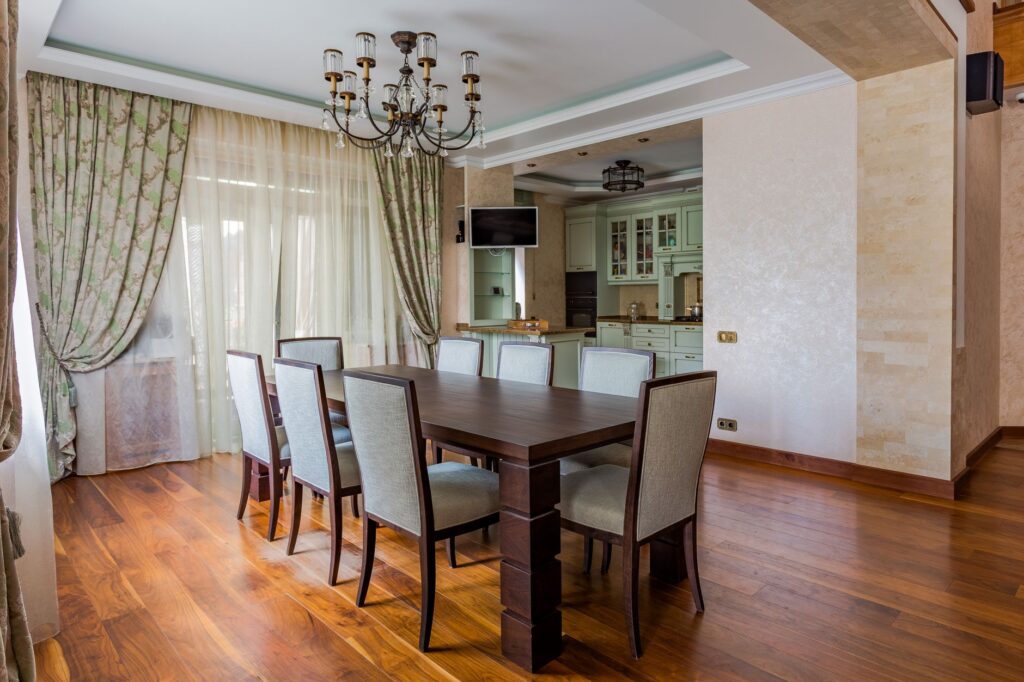
Unless your dining room has doors that close it off completely, your paint choice needs to play nicely with neighboring spaces. If your dining room opens directly into your kitchen or living room, you don’t need to use the exact same color, but you want a harmonious relationship.
Using different shades from the same color family creates flow while maintaining distinct zones—like a soft gray in the living room and a slightly deeper gray-blue in the dining room. Alternatively, keep one space neutral and add color in the other for contrast that still feels intentional.
White or cream trim can help separate spaces when you’re using different wall colors, acting as a visual buffer that makes transitions feel smooth rather than jarring.
Choosing a dining room paint color doesn’t have to feel overwhelming. Start by understanding your light, honor your existing furniture, decide on the mood you want, and make sure the color flows with adjacent spaces. Most importantly, pick a color that makes you happy every time you walk into the room. Your dining room should feel like a place you want to gather, whether it’s for a quick breakfast or a celebration dinner. Trust your instincts, test those samples, and remember—paint is one of the most affordable and changeable elements in a room. You’ve got this.
There’s something about farmhouse chandeliers that just works in a dining room—they bring warmth without being fussy, character without feeling overdone. But with so many styles calling themselves “farmhouse,” from sleek metal cages to chunky wood beam fixtures, figuring out which one belongs above your table can feel surprisingly tricky. The right chandelier should anchor […]
A sputnik chandelier makes a serious statement in a dining room—all those radiating arms and exposed bulbs create instant drama and mid-century appeal. But with so many variations in size, arm count, and finish, choosing the right one for your space can feel overwhelming. Get it right, though, and you’ve got a showstopper that pulls […]
When every square foot counts, bringing furniture into a small apartment feels like a high-stakes game of Tetris. You need storage desperately, but you’re terrified of making your space feel even more cramped. A sideboard can be the perfect solution—if you choose the right one. Let’s walk through exactly what to look for so you […]