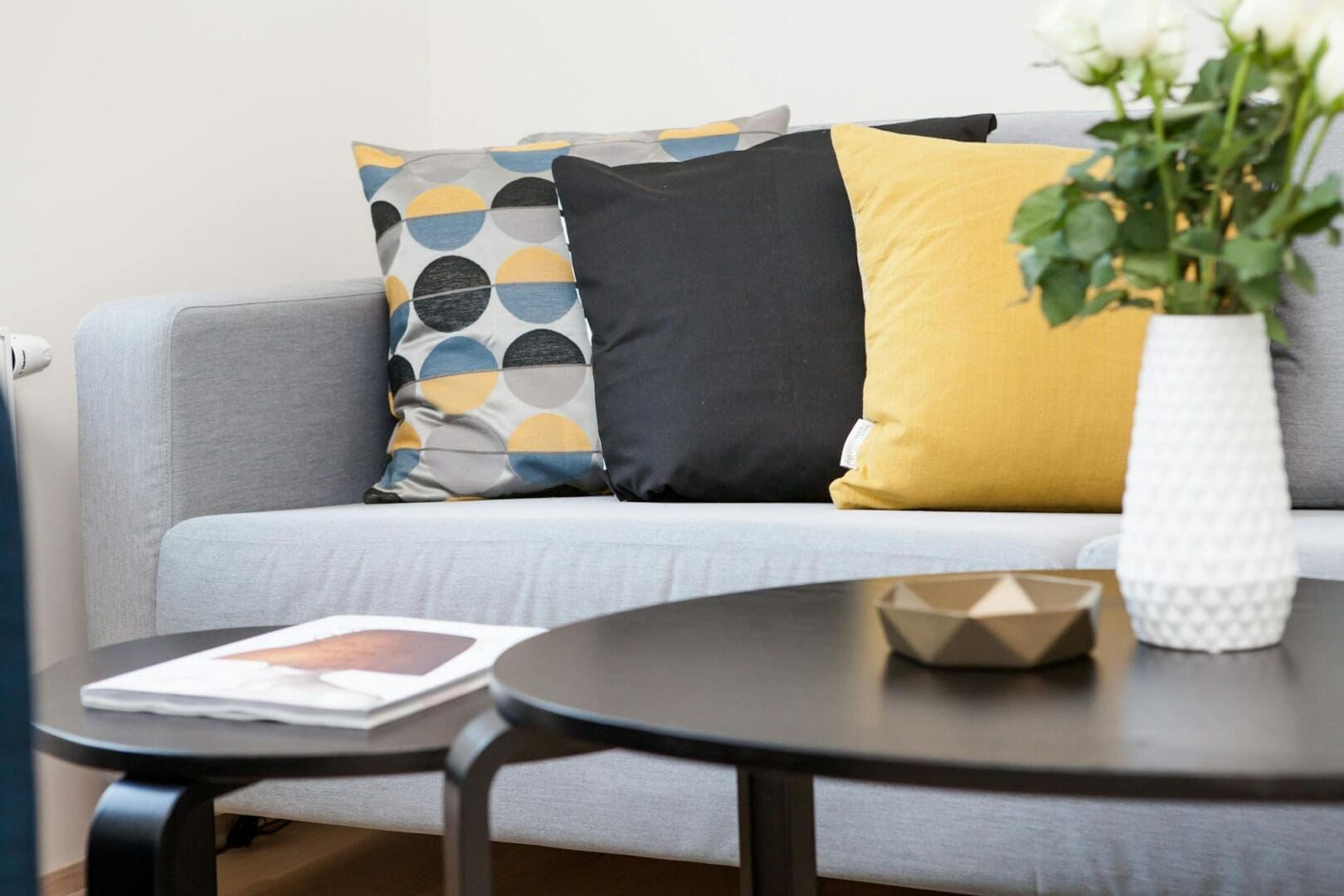
You’ve found the perfect sofa, but now that coffee table you loved in the showroom looks completely wrong in your living room. Too small, too tall, or just oddly proportioned—it’s one of the most common furniture frustrations homeowners face. The good news? Getting the coffee table-to-sofa relationship right comes down to a few simple guidelines that work every single time.
Getting the Size Right
The golden rule: your coffee table should be roughly two-thirds the length of your sofa. If you have an 84-inch sofa, look for a table that’s 56 inches long. This creates visual balance without overwhelming the space or looking like an afterthought.
For sectionals, measure the length of the side that faces the table rather than the entire sectional. If you have a large L-shaped sectional, you might even consider two smaller tables or a square table instead of trying to match the full span.
Width matters too. Leave 14-18 inches between the edge of your coffee table and the sofa. This gives you enough room to walk through comfortably while keeping drinks and remotes within easy reach. If your living room is on the smaller side, stick closer to that 14-inch minimum. Generous spaces can handle 18 inches or even slightly more.
Finding the Right Height
Your coffee table should sit at the same height as your sofa cushions, or up to two inches lower. Most sofas have seat heights between 17-19 inches, which is why most coffee tables fall in the 16-18 inch range.
Measure your actual sofa before you shop—don’t guess. A table that’s too low forces you to lean down uncomfortably, while one that’s too high creates an awkward visual line and makes it harder to see around in conversation areas. If you have a particularly low-slung modern sofa (some are as low as 15 inches), you’ll need to specifically seek out lower-profile tables.
Choosing the Best Shape
The shape of your coffee table should complement your sofa’s lines and your room’s layout. Rectangular tables are the most versatile choice and work beautifully with standard three-seat sofas and sectionals. They create clean sight lines and maximize surface area.
Round and oval tables shine in smaller spaces or rooms with lots of traffic flow. Without sharp corners, they’re easier to navigate around and can actually make a compact living room feel more spacious. They’re also ideal if you have young children. Round tables pair especially well with curved or rounded sofas.
Square tables work best with sectionals or when you have seating on multiple sides. They create an intimate conversation area and give everyone equal access. Just make sure your square table isn’t so large that people on opposite ends feel too far apart—48 inches is usually the maximum width that still feels social.
Matching Your Style and Budget
Your coffee table doesn’t need to match your sofa exactly, but it should share a similar design sensibility. A sleek glass and chrome table will look out of place with a traditional rolled-arm sofa, just as a heavy wooden trunk will clash with mid-century modern furniture.
Budget-wise, expect to spend $150-400 for decent quality basic tables in materials like engineered wood or metal. Mid-range options ($400-900) bring you solid wood, stone tops, and better construction that’ll last years. Splurge-worthy pieces ($900+) offer premium materials like marble, handcrafted details, and designer names—worthwhile if your sofa is an investment piece too.
Consider your lifestyle when choosing materials. Glass shows every fingerprint but makes small spaces feel larger. Wood is timeless but can scratch. Upholstered ottomans work as coffee tables and provide extra seating, though you’ll want a tray for drinks.
The right coffee table pulls your seating area together and makes your living room actually livable. Measure your sofa, consider your space, and use these proportions as your starting point. When the scale is right, everything else falls into place—and you’ll wonder why that showroom table ever seemed like a good fit.
You need more storage in your living room, but a bulky bookcase feels too heavy and floating shelves aren’t cutting it. A credenza might be exactly what you’re looking for—it’s that low-profile cabinet that gives you tons of hidden storage while creating a beautiful surface for lamps, plants, and the things you actually want to […]
If you’ve been hitting snooze repeatedly or dragging yourself out of bed feeling groggy, you’re not alone. Waking up to a jarring alarm in a dark room works against your body’s natural rhythms, especially during winter months. A sunrise alarm clock mimics natural dawn, gradually filling your room with light to ease you awake. But […]
Waking up at 3 a.m. with a sweaty neck and flipping your pillow to the cool side for the fourth time isn’t just annoying—it’s robbing you of quality sleep. If you’re a hot sleeper, your pillow might be trapping heat against your head and neck all night long. The good news? The right cooling pillow […]