A china cabinet does more than store dishes—it’s a statement piece that anchors your dining room and showcases the items you love. Whether you’re displaying heirloom china, a curated collection of glassware, or simply need a place to keep serving pieces organized, choosing the right cabinet means balancing aesthetics with practicality. Let’s walk through what matters most.
Size and Proportion for Your Space
The biggest mistake people make is buying a china cabinet that overwhelms or underwhelms their dining room. Start by measuring your available wall space, but don’t stop there—consider ceiling height too. Standard china cabinets range from 60 to 84 inches tall, with widths between 36 and 72 inches.
For smaller dining rooms (under 120 square feet), look at narrow cabinets around 36 to 48 inches wide. These provide adequate storage without cramping the space. Medium to large dining rooms can accommodate wider pieces, especially if you’re working with a long wall that needs visual weight. A good rule: your cabinet should take up no more than one-third of your wall length, leaving breathing room on either side.
Don’t forget depth—most china cabinets sit 14 to 18 inches deep. In tight spaces where chairs need to tuck close to the table, a shallower profile (14-15 inches) prevents constant bumping and keeps traffic flow comfortable.
Display Style: Glass Doors vs. Closed Storage
China cabinets come in three main configurations, each with different personalities. Traditional glass-front cabinets with full visibility on upper shelves (and sometimes drawers or closed storage below) work beautifully when you have dishes worth showing off. These run from around $400 for budget-friendly options to $2,000+ for solid wood pieces with premium hardware.
Corner china cabinets maximize awkward spaces and often feature curved glass fronts that add architectural interest. They’re perfect for smaller dining rooms where wall space is limited but you still want display storage.
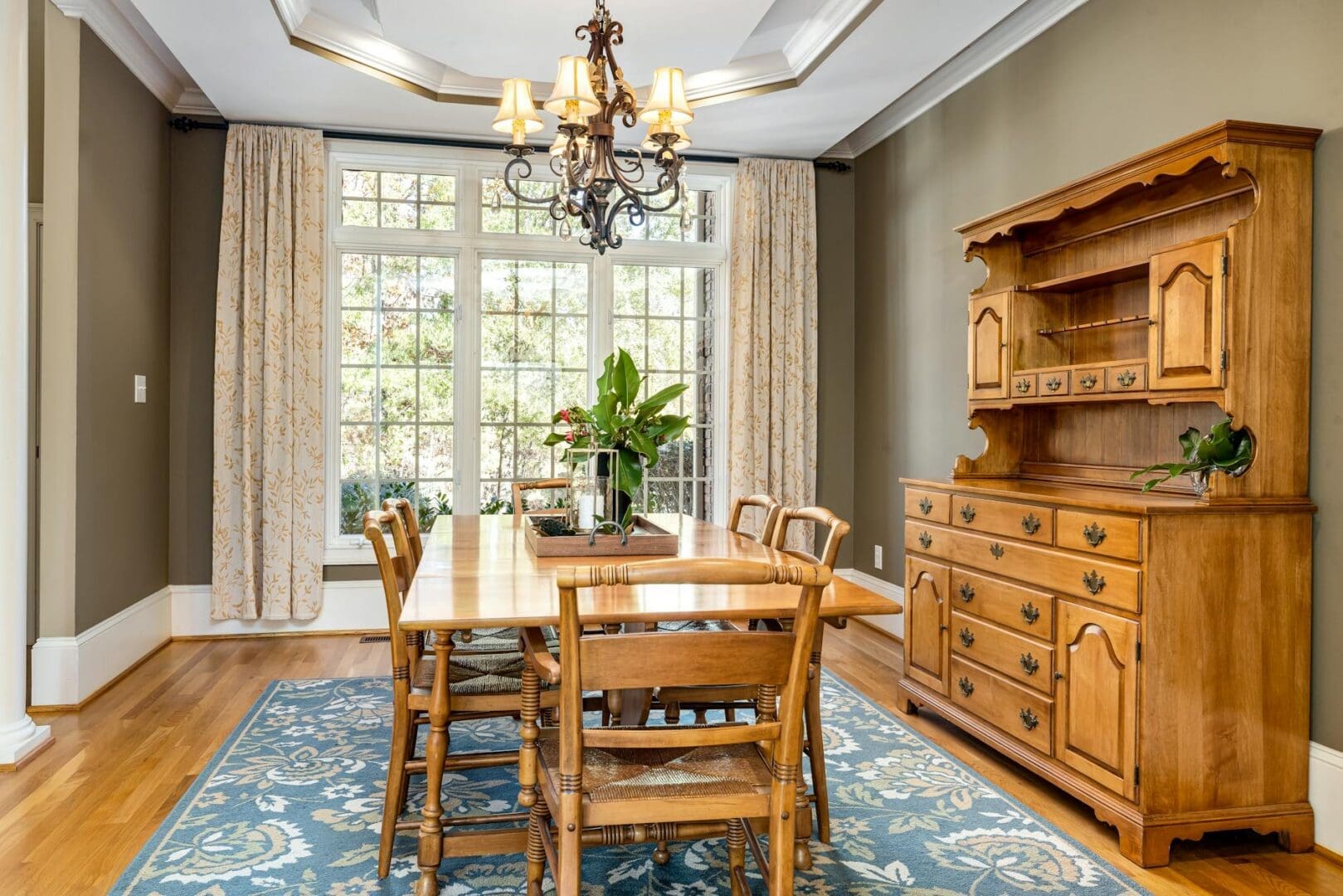
Hutches and buffets with hutch tops give you more versatility—closed lower storage hides less photogenic items like table linens and serving utensils, while glass upper cabinets display your prettier pieces. This hybrid approach is especially practical for everyday dining rooms that need to balance beauty with function.
Consider whether you want lighted interiors. Built-in LED lighting (common in mid-range to higher-end cabinets) makes your displays pop and creates ambiance during dinner parties. Budget around an extra $100-300 for this feature.
Material and Construction Quality
What your china cabinet is made from affects both longevity and price. Solid hardwoods like oak, cherry, and mahogany represent the investment tier ($1,200-$4,000+), offering heirloom quality that ages beautifully. These feature dovetail joinery, adjustable shelving, and substantial weight that signals quality.
Wood veneer over engineered wood or MDF brings the look of real wood at gentler prices ($400-$1,200). Quality varies widely here—look for thick veneer that won’t peel, sturdy shelf construction, and smooth-operating hinges and door mechanisms. Cheaper hardware is usually the first thing to fail on budget cabinets.
Pay attention to these construction details regardless of price point:
Adjustable shelving so you can accommodate different dish heights
Plate grooves or slots on shelves to keep dishes secure and upright
Felt-lined drawers if the cabinet includes them
Soft-close hinges on doors (a worthwhile upgrade that prevents slamming)
Reinforced glass shelves rated to hold the weight of heavy serveware
Style That Complements Your Dining Room
Your china cabinet should feel like it belongs with your existing furniture, not like an afterthought. Traditional cabinets feature ornate molding, carved details, and rich wood finishes in cherry or mahogany. These pair naturally with formal dining sets and classic decor.
Transitional styles split the difference with cleaner lines but warm wood tones—think Craftsman-inspired or Shaker-style cabinets. These work in both traditional and contemporary settings, making them versatile if your style evolves.
Modern and contemporary china cabinets showcase minimalist frames, often in darker finishes or even metal and glass combinations. These suit open-concept spaces and modern dining furniture with geometric lines.
Farmhouse and rustic cabinets bring in distressed finishes, reclaimed wood looks, and more casual hardware. They’re ideal if your dining room leans country or if you’re mixing formal dishes with a relaxed setting.
The right china cabinet transforms your dining room from merely functional to genuinely curated. Measure carefully, think about what you’ll actually store, and choose a style that makes you happy every time you walk past it. When you find a piece that checks these boxes, you’ll know—it’ll feel less like furniture shopping and more like bringing home exactly what your dining room’s been missing.
There’s something about farmhouse chandeliers that just works in a dining room—they bring warmth without being fussy, character without feeling overdone. But with so many styles calling themselves “farmhouse,” from sleek metal cages to chunky wood beam fixtures, figuring out which one belongs above your table can feel surprisingly tricky. The right chandelier should anchor […]
A sputnik chandelier makes a serious statement in a dining room—all those radiating arms and exposed bulbs create instant drama and mid-century appeal. But with so many variations in size, arm count, and finish, choosing the right one for your space can feel overwhelming. Get it right, though, and you’ve got a showstopper that pulls […]
When every square foot counts, bringing furniture into a small apartment feels like a high-stakes game of Tetris. You need storage desperately, but you’re terrified of making your space feel even more cramped. A sideboard can be the perfect solution—if you choose the right one. Let’s walk through exactly what to look for so you […]