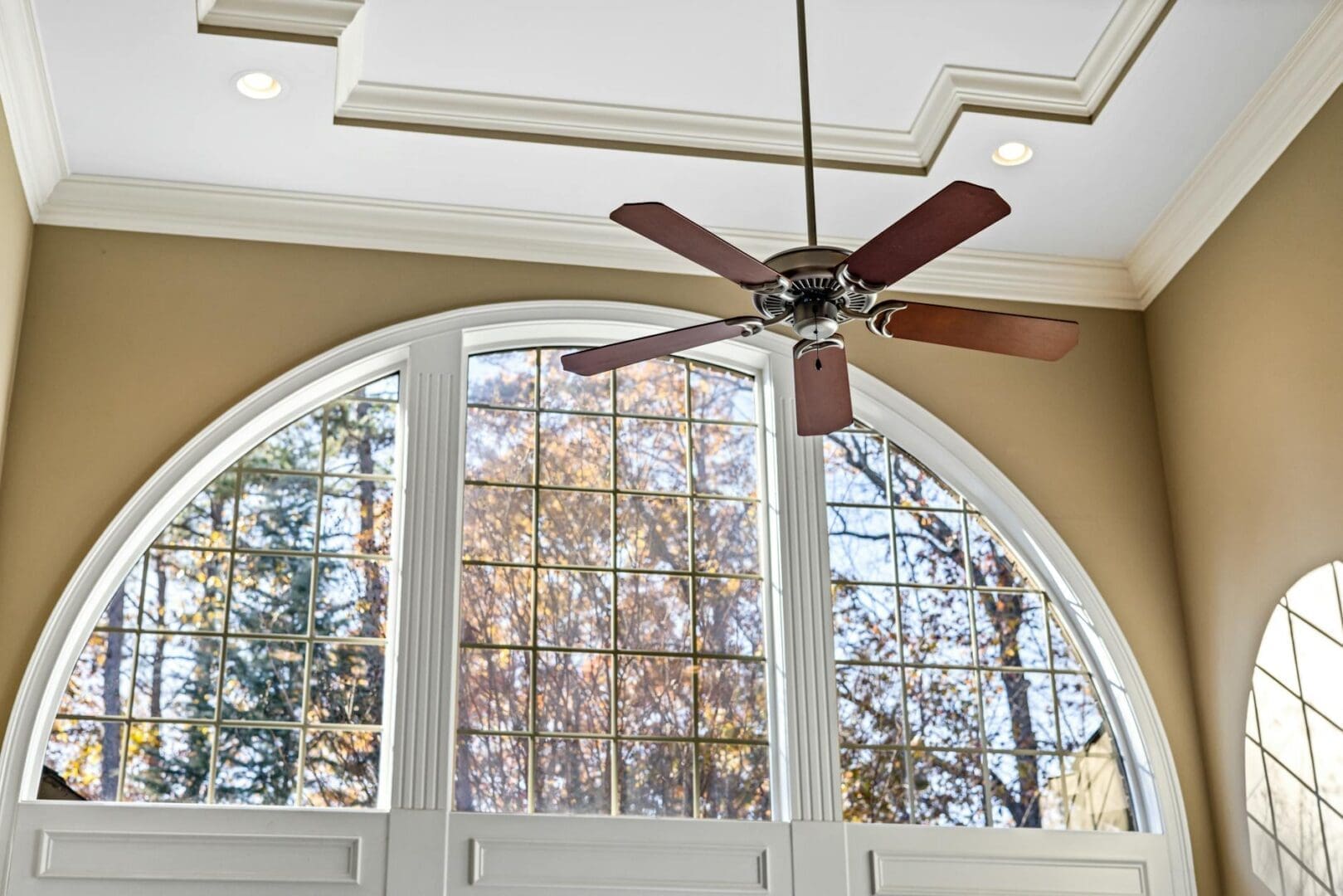
Shopping for a ceiling fan for your great room, master bedroom, or open-concept living space? The stakes feel higher when you’re dealing with a room that’s 300 square feet or more. Too small a fan, and you’ll barely feel a breeze. Too weak a motor, and it’ll struggle to push air effectively. Let’s walk through what actually matters when you’re choosing a ceiling fan that can handle a large space.
Getting the Blade Span Right
This is the most critical decision you’ll make. For large rooms, blade span matters more than almost anything else. Here’s a practical breakdown:
Rooms 300-350 square feet: Look for fans with 60-inch blades
Rooms over 450 square feet: Consider an 84-inch fan or multiple smaller fans
Yes, these fans are big. A 72-inch fan will feel visually substantial, but that’s the point—you need those longer blades to move air across the entire room. If you’re worried about the fan overwhelming your space, focus on designs with sleeker blade profiles rather than downsizing, which will leave you disappointed with the airflow.
Budget-friendly large fans start around $200-300, while mid-range options with better motors and finishes run $400-700. High-end models with smart features and premium materials can reach $1,000-2,000.
Motor Quality and Performance
A large room demands a powerful motor that can turn those big blades efficiently without wobbling or making noise. Look for motors rated at 172mm x 20mm or larger for rooms over 300 square feet. DC motors cost more upfront (typically adding $100-300 to the price) but run quieter, last longer, and use about 70% less energy than AC motors.
Pay attention to airflow ratings measured in CFM (cubic feet per minute). For large spaces, you want at least 5,000-7,000 CFM. Anything less, and you’re just pushing air around ineffectively. Better fans will list this spec clearly—if it’s not mentioned, that’s often a red flag about performance.
Three speeds are standard, but six speeds give you much better control in a large room where air circulation needs change seasonally. The ability to reverse direction is non-negotiable—you’ll want to pull warm air down in winter.
Mounting and Ceiling Height Considerations
Ceiling height dramatically affects which fan will work in your space. For standard 8-9 foot ceilings, you’ll need a low-profile or flush mount design to maintain the recommended 7-foot clearance from floor to blade. These hugger-style fans work fine, but they don’t move air quite as efficiently as fans with more space above the blades.
If you have 10-foot or higher ceilings, use a downrod to position the fan 8-9 feet from the floor. This creates better air circulation patterns. Downrods come in various lengths—12, 18, 24, 36, and 48 inches are common. Many fans include a short downrod but you can purchase longer ones separately for $30-100.
For vaulted or angled ceilings, you’ll need an angled mounting kit, which typically adds $40-80 to your purchase. Make sure the fan you’re considering explicitly supports angled mounting, as not all do.
Style That Works at Scale
Large fans become focal points whether you want them to or not, so style matters. Modern farmhouse styles with distressed wood blades work beautifully in great rooms and master bedrooms. Industrial designs with metal cages or Edison bulbs suit lofts and contemporary spaces. For traditional rooms, look for fans with elegant blade carvings and oil-rubbed bronze or antique brass finishes.
Integrated lighting is convenient, but in large rooms, a single fan light often won’t provide adequate illumination. Consider whether you need supplemental lighting or if you’d prefer a fan without lights that won’t compete with your existing fixtures. Remote controls or wall controls are essential for large fans—nobody wants to use pull chains on a 72-inch fan.
Choosing the right ceiling fan for a large room comes down to proper sizing first, then motor quality, and finally mounting and style. Measure your space, calculate the square footage, and don’t be tempted to go smaller than recommended. A properly sized fan transforms a large room from stuffy to comfortable and can reduce your cooling costs significantly. When you find options that meet these specs, you’re ready to start comparing specific models that fit your budget and design preferences.
You need more storage in your living room, but a bulky bookcase feels too heavy and floating shelves aren’t cutting it. A credenza might be exactly what you’re looking for—it’s that low-profile cabinet that gives you tons of hidden storage while creating a beautiful surface for lamps, plants, and the things you actually want to […]
If you’ve been hitting snooze repeatedly or dragging yourself out of bed feeling groggy, you’re not alone. Waking up to a jarring alarm in a dark room works against your body’s natural rhythms, especially during winter months. A sunrise alarm clock mimics natural dawn, gradually filling your room with light to ease you awake. But […]
Waking up at 3 a.m. with a sweaty neck and flipping your pillow to the cool side for the fourth time isn’t just annoying—it’s robbing you of quality sleep. If you’re a hot sleeper, your pillow might be trapping heat against your head and neck all night long. The good news? The right cooling pillow […]