Your home office bookcase needs to do more than just hold books. It’s storage, display space, room divider, and backdrop for video calls—all rolled into one. Whether you’re setting up a new workspace or upgrading an existing one, the right bookcase can transform a cluttered corner into an organized, professional-looking office that actually helps you get work done.
Size and Configuration: Measure Twice, Buy Once
Start with your wall space and ceiling height. Standard bookcases range from 24 to 84 inches tall, but home offices often benefit from taller units (72-84 inches) that maximize vertical storage without eating up floor space. Width matters too—a 36-inch bookcase fits most walls comfortably, while 48-60 inch models work well for larger rooms or when you need serious storage.
Consider these popular configurations:
Ladder bookcases: Lean against the wall with a small footprint, perfect for tight spaces (typically 18-24 inches wide)
Standard vertical units: The workhorse option with 3-6 shelves, ideal for most home offices
L-shaped or corner units: Make use of awkward corners while keeping everything within reach
Modular systems: Start with one unit and add more as your collection grows
Shelf depth is crucial. Office supplies and binders need at least 10-12 inches, while books are comfortable at 8-10 inches. If you’re displaying decorative objects or storing larger items, look for 12-14 inch depths.
Material and Construction Quality
The material you choose affects both durability and price. Solid wood bookcases (oak, walnut, or maple) start around $400-600 and can last decades, developing character as they age. They’re your best bet if you’re housing heavy reference books or legal binders—expect weight capacities of 40-60 pounds per shelf.
Engineered wood (MDF or particle board with veneer) keeps costs down, typically $150-400 for a quality unit. Look for thicker panels (at least 5/8 inch) and reinforced backs. These work fine for average book collections and decorative displays, with shelf capacities around 25-35 pounds.
Metal bookcases bring an industrial edge and serious strength, with shelves often holding 50-75 pounds. They run $200-500 and work especially well in modern or minimalist offices. The powder-coated finish resists scratches better than you’d expect.
Check the backing material regardless of frame type. A flimsy backing means a wobbly bookcase. Look for solid backs or at minimum, thick paneling that can be securely anchored to wall studs.
Style That Works With Your Space
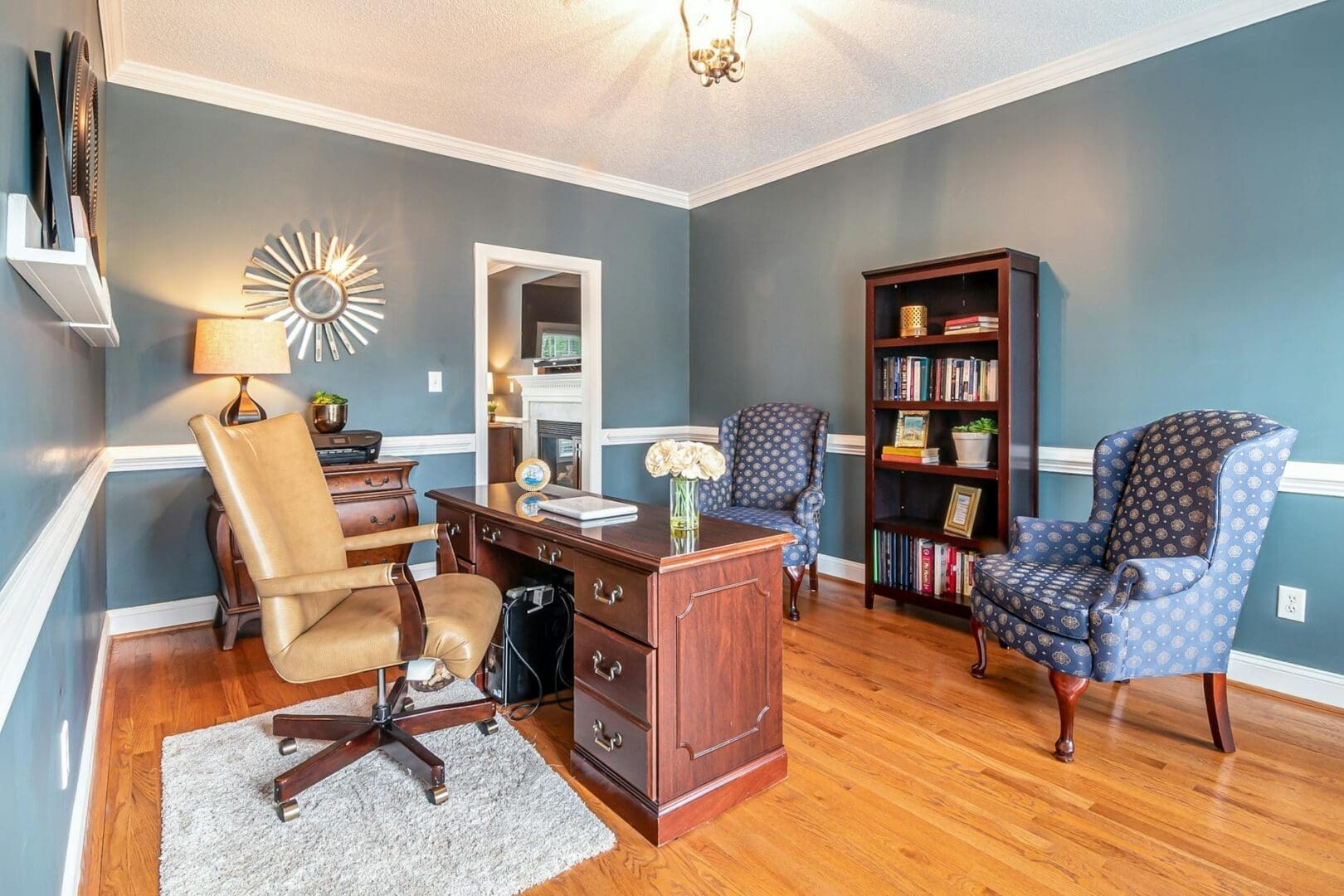
Your bookcase should complement your desk and existing office furniture. Traditional offices pair well with classic wood bookcases featuring crown molding and raised panel details. Contemporary spaces call for clean lines, minimal hardware, and mixed materials like metal frames with wood shelves.
Open bookcases create an airy feel and let you display items from both sides—great for room dividers. Closed-back units provide a finished look and hide messy wall outlets or less-than-perfect paint jobs. Glass-door bookcases ($500-1,200) protect valuable books from dust while maintaining visibility, though they add visual weight to smaller rooms.
Consider color strategically. Dark wood or black metal makes a bold statement but can overwhelm compact spaces. Light woods, white, or gray finishes reflect light and help small home offices feel larger. If your walls are busy, a simple bookcase provides visual relief.
Budget and Long-Term Value
Budget-friendly options ($100-300) work for lighter loads and shorter timelines. Expect assembly required and plan to anchor them to walls for stability. Mid-range choices ($300-700) offer better materials, adjustable shelving, and furniture-quality finishes that age gracefully. Splurge-worthy pieces ($700-2,000+) deliver heirloom quality with dovetail joints, hand-applied finishes, and the kind of presence that elevates your entire office.
Think about adjustable shelves—they add $30-50 to the cost but let you reconfigure as needs change. Built-in cord management and integrated lighting (common in $600+ models) might seem like extras until you’re fumbling behind a loaded bookcase to plug in a lamp.
The right bookcase brings order to your work life while looking good on camera. Measure your space carefully, choose materials that match your storage needs, and pick a style that makes you happy to sit down at your desk. A well-chosen bookcase isn’t just furniture—it’s the foundation of an office that actually works.
Your home office deserves better than a jumble of mismatched shelves and that filing cabinet you’ve been meaning to replace. A storage wall unit can transform your workspace from chaotic to composed, giving you dedicated spots for books, supplies, tech equipment, and all those things that currently live in piles. The trick is finding one […]
If you’re drowning in papers, sticky notes, and file folders that haven’t been touched in months, you’re not alone. The promise of a paper-free office isn’t just about going digital—it’s about choosing furniture and storage solutions that support a cleaner, more organized way of working. The right setup makes it easier to maintain that clutter-free […]
Your back is telling you it’s time. After months of working from home in a dining chair or that hand-me-down seat from college, you’re ready to invest in a proper office chair. The good news? You don’t need to spend $800 on a Herman Miller to get real ergonomic support. The under-$300 market is packed […]