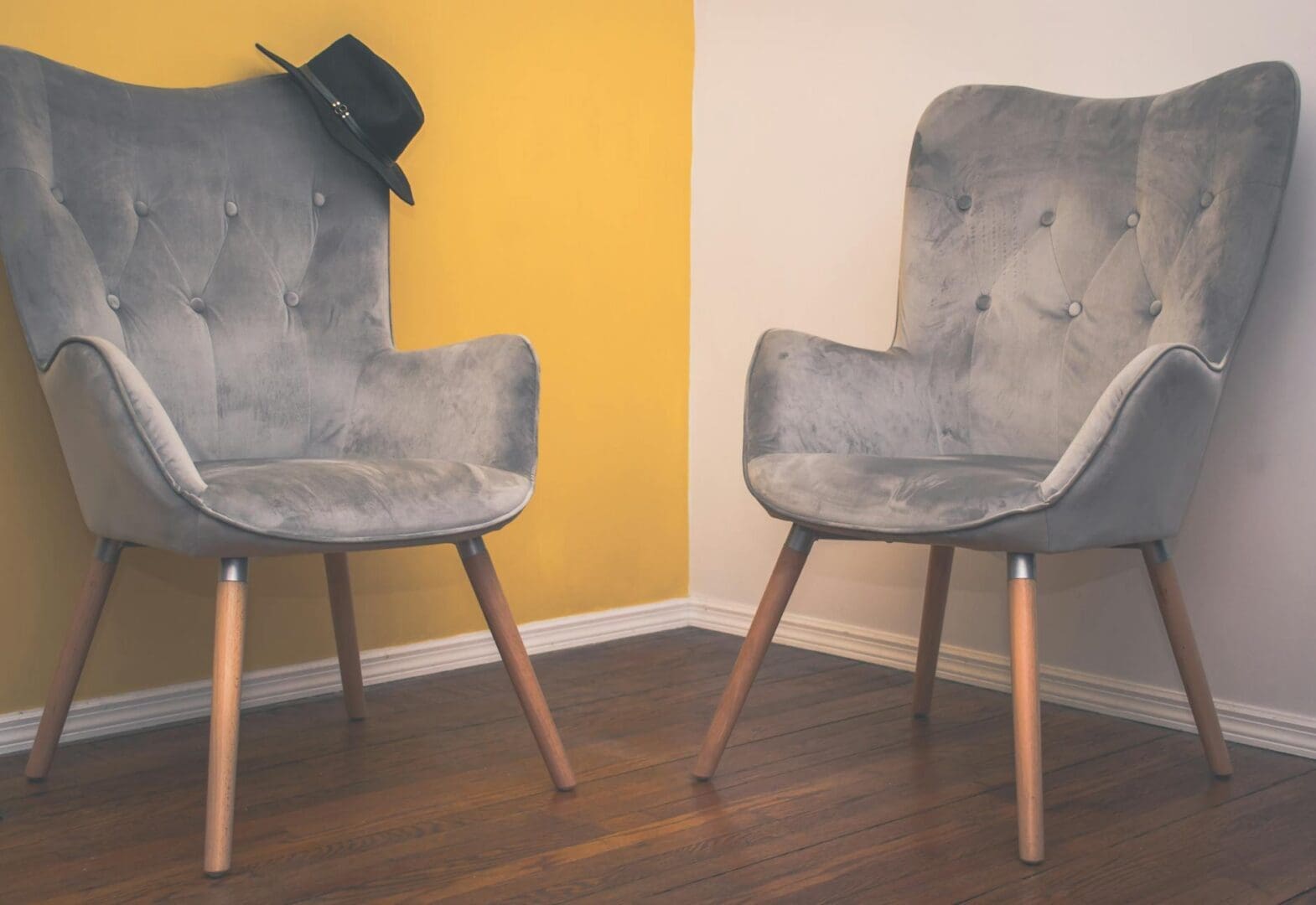
You know that feeling when a room is almost there, but something’s missing? An accent chair might be exactly what you need. More than just extra seating, the right accent chair can anchor a reading nook, balance a lopsided layout, or introduce that pop of personality your space has been craving. But with so many styles, sizes, and fabrics out there, finding one that actually enhances your room rather than cluttering it takes some thoughtful consideration.
Getting the Scale and Proportion Right
Before you fall in love with a chair online, break out the measuring tape. An accent chair that’s too bulky will overwhelm a small room, while a dainty bergère might look lost beside a substantial sectional.
Measure both your available floor space and the height of surrounding furniture. Your accent chair should feel proportional to your sofa—generally, the seat height should be within a few inches of your couch cushions. Most accent chairs range from 28 to 36 inches wide, but consider the visual weight too. A tufted wingback takes up more visual space than a streamlined mid-century armchair, even if their actual dimensions are similar.
Don’t forget about clearance. You’ll want at least 24 to 30 inches of walking space around the chair, and if it’s near a doorway or high-traffic area, err on the side of more room. Think about how the chair will be used—a chair meant for conversation should angle slightly toward your seating area, while a reading chair can nestle into a corner.
Matching Style Without Being Matchy-Matchy
Here’s where it gets fun. Your accent chair doesn’t need to match your existing furniture, but it should complement it. Look at what you already have and decide whether you want your chair to blend in or stand out.
For a cohesive look, pull a color from your rug, curtains, or throw pillows and echo it in your chair upholstery. If your room feels too safe or monochromatic, this is your chance to introduce contrast—think a jewel-toned velvet chair in a neutral room, or a leather club chair to offset soft, feminine fabrics.
Style-wise, mixing periods and aesthetics creates interest. A modern space can handle a vintage-inspired piece, and traditional rooms benefit from contemporary accents. The key is finding common ground: matching wood tones, complementary color temperatures, or repeated shapes and curves throughout the room.
Choosing Fabric and Materials That Work for Your Life
Fabric choice is where practicality meets aesthetics. If you’ve got kids, pets, or a tendency to curl up with coffee, save the pale linen for another room.
Performance fabrics have come a long way and no longer look utilitarian. Many are treated to resist stains and wear while still feeling soft. Leather and faux leather age gracefully and wipe clean easily. Velvet adds luxury but shows wear patterns over time—fine for low-traffic spots, less ideal for daily use.
Consider texture alongside pattern. In a room full of smooth surfaces, a nubby boucle or chunky weave adds dimension. Pattern can be tricky—large-scale prints make bold statements but can overwhelm small spaces, while subtle textures and tone-on-tone patterns feel safer but still interesting.
Budget-wise, expect to spend $250 to $500 for decent quality at mass retailers, $500 to $1,200 for better construction and fabrics, and $1,200+ for designer pieces or custom upholstery. Solid wood frames and eight-way hand-tied springs justify higher price tags if longevity matters to you.
Placement Strategies That Actually Work
Where you put your accent chair matters as much as which one you choose. A chair floating in a corner rarely looks intentional. Instead, create purpose.
Pair two matching or complementary chairs opposite a sofa to establish a conversation area. Place a single chair at an angle in a corner with a side table and lamp for an instant reading nook. Use an accent chair to define zones in an open floor plan—it can mark where the living area ends and the dining space begins.
In bedrooms, an accent chair near a window becomes a spot for morning coffee or pulling on shoes. Just make sure it’s not blocking natural light or creating an awkward obstacle course between your bed and closet.
Your accent chair should feel like it belongs there, not like it wandered in and got stuck. When placement feels natural and the chair serves a clear purpose—even if that purpose is purely visual—your room will feel complete in a way that’s hard to articulate but impossible to miss.
You need more storage in your living room, but a bulky bookcase feels too heavy and floating shelves aren’t cutting it. A credenza might be exactly what you’re looking for—it’s that low-profile cabinet that gives you tons of hidden storage while creating a beautiful surface for lamps, plants, and the things you actually want to […]
If you’ve been hitting snooze repeatedly or dragging yourself out of bed feeling groggy, you’re not alone. Waking up to a jarring alarm in a dark room works against your body’s natural rhythms, especially during winter months. A sunrise alarm clock mimics natural dawn, gradually filling your room with light to ease you awake. But […]
Waking up at 3 a.m. with a sweaty neck and flipping your pillow to the cool side for the fourth time isn’t just annoying—it’s robbing you of quality sleep. If you’re a hot sleeper, your pillow might be trapping heat against your head and neck all night long. The good news? The right cooling pillow […]