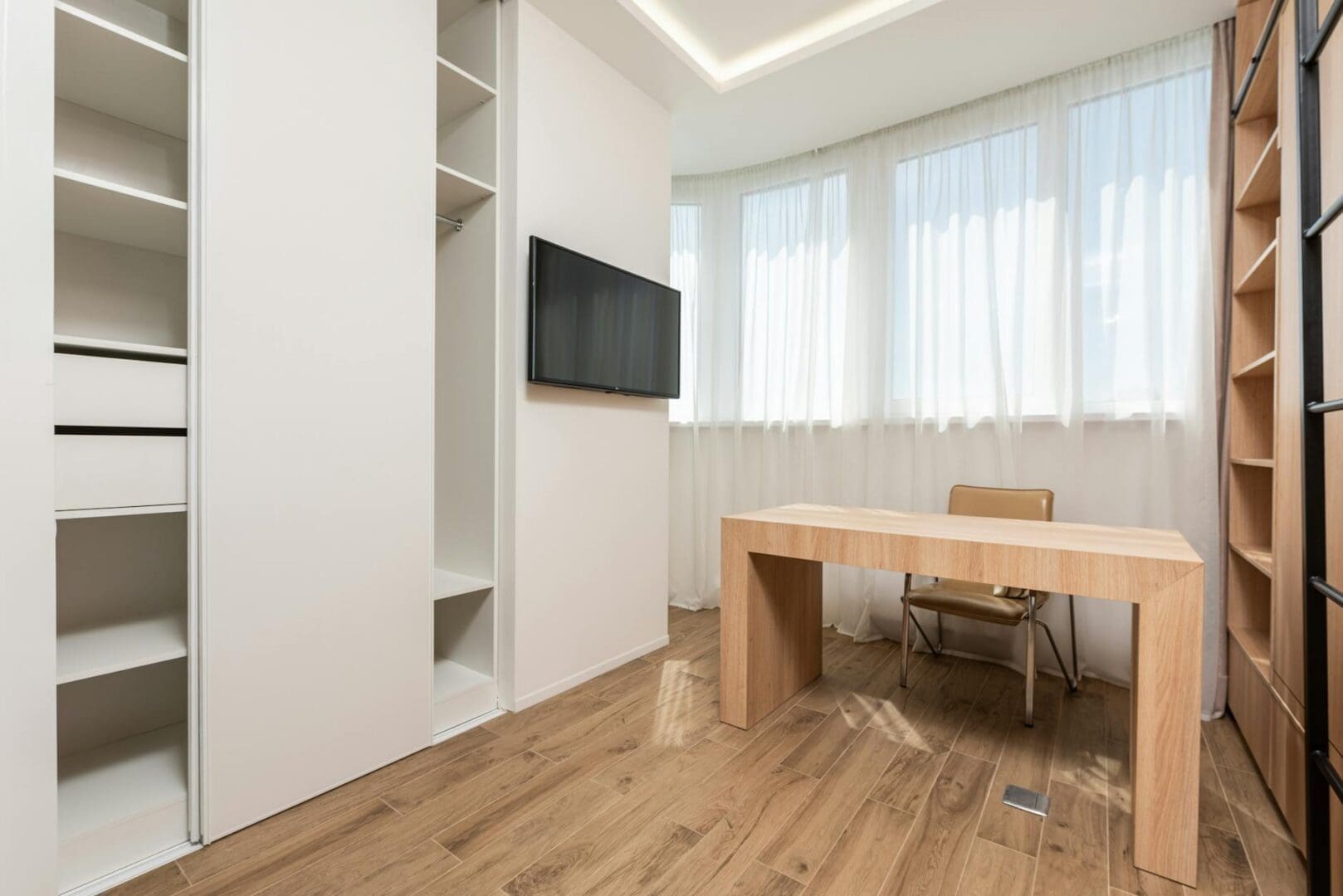
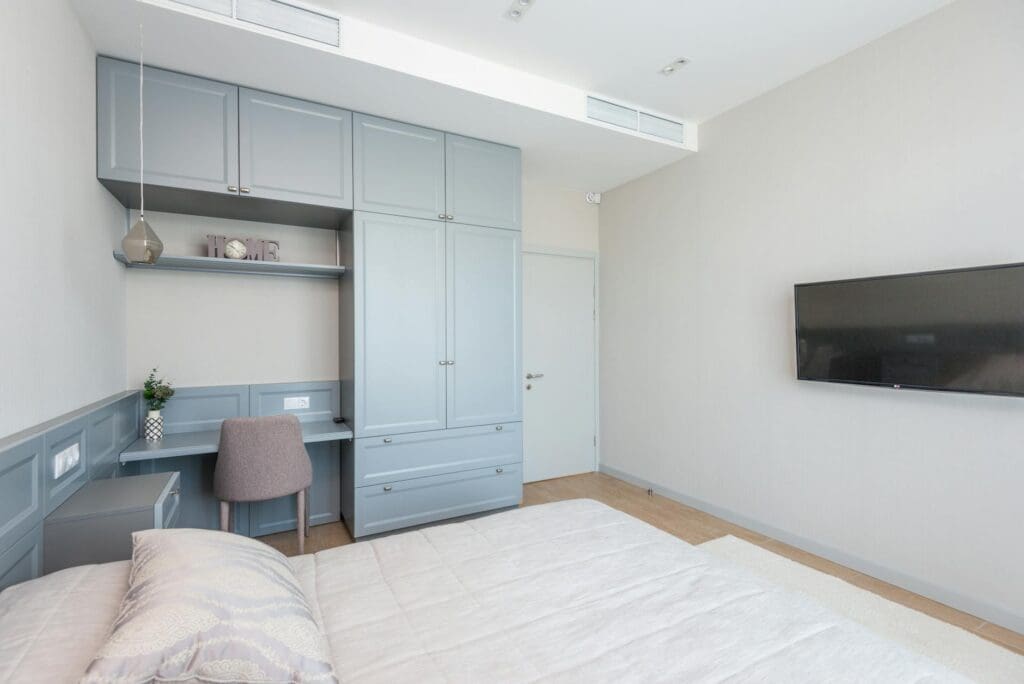
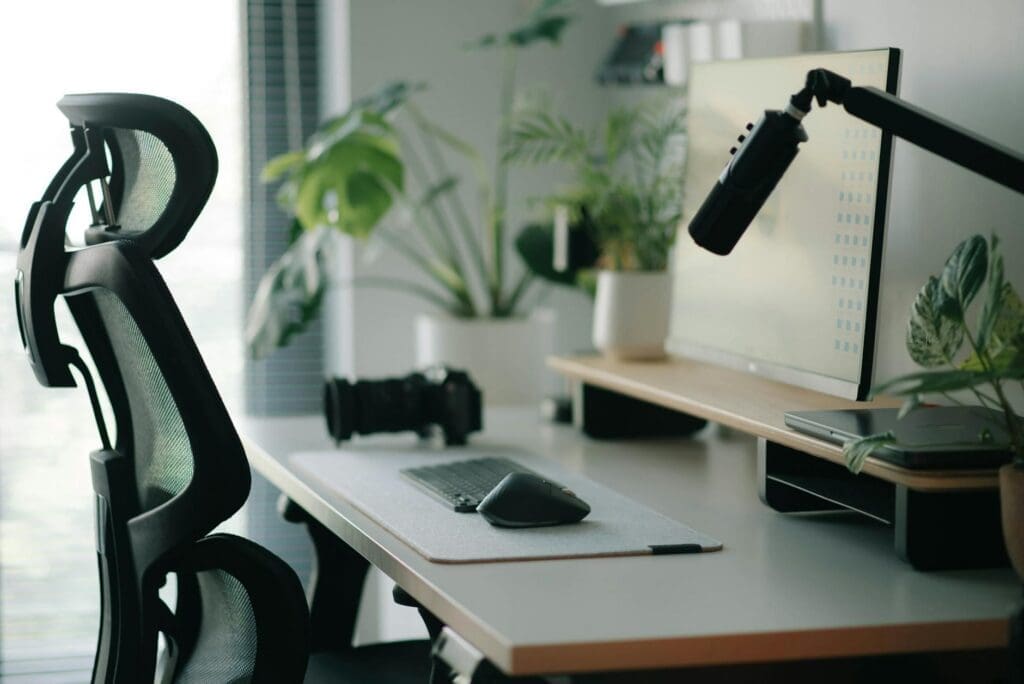
If you’re working from home but don’t have a spare room to dedicate as an office, that underutilized coat closet or unused bedroom closet might be the perfect solution. A “cloffice” gives you a dedicated workspace with a door you can close at the end of the day—something that’s surprisingly valuable when your dining table doubles as your desk. The key is maximizing every inch of that compact space while keeping it comfortable enough to actually want to work there.
Measuring Your Space and Choosing the Right Desk
Before you start shopping, grab a tape measure. Most reach-in closets are 24 to 30 inches deep and 48 to 96 inches wide. Your desk depth is the critical measurement here—you’ll need at least 20 inches of depth to comfortably use a laptop and have some elbow room, though 24 inches is ideal if your closet allows it.
For closet offices, you have three main desk options. Wall-mounted floating desks (ranging from $80 to $300) work beautifully in tight spaces and can be installed at exactly the right height for your chair. Corner desks maximize awkward angles in L-shaped closets. Compact writing desks with slim profiles, typically 20 to 24 inches deep and 36 to 48 inches wide, fit standard closets perfectly and cost anywhere from $150 for basic models to $600 for solid wood options.
Whatever you choose, measure twice. You’ll want to account for your chair when it’s pulled out—add at least 36 inches from the desk edge to the back wall of the room to avoid feeling boxed in every time you sit down.
Lighting Your Workspace Properly
Closets weren’t designed for eight-hour work sessions, so the existing overhead light probably won’t cut it. Poor lighting leads to eye strain and headaches, which makes that tiny space feel even more cramped.
Start with task lighting. A desk lamp with adjustable brightness and color temperature gives you control throughout the day. Look for LED options with at least 400 lumens—you can find quality versions between $35 and $120. If desk space is tight, consider a wall-mounted swing arm lamp or a clip-on light that attaches to a shelf above your workspace.
Overhead lighting matters too. Replace that single dim bulb with a bright LED (aim for 800 to 1,100 lumens for a 6-by-3-foot space). Battery-powered puck lights or LED strip lighting under shelves add ambient lighting without requiring an electrician, running $20 to $60 for a set.
Building in Smart Storage Solutions
The beauty of a closet office is that you’re already working with a space designed for storage—you just need to reconfigure it. Remove the existing closet rod and use that vertical space strategically.
Floating shelves above your desk keep reference materials and supplies within arm’s reach without eating into your work surface. Install them 14 to 18 inches apart to accommodate books and binders. Wall-mounted file organizers and magazine racks (starting around $15 each) keep papers off your desk. A small pegboard mounted on the side wall creates customizable storage for office supplies and costs under $30 with hooks included.
Don’t forget about the space under your desk. A rolling file cabinet (typically 15 to 18 inches wide) fits beneath most desks and doubles as a footrest. Drawer organizers and desktop storage cubes contain the small stuff that otherwise creates visual clutter in an already small space.
Making It Comfortable for All-Day Use
A closet office only works if you actually want to spend time there. Your chair is the most important comfort decision you’ll make. Skip the dining chair—after a few hours, you’ll regret it. A proper task chair with lumbar support doesn’t have to cost $500; solid options exist in the $150 to $250 range. Measure the chair’s width against your closet opening to ensure you can actually get it in and out.
Consider ventilation too. Closets can get stuffy, especially with the door closed. A small USB desk fan improves air circulation and costs less than $20. If your closet has particularly poor airflow, keep the door open when you’re working, or install a door with louvered panels that allow air movement.
Temperature control matters year-round. In winter, a small under-desk heater runs about $30 to $50 and makes a chilly closet bearable. Keep cables organized with cable management clips or sleeves—in tight quarters, tangled cords become genuinely aggravating.
Converting a closet into a functional office takes some planning, but it’s entirely doable with the right compact furniture and smart storage. Focus on the fundamentals—a properly sized desk, good lighting, and a comfortable chair—and you’ll have a workspace that helps you be productive rather than making you feel like you’re hiding in a closet all day.
Your home office deserves better than a jumble of mismatched shelves and that filing cabinet you’ve been meaning to replace. A storage wall unit can transform your workspace from chaotic to composed, giving you dedicated spots for books, supplies, tech equipment, and all those things that currently live in piles. The trick is finding one […]
If you’re drowning in papers, sticky notes, and file folders that haven’t been touched in months, you’re not alone. The promise of a paper-free office isn’t just about going digital—it’s about choosing furniture and storage solutions that support a cleaner, more organized way of working. The right setup makes it easier to maintain that clutter-free […]
Your back is telling you it’s time. After months of working from home in a dining chair or that hand-me-down seat from college, you’re ready to invest in a proper office chair. The good news? You don’t need to spend $800 on a Herman Miller to get real ergonomic support. The under-$300 market is packed […]