A formal dining room doesn’t require a designer’s budget or a trust fund. Whether you’re furnishing your first home or refreshing a tired space, you can create an elegant dining environment that feels polished and intentional without maxing out your credit cards. The secret isn’t spending more—it’s knowing where to invest, where to save, and how to make smart choices that deliver visual impact.
Start With the Right Table Foundation
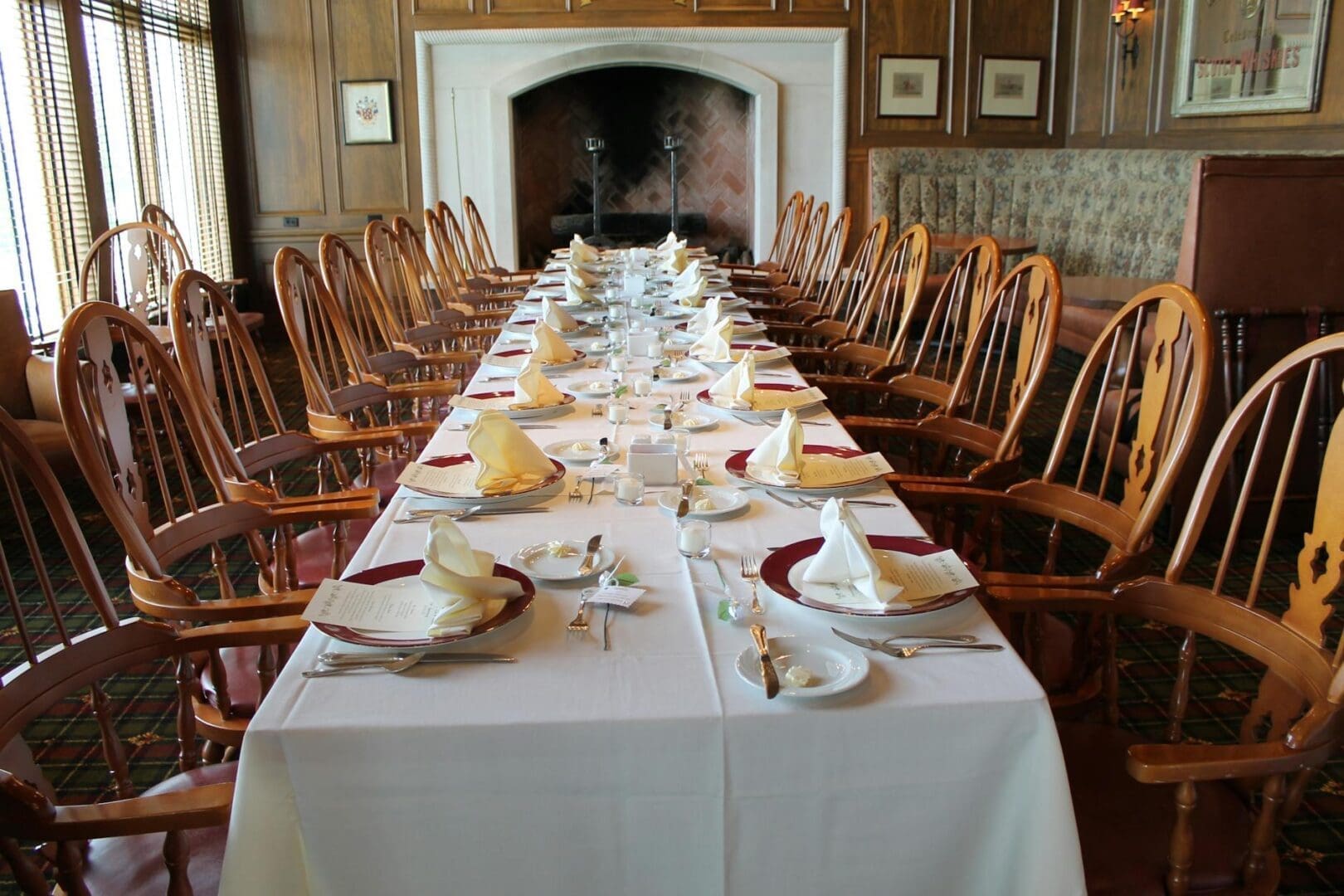
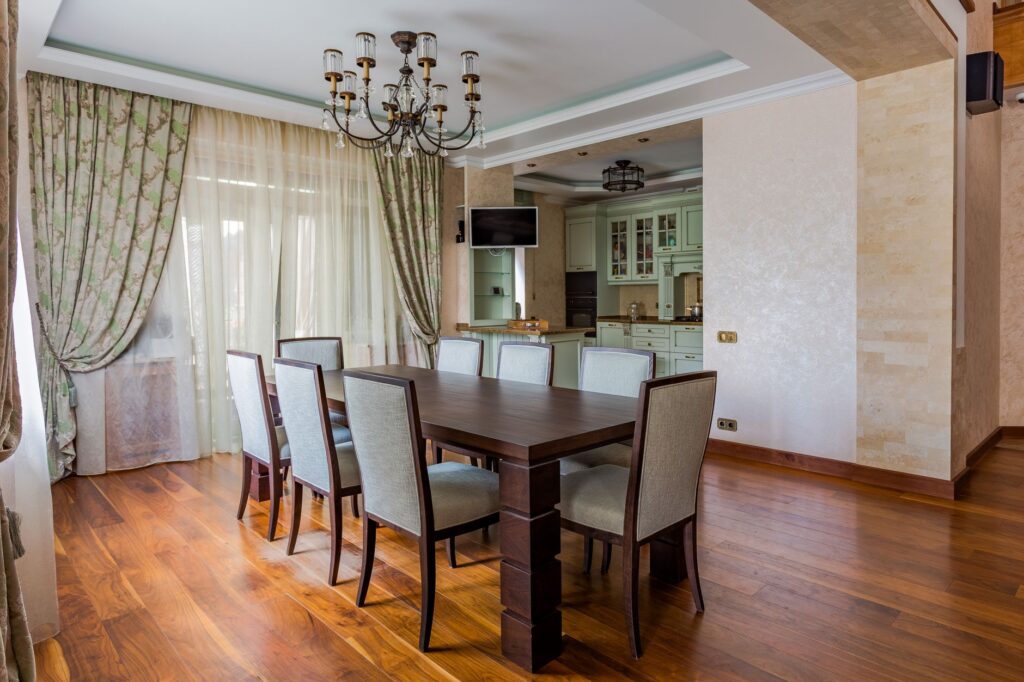
Your dining table anchors the entire room, so this is where you’ll want to focus your budget first. Look for solid wood or wood veneer tables rather than particle board—they’ll last decades and look better as they age. A simple rectangular table in walnut, oak, or cherry can look remarkably formal, especially with clean lines and substantial proportions.
Budget-friendly options start around $400-600 for a table that seats six to eight people. At this price point, focus on sturdy construction over ornate details. A pedestal base or parsons-style table with a rich finish can look just as elegant as pieces costing thousands more. If you find a solid vintage table with good bones but a tired finish, refinishing runs about $200-300 and gives you a custom look at a fraction of retail prices.
Extend your seating capacity without expanding your budget by choosing a table with a leaf. This practical feature means you’re always prepared for larger gatherings without permanently sacrificing floor space.
Mix and Match Your Seating Strategy
Here’s where you can get creative and save substantially. Matching sets of eight formal dining chairs can easily run $1,200-2,000, but there’s a smarter approach. Buy four to six matching side chairs in a simple style—think straight backs, upholstered seats, and classic proportions. You’ll find quality options for $100-150 per chair.
Then add visual interest with different head chairs or a upholstered bench on one side. This mixing actually looks more sophisticated and collected than a perfectly matched set. The key is maintaining consistent finishes (all dark wood, all light wood) and similar scale so everything feels cohesive.
Upholstered seats in neutral fabrics like linen, cotton, or durable polyester blends add formality without the premium price of leather. Look for removable cushions or seats—they’re easier to clean or reupholster down the road.
Light the Room for Drama and Function
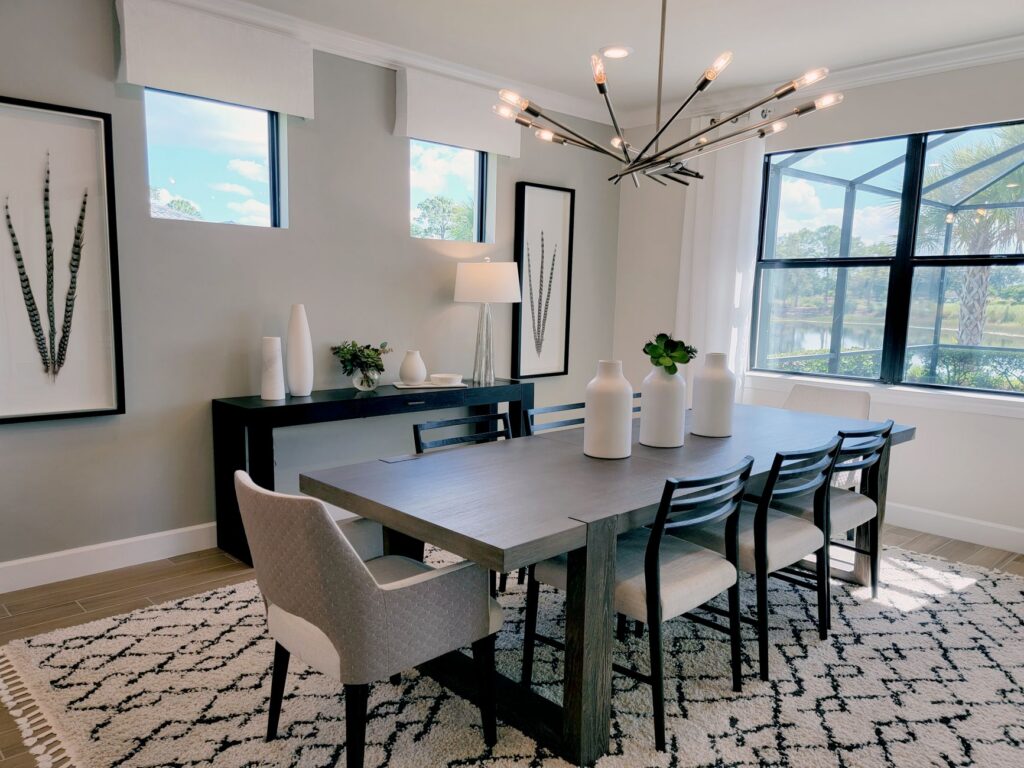
Lighting transforms a dining space from basic to formal faster than any other single element. A chandelier centered over your table creates instant elegance and sets the room’s tone. You don’t need a crystal masterpiece—plenty of stunning options exist in the $200-400 range.
Look for fixtures with these formal-leaning features:
Metal finishes in brass, bronze, or matte black rather than brushed nickel
Multiple arms or tiers that add visual weight and presence
Glass, fabric shades, or candelabra-style bulbs that diffuse light beautifully
Dimmer compatibility so you can adjust ambiance for different occasions
Scale matters here. Your chandelier should be roughly one-half to two-thirds the width of your table and hang 30-36 inches above the surface. Too small reads as an afterthought, undermining all your other efforts.
Add Finishing Touches That Elevate
The final layer of formality comes from thoughtful accessories, and this is where your budget can really stretch. A simple area rug grounds the space and absorbs sound—look for 8×10 or 9×12 sizes that extend beyond the table and chairs. Synthetic fibers or flatweave styles in traditional patterns start around $200 and clean more easily than wool.
Window treatments add softness and polish. Floor-length curtains in solid colors or subtle patterns instantly formalize any room. Budget $100-200 for ready-made panels, or go custom if your windows are unusual sizes.
On the table itself, invest in quality basics: white or cream dinner plates ($40-60 for eight place settings), simple glassware, and cloth napkins in neutral tones. These foundational pieces work for both everyday meals and special occasions. Save decorative chargers, fancy flatware, and statement centerpieces for later—they’re not essential to achieving a formal look.
Creating a formal dining room on a budget is absolutely achievable when you prioritize quality where it matters, embrace smart mixing strategies, and layer in classic elements thoughtfully. With a solid table, comfortable seating, proper lighting, and a few well-chosen accessories, you’ll have a space that feels special every time you gather around it—without the financial stress that takes the joy out of entertaining.
There’s something about farmhouse chandeliers that just works in a dining room—they bring warmth without being fussy, character without feeling overdone. But with so many styles calling themselves “farmhouse,” from sleek metal cages to chunky wood beam fixtures, figuring out which one belongs above your table can feel surprisingly tricky. The right chandelier should anchor […]
A sputnik chandelier makes a serious statement in a dining room—all those radiating arms and exposed bulbs create instant drama and mid-century appeal. But with so many variations in size, arm count, and finish, choosing the right one for your space can feel overwhelming. Get it right, though, and you’ve got a showstopper that pulls […]
When every square foot counts, bringing furniture into a small apartment feels like a high-stakes game of Tetris. You need storage desperately, but you’re terrified of making your space feel even more cramped. A sideboard can be the perfect solution—if you choose the right one. Let’s walk through exactly what to look for so you […]