The right lighting can transform your dining room from purely functional to genuinely special. Whether you’re hosting dinner parties or just trying to make Tuesday night pasta feel a little more civilized, your lighting sets the entire mood. But walk into any lighting showroom and you’ll quickly feel overwhelmed by the options. Let’s break down what actually matters when choosing dining room lighting.
Getting the Size Right
Here’s where most people stumble: a chandelier or pendant that’s too small looks like an afterthought, while one that’s too large overwhelms the space. The general rule is to add your room’s length and width in feet, then convert that number to inches for your fixture’s diameter. So a 12×14 foot dining room calls for a roughly 26-inch fixture.
For the height, hang your chandelier or pendant 30 to 36 inches above the table surface. If you have particularly tall ceilings (above 8 feet), add 3 inches for every additional foot of ceiling height. The key test: can everyone seated see each other without the fixture blocking sightlines? If yes, you’re in good shape.
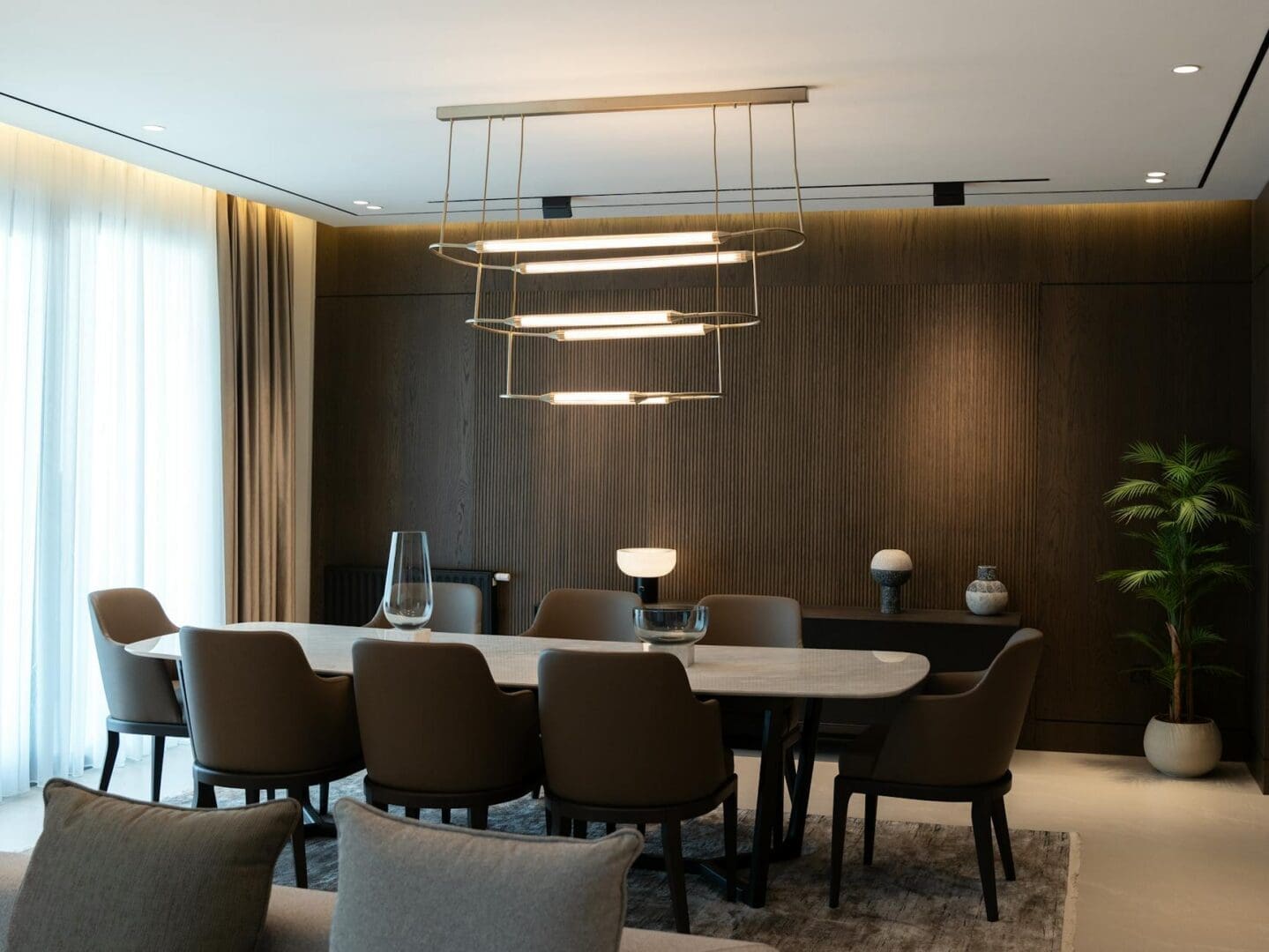
Long rectangular tables often benefit from either an elongated linear chandelier or two matching pendants hung in a row. A 6-foot table can handle a single fixture, but once you’re at 8 feet or longer, consider the double pendant approach.
Choosing Your Fixture Style
Your dining room lighting should complement your overall design, but it can also be a statement piece that adds personality. Here are the main styles worth considering:
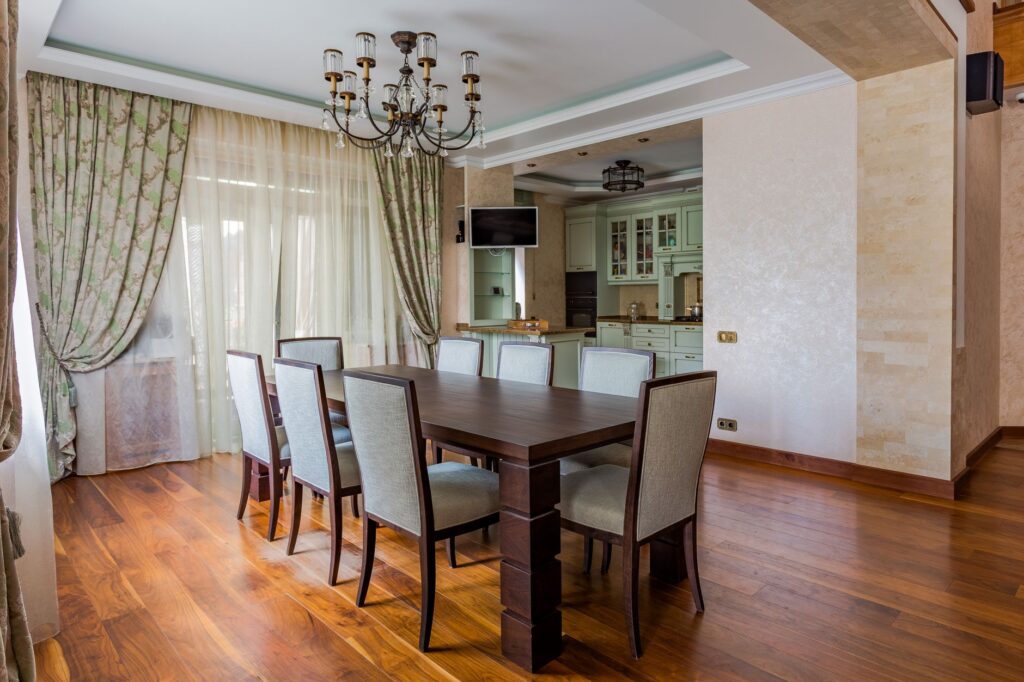
Traditional chandeliers with multiple arms and candelabra bulbs work beautifully in formal spaces and pair well with classic furniture. Expect to spend $200-$600 for quality options, with designer pieces reaching $1,500+.
Linear suspension lights suit contemporary and transitional spaces, especially over rectangular tables. These range from $300 for simple designs to $1,000+ for architectural statements.
Drum pendants offer a softer, more modern look and work particularly well in casual dining areas. Budget-friendly options start around $150, while fabric or metal designs with interesting details run $300-$800.
Globe or cluster pendants bring a playful, contemporary vibe and work nicely in smaller dining nooks. You’ll find good options between $200-$600.
Mixed metal finishes are having a moment, so don’t feel locked into matching your lighting finish to your cabinet hardware or faucets. Matte black, brushed brass, and aged bronze are particularly versatile.
Lighting Layers Make the Difference
A single overhead fixture rarely provides adequate lighting for a dining room. The best-lit dining spaces use layers: ambient lighting for overall illumination, task lighting for functionality, and accent lighting for atmosphere.
Your main chandelier or pendant handles the ambient layer, but consider adding dimmable recessed lights or a pair of wall sconces to fill in shadows and provide flexibility. Sconces flanking a buffet or sideboard add both task lighting for serving and visual balance to the room. Look for sconces with adjustable brightness or pair them with a dimmer switch.
The dimmer switch itself deserves special mention—it’s possibly the best $30 you’ll spend on your dining room. Being able to dial down the brightness for intimate dinners or crank it up for homework sessions gives you the flexibility to use your space throughout the day.
Bulb Selection Actually Matters
You’ve invested in a beautiful fixture, so don’t undermine it with the wrong bulbs. For dining rooms, aim for warm white light (2700K-3000K color temperature) which creates an inviting, flattering glow. Cool white bulbs might work in your kitchen, but they’ll make your dining room feel institutional.
LED bulbs have come a long way and now offer excellent color rendering at a fraction of the energy cost. If your fixture uses exposed bulbs, consider LED filament bulbs that mimic the vintage Edison look without the heat and energy waste. For fixtures with shades or diffusers, standard LED bulbs work perfectly fine.
The right dining room lighting pulls your entire space together and makes every meal feel a bit more special. Start by measuring carefully, choose a style that speaks to your aesthetic, add layers for flexibility, and don’t forget that dimmer switch. Your dining room is where you gather with the people who matter most—the lighting should make everyone look good and feel welcome.
There’s something about farmhouse chandeliers that just works in a dining room—they bring warmth without being fussy, character without feeling overdone. But with so many styles calling themselves “farmhouse,” from sleek metal cages to chunky wood beam fixtures, figuring out which one belongs above your table can feel surprisingly tricky. The right chandelier should anchor […]
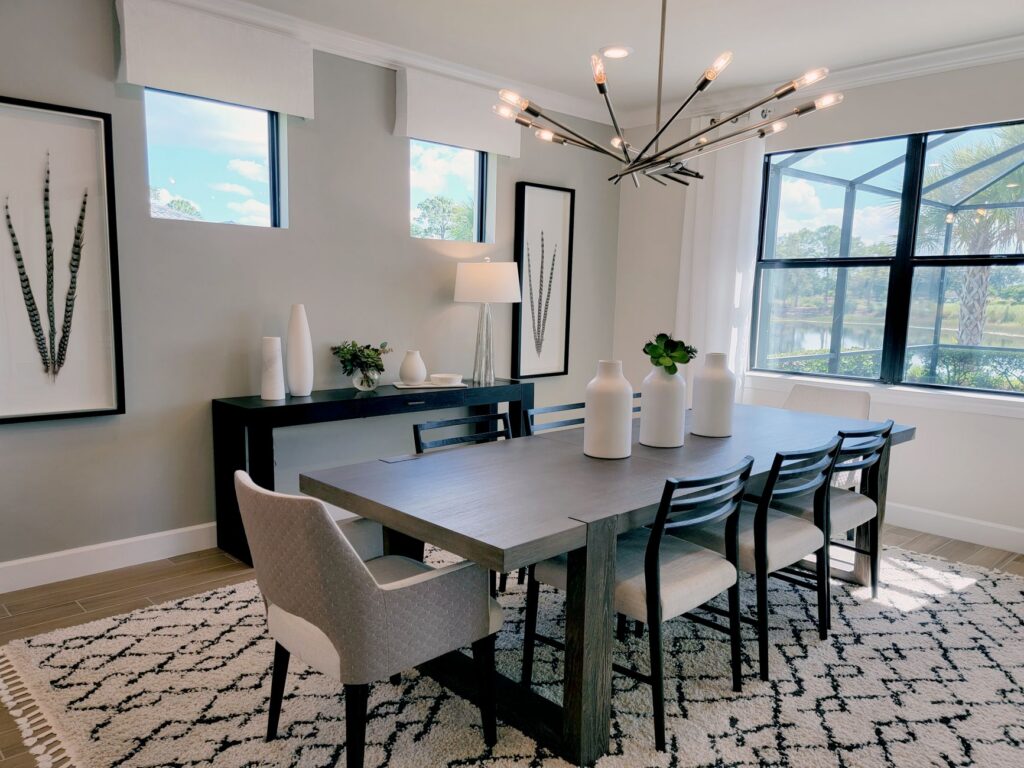
A sputnik chandelier makes a serious statement in a dining room—all those radiating arms and exposed bulbs create instant drama and mid-century appeal. But with so many variations in size, arm count, and finish, choosing the right one for your space can feel overwhelming. Get it right, though, and you’ve got a showstopper that pulls […]
When every square foot counts, bringing furniture into a small apartment feels like a high-stakes game of Tetris. You need storage desperately, but you’re terrified of making your space feel even more cramped. A sideboard can be the perfect solution—if you choose the right one. Let’s walk through exactly what to look for so you […]