A sprawling dining room should feel like a gift, but instead it often feels awkward and unwelcoming. When there’s too much space between the table and walls, conversations get lost in the void, and even a dinner party for eight can feel strangely distant. The good news? You don’t need to move walls or find a bigger table to solve this. Creating intimacy in a large dining room is all about defining boundaries and drawing the eye inward.
Anchor Your Space with the Right Rug
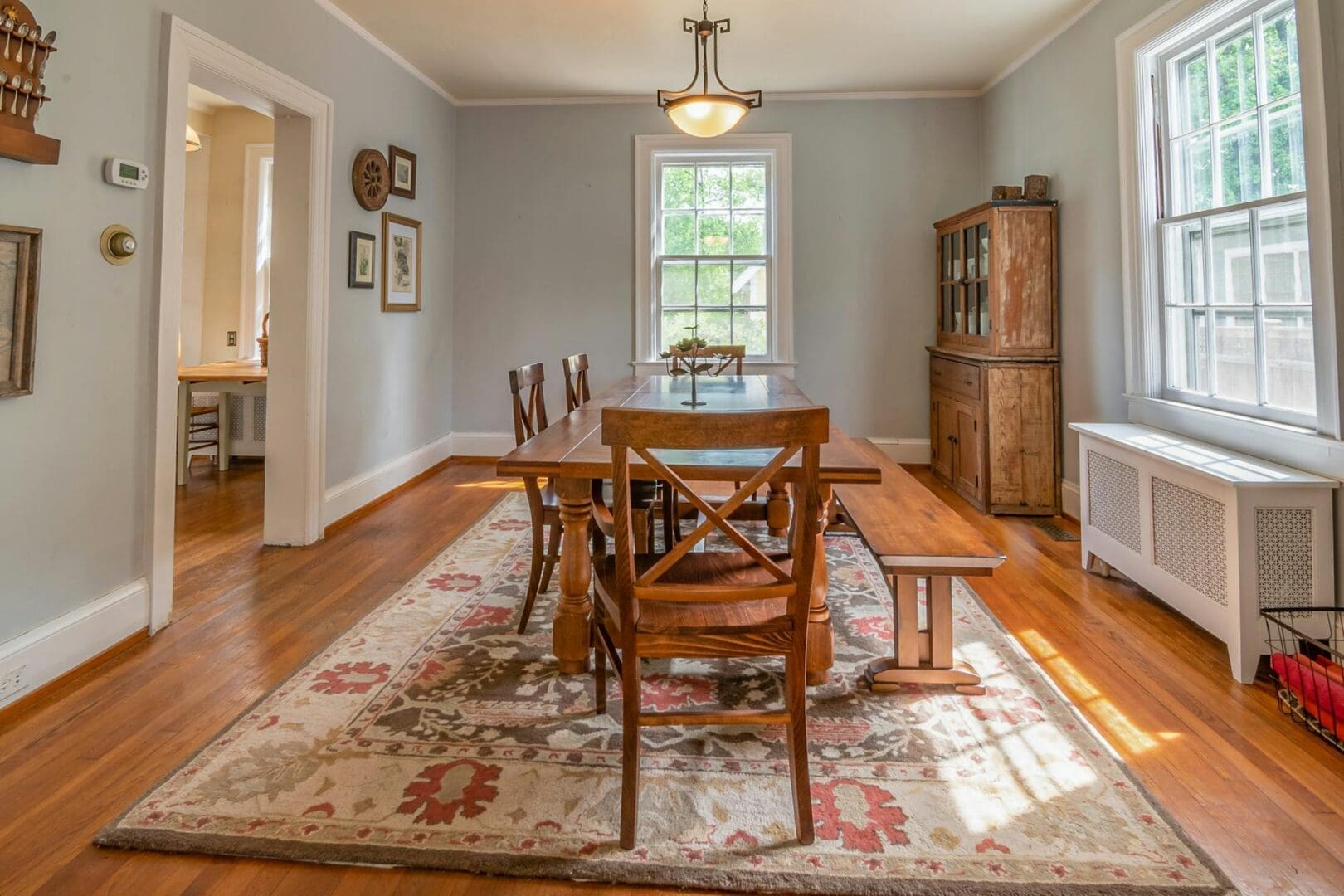
A well-chosen area rug is your first line of defense against the emptiness of a cavernous dining room. It visually defines where your dining zone begins and ends, creating a room within a room. Look for a rug that extends at least 24 inches beyond all sides of your table when chairs are pulled out—this prevents chair legs from catching on the edge and ensures everyone stays on the rug during the meal.
For a standard rectangular table seating six to eight, you’re typically looking at an 8×10 or 9×12 rug. Round tables pair beautifully with round or square rugs, which reinforce that sense of an enclosed, cozy circle. Material matters here: flatweave rugs in the $200-$600 range are easiest to clean, while hand-knotted wool rugs ($800-$3,000+) add substantial warmth and sound absorption that makes the space feel quieter and more contained.
Lower Your Lighting to Draw Eyes Down
High ceilings and ambient overhead lighting emphasize vertical space, which is exactly what you don’t want when creating intimacy. Instead, bring light sources down to table level. A chandelier or pendant light hung 30-36 inches above the table creates a glowing focal point that naturally draws people together.
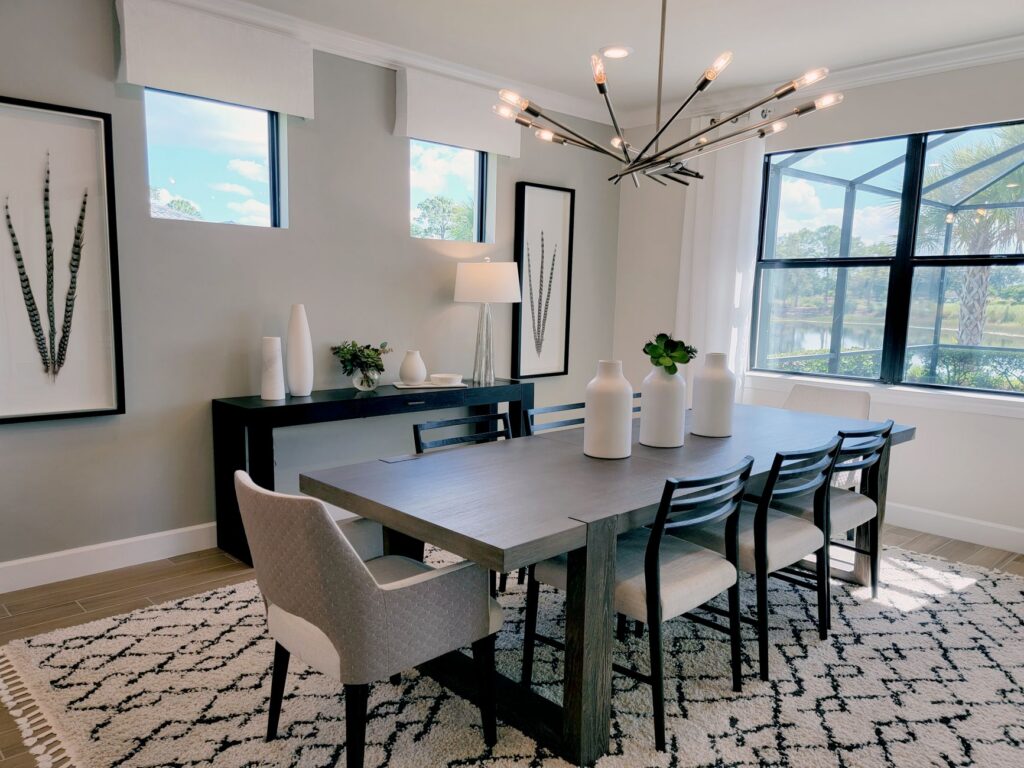
The fixture itself should be roughly one-half to two-thirds the width of your table. A 48-inch round table, for instance, looks balanced under a 24-30 inch diameter chandelier. Budget options in the $150-$400 range include drum pendants and simple linear fixtures, while statement chandeliers with multiple arms or interesting materials run $600-$2,500.
Consider adding dimmable bulbs or a dimmer switch—the ability to lower light levels in the evening creates instant coziness. If you want to layer in even more intimacy, flanking buffets or sideboards with table lamps brings additional pools of warm light at eye level when seated.
Use Furniture to Create Walls That Aren’t Walls
Strategic furniture placement can section off your dining area without actual construction. A sideboard, buffet, or console table positioned behind the dining chairs acts as a visual barrier that suggests “the dining room ends here.” These pieces run anywhere from $400 for simple wood designs to $2,000+ for solid hardwood with extensive storage.
Bookcases or open shelving units work similarly and add vertical interest. Position them perpendicular to a wall to create an L-shape that partially encloses the dining zone. You can also use a bench or settee instead of chairs on one side of the table—the upholstered back creates a soft wall that adds to the cocooning effect.
Don’t push everything against the walls just because you have the space. Floating your dining table away from walls and centering it on your rug actually makes the arrangement feel more intentional and intimate, even if it seems counterintuitive.
Add Layers That Absorb Sound and Soften Edges
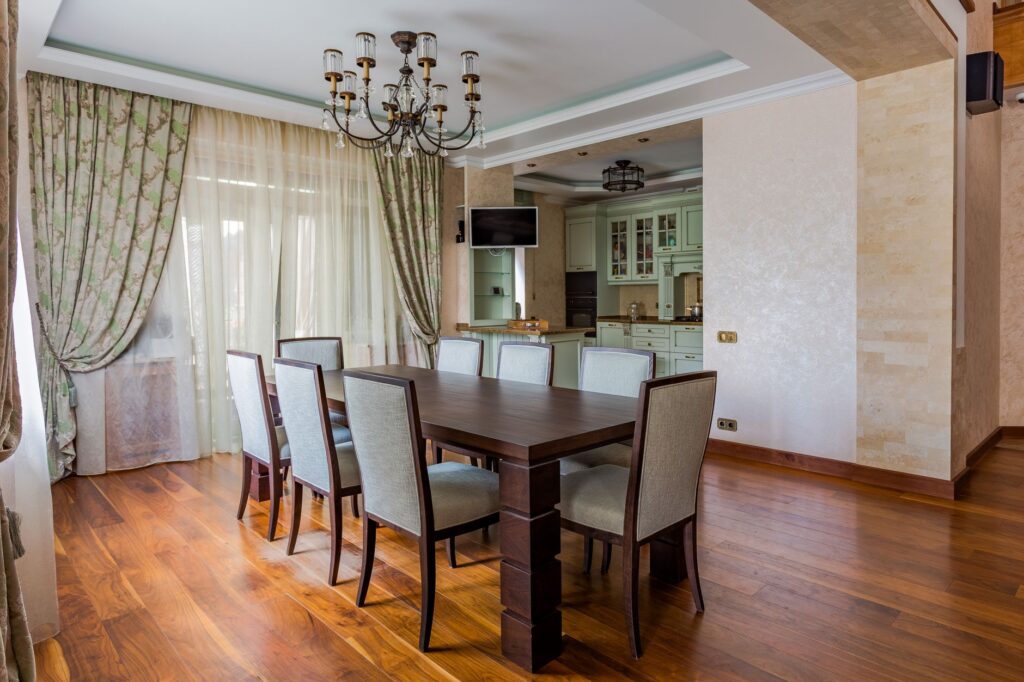
Large rooms with hard surfaces create echo and make voices feel scattered. Textile layers combat this beautifully. Beyond your rug, consider floor-length curtains even if your dining area doesn’t have windows nearby—hanging panels on one wall adds softness and helps define boundaries.
Upholstered dining chairs instead of all-wood versions absorb sound and feel more enveloping. You’ll find fabric dining chairs starting around $150 each for basic designs, up to $400+ each for performance fabrics or leather. Even adding seat cushions to existing wooden chairs helps.
A substantial centerpiece—whether fresh flowers, a bowl arrangement, or candlesticks—gives the eye something to focus on at the table itself rather than wandering to the empty corners of the room. This small detail makes a surprising difference in how gathered and connected the space feels.
The secret to intimacy in a large dining room isn’t fighting against the space you have—it’s about carving out a smaller, well-defined zone within it. When you combine a properly sized rug, lowered lighting, strategic furniture placement, and sound-softening textures, you create a dining area that feels like a destination rather than a formality. Your next dinner party will prove it.
There’s something about farmhouse chandeliers that just works in a dining room—they bring warmth without being fussy, character without feeling overdone. But with so many styles calling themselves “farmhouse,” from sleek metal cages to chunky wood beam fixtures, figuring out which one belongs above your table can feel surprisingly tricky. The right chandelier should anchor […]
A sputnik chandelier makes a serious statement in a dining room—all those radiating arms and exposed bulbs create instant drama and mid-century appeal. But with so many variations in size, arm count, and finish, choosing the right one for your space can feel overwhelming. Get it right, though, and you’ve got a showstopper that pulls […]
When every square foot counts, bringing furniture into a small apartment feels like a high-stakes game of Tetris. You need storage desperately, but you’re terrified of making your space feel even more cramped. A sideboard can be the perfect solution—if you choose the right one. Let’s walk through exactly what to look for so you […]